Gravestone Doji
 By LuxAlgoJul 6, 2026
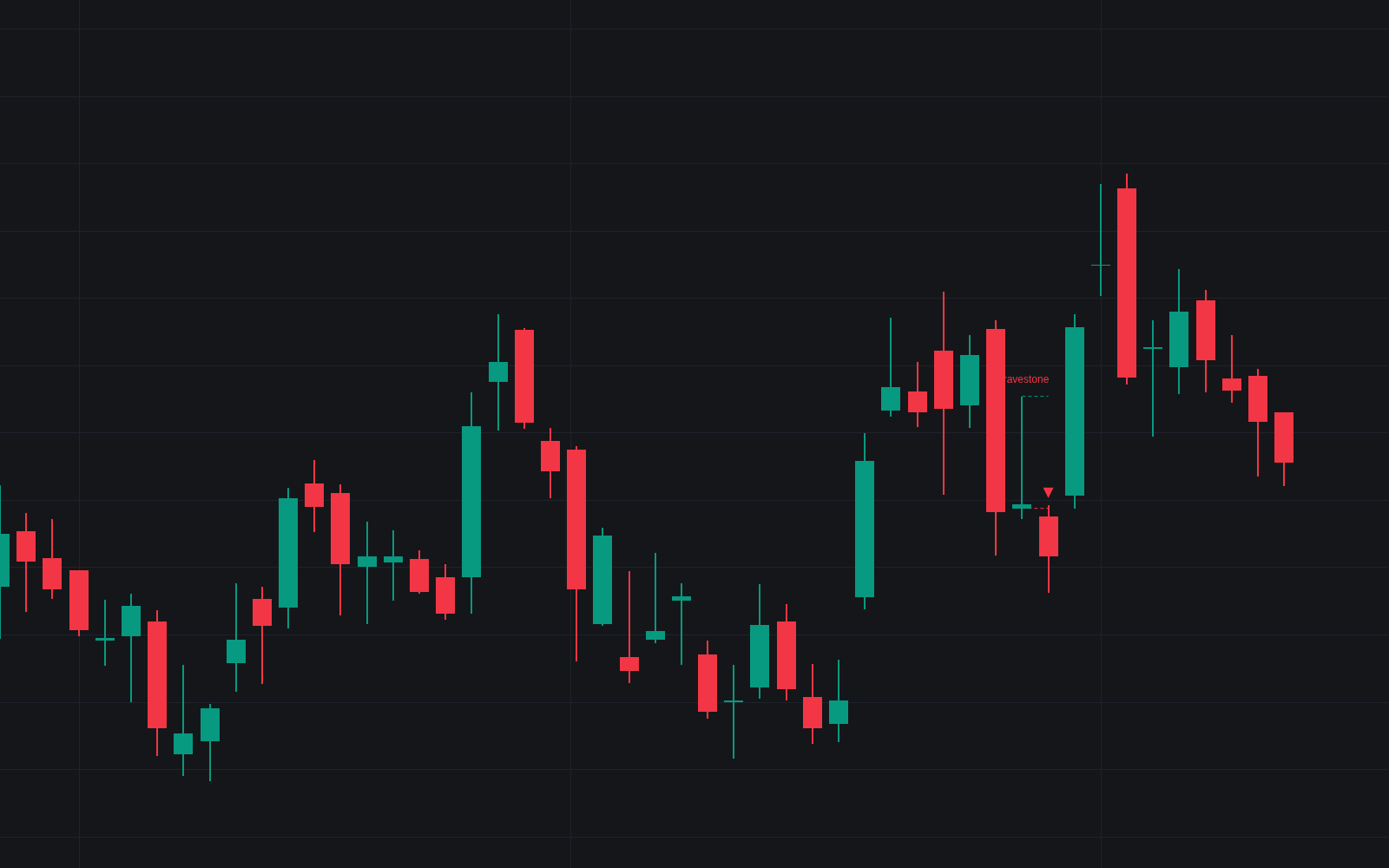

Gravestone Doji detects the inverted-T session (open, close and low pressed together under a long upper shadow) and manages what happens next, the first library implementation of the gravestone doji. Qualifying candles after an advance are labeled at the high, a dashed trigger line extends from the body bottom and a dashed stop line from the shadow high, and each pattern resolves inside a confirmation window: a triangle prints when a close confirms the topping read, an x-cross when it is invalidated. Gravestones after a decline can optionally be labeled as recovery probes instead.
How to Trade the Gravestone Doji?
- Gravestone label prints: the bar's push higher failed completely. An alert fires, but the classical treatment waits for confirmation before acting.
- Confirmation triangle: a close below the gravestone body within the window activates the bearish reading; the shadow high is the natural stop reference.
- Invalidation x-cross: a close back above the shadow high means the refused prices were accepted after all, and the pattern is dropped.
- Recovery probes: with the decline option on, gravestones below the trend average are marked as indecisive recovery attempts, with their own alert.
Gravestone Doji Settings
- Maximum Body Size % (default 5): how close open and close must sit, as a share of the bar range.
- Maximum Lower Shadow % (default 10): keeps open, close and low together.
- Minimum Shadow / Body Ratio (default 2) and Minimum Shadow Length (default 1) x ATR (default 14): the upper shadow must be long against both the body and recent bars.
- Require Prior Advance (default enabled) with Trend SMA Length (default 50); Flag Gravestones After A Decline (default disabled).
- Require Elevated Volume (default disabled) with Minimum Volume (default 1.5) x SMA (default 20).
- Confirmation Window (Bars) (default 3) and Trigger & Stop Levels (default enabled).
Frequently Asked Questions

Original indicatorBuilt in-house by LuxAlgo
The Library is free. Quant makes it yours.
Pull any concept or indicator into Quant: rebuild it, retune it, or turn it into a backtested strategy of your own.