Hikkake
 By LuxAlgoApr 11, 2026
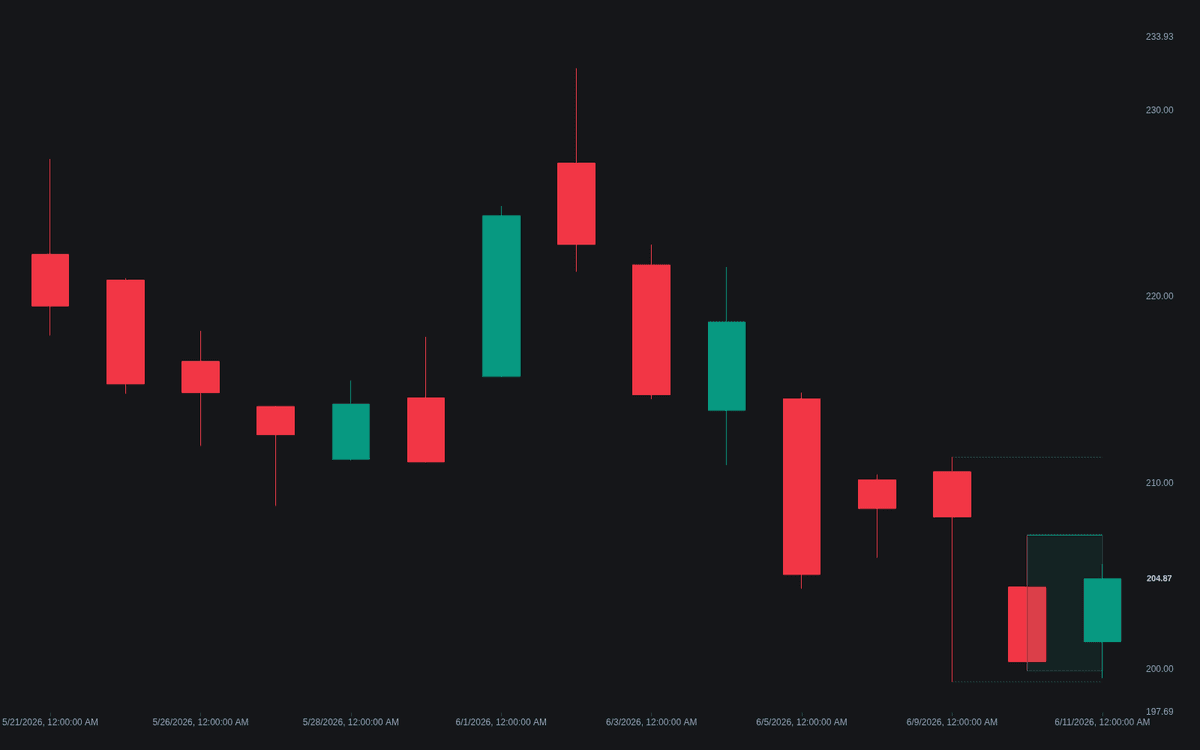

Hikkake is the definitive clean implementation of the hikkake trap sequence. It finds an inside bar whose first break takes exactly one of its sides, then arms a setup in the opposite direction: a break above arms a bearish trap, a break below a bullish one. The setup draws the inside-bar zone, the trigger at the opposite extreme, dotted mother-bar reference levels and a dashed invalidation line, then waits: snap back through the trigger inside the window and the pattern fires; otherwise the setup is retired.
How to Trade the Hikkake?
- Armed setup: the false break just printed. Nothing to do but watch the trigger level.
- Trigger fires: price came back through the opposite extreme within the window; the label's tooltip reports the failed break's extreme and elapsed bars, and levels project forward.
- Invalidation: the conventional stop rides just past the false break's extreme; a return there re-asks the question the trap had answered.
- Expiry: a trigger arriving late has typically lost its trap logic; setups void after the window.
Direction follows the snap-back, not the bait: the side that broke first is the trapped side.
Hikkake Settings
- Trigger Window (Bars) (default 3): bars allowed between false break and trigger.
- Trigger Condition (default Wick): trade-through triggers, or a stricter close beyond the level.
- Max Inside Bar Size % (default 100): cap on the inside bar relative to the mother bar.
- Cancel On Close Beyond Mother Bar (default disabled): void setups whose break follows through instead of failing.
- Trend Alignment (default disabled) with SMA Length (default 50): only arm setups resolving with the trend.
- Invalidation Level (default False Break Extreme): or the conservative mother bar extreme.
- Levels & style: invalidation line on, projected target off, mother bar levels on, voided setups hidden, extension 10 bars.
Frequently Asked Questions

Original indicatorBuilt in-house by LuxAlgo
The Library is free. Quant makes it yours.
Pull any concept or indicator into Quant: rebuild it, retune it, or turn it into a backtested strategy of your own.