False Breakout
 By LuxAlgoMay 18, 2026
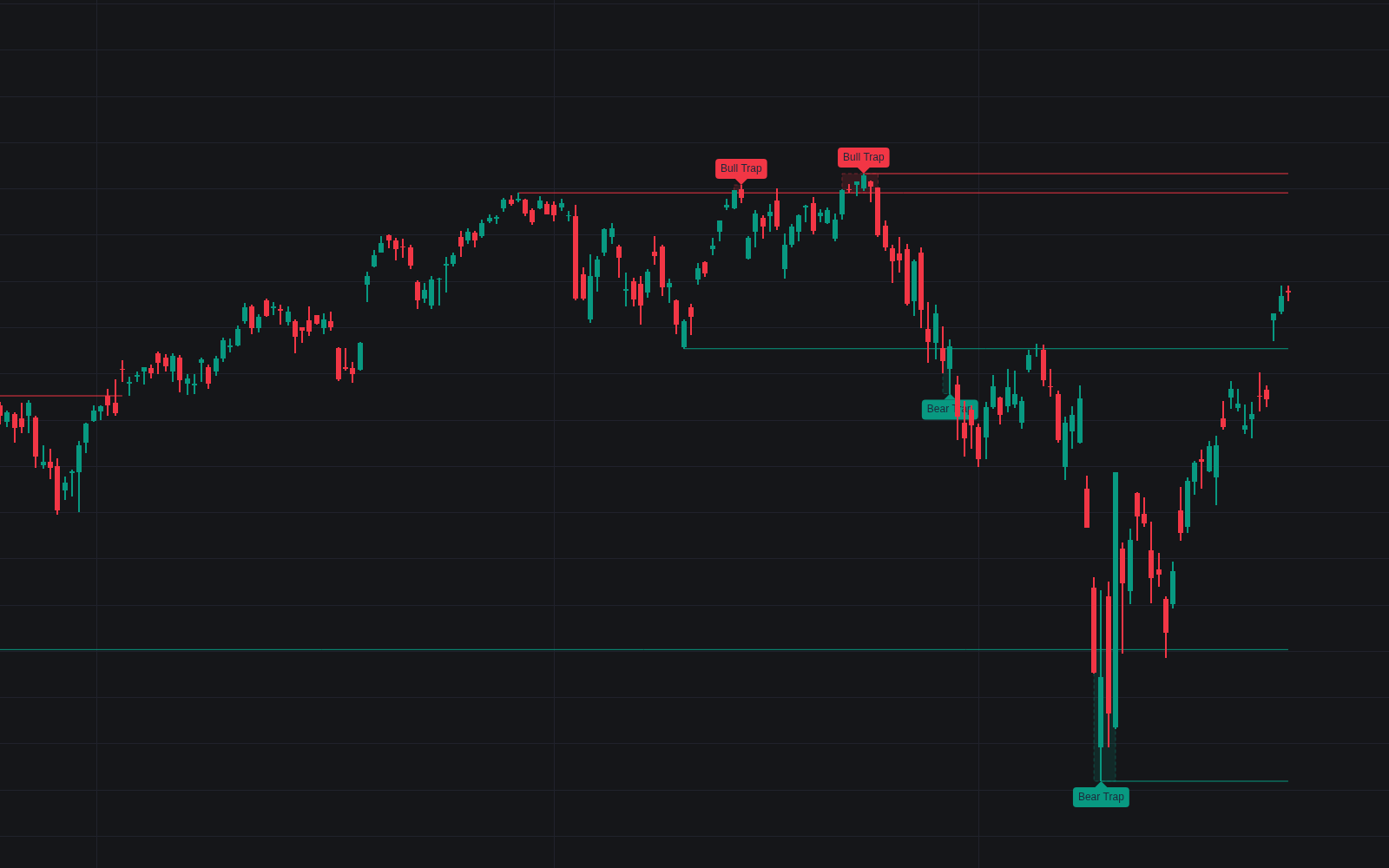

False Breakout is the definitive clean build of the false breakout study: it watches confirmed swing levels for breakout attempts and classifies each as genuine or failed. A break beyond a level opens a failure window; a close returning to the original side inside that window confirms the trap, while price holding beyond retires the level as a genuine breakout. Confirmed failures are boxed from the broken level to the false-break extreme and labeled there.
How to Trade the False Breakout?
- Bull Trap: a break above resistance that closed back inside. Breakout buyers are trapped, and the classic read is a fade back across the range.
- Bear Trap: the mirrored failure below support, trapping breakdown sellers.
- Zone's outer edge: the false-break extreme is the commonly used stop when fading, since a return beyond it revives the breakout case.
- Same-bar confirmation: with the Wick trigger, a poke beyond the level that finishes back inside confirms immediately.
Each side fires its own alert, plus a combined any-trap stream.
False Breakout Settings
- Swing Length (default 20): bars left and right confirming the swings that become watched levels; larger values keep only significant boundaries.
- Break Trigger (default Close): Close starts the failure watch only once a bar closes beyond the level, the stricter school; Wick starts it on any intrabar poke.
- Failure Window (Bars) (default 5): maximum bars beyond the level for a re-entry to still count as a failure.
- Require Heavy Re-entry Volume (default off) with Volume Average Length (default 20): only confirms traps whose re-entry bar trades above its trailing average volume.
- Show Swing Levels, Show Trap Zones and Show Trap Labels (all default on) control the visuals.
Frequently Asked Questions

Original indicatorBuilt in-house by LuxAlgo
The Library is free. Quant makes it yours.
Pull any concept or indicator into Quant: rebuild it, retune it, or turn it into a backtested strategy of your own.