Inverted Hammer
 By LuxAlgoJun 21, 2026
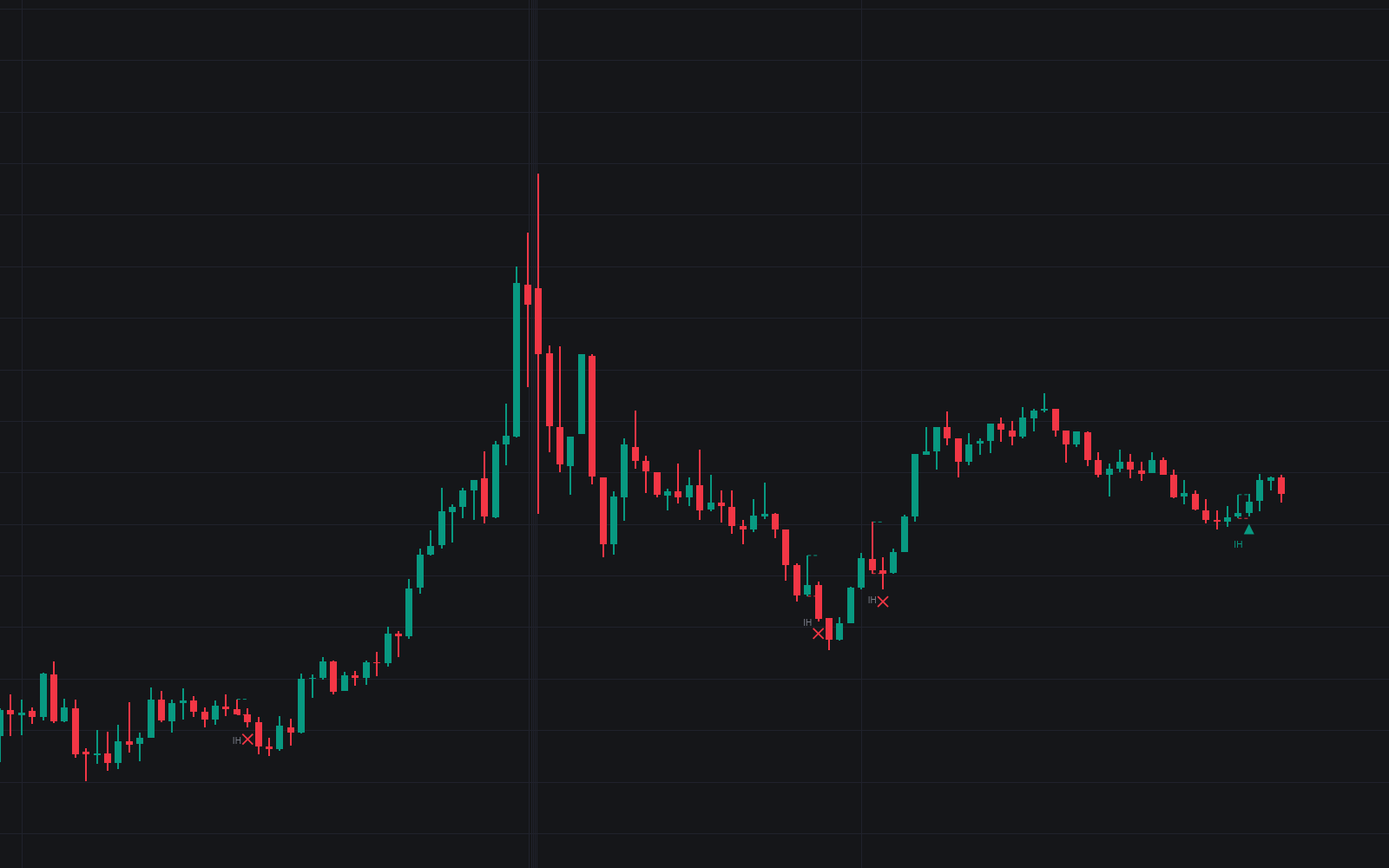

Inverted Hammer detects the single-candle bottom-reversal candidate with measurable proportions, then manages what matters most: confirmation. A qualifying inverted hammer needs an upper shadow at least twice the real body, a lower shadow within 10% of the range, a real body of at least 5%, and a decline into the candle.
How to Trade the Inverted Hammer?
- Tentative IH tag: a candidate only. The candle closes weak by construction, so nothing is implied until follow-through appears.
- Confirmation triangle: fires when the next candle gaps above the body or closes bullish, or price trades above the pattern high in the window.
- Trigger and stop lines: entry above the pattern high, invalidation below the pattern low, drawn while it is pending.
Each pattern resolves within the window as confirmed, invalidated, or expired; set the window to 1 for the strict next-candle reading.
Inverted Hammer Settings
- Minimum Upper Shadow / Body Ratio (default 2), Maximum Lower Shadow (%) (default 10), Minimum Real Body (%) (default 5): the shape tests: shadow multiple, shaved-low tolerance, and the body floor that excludes gravestone-style doji.
- Bullish Body Only (default disabled): classical references accept either body color.
- Decline Detection (default Price Below SMA) with SMA Length (default 50) and Decline Lookback (default 5): how the decline into the candle is established.
- Confirmation Window (default 3): bars allowed before an unconfirmed pattern is set aside; the gap-up, bullish-close, and trade-above-high rules all default on.
- Volume Grading (default Highlight), Volume Average Length (default 20), Elevated Volume Multiple (default 1.5): participation grading. An IH+ tag marks elevated volume; bypassed without volume data.
- Labels, levels, resolution markers, and colors are style options.
Frequently Asked Questions

Original indicatorBuilt in-house by LuxAlgo
The Library is free. Quant makes it yours.
Pull any concept or indicator into Quant: rebuild it, retune it, or turn it into a backtested strategy of your own.