Three Inside Up/down
 By LuxAlgoJun 7, 2026
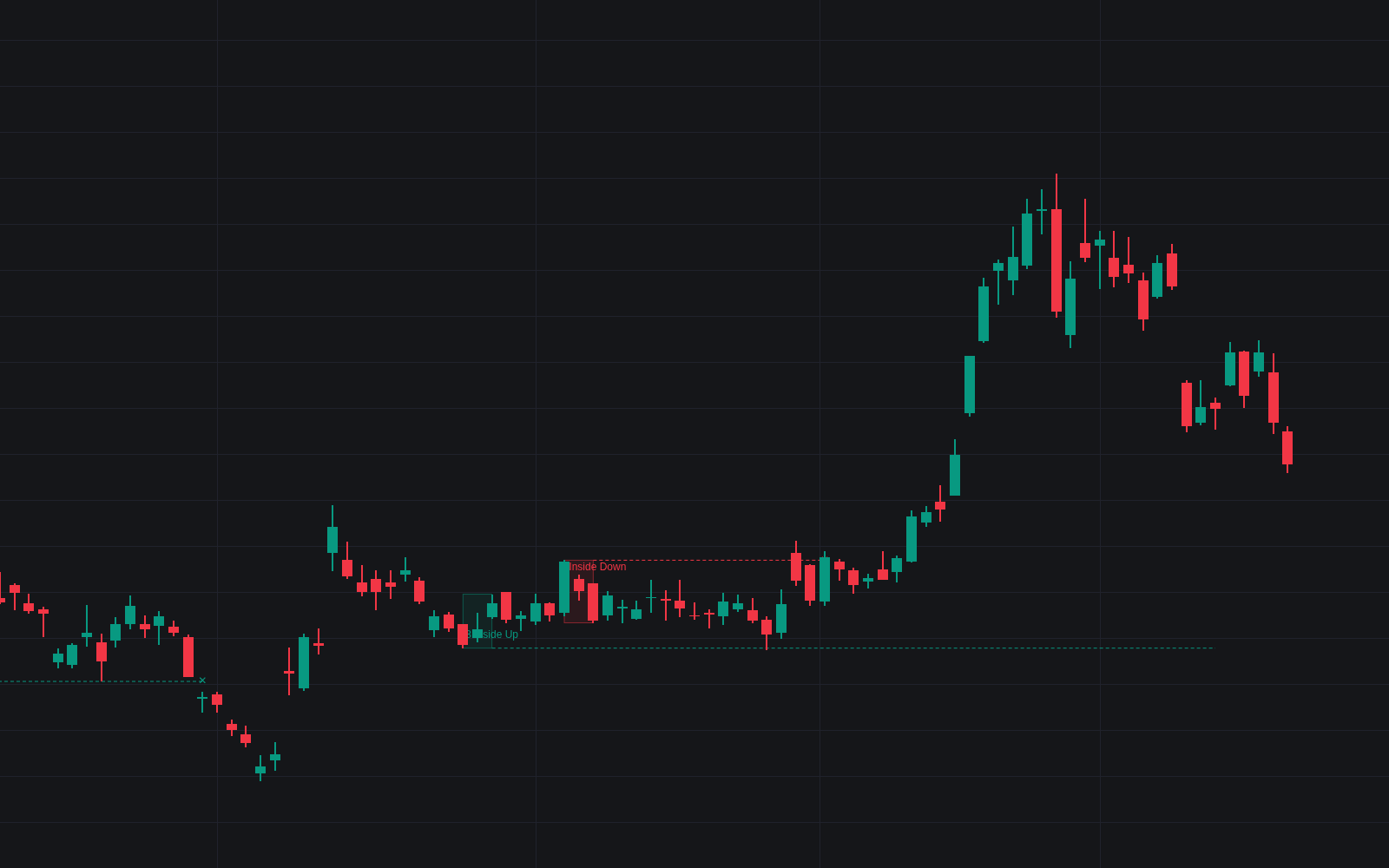

Three Inside Up/down waits for the harami to prove itself. A long opening body in the trend direction, a smaller counter-colored body contained inside it, then the completion candle: by default a close beyond the first candle's extreme, the strict reading of three inside up/down, here given its first purpose-built detector. Each pattern prints a box, a label and a dashed invalidation level at its far extreme; a later close back through it marks the failed reversal with a cross.
How to Trade the Three Inside Up/down?
- 3 Inside Up: within a decline, a long dark candle, a contained white body, and a third close clearing the first candle's high, a confirmed bullish claim with invalidation at the pattern low.
- 3 Inside Down: the mirror within an advance, invalidated at the pattern high.
- Invalidation cross: a close back through the level negates the confirmed reversal. The cross label and matching alerts make failures as explicit as completions.
Three Inside Up/down Settings
- Completion Rule (default Strict: Close Beyond First Candle's Extreme): the loose option accepts a close beyond the second candle's close.
- Second Candle Color (default Opposite To First Candle): Any Contained Body drops the classical color requirement and accepts dojis.
- Long Body Lookback (default 14) and Long Body Multiplier (default 1.0): the long-first-candle test.
- Decisive Third Candle (default on) with Min Body/Range % (default 30): screens doji-like completion candles.
- Trend Detection (default Moving Average; also Net Price Change or None) with Trend Length (default 50).
- Show Invalidation Level (default on) with Maximum Level Duration (default 50), plus label and box toggles.
Frequently Asked Questions

Original indicatorBuilt in-house by LuxAlgo
The Library is free. Quant makes it yours.
Pull any concept or indicator into Quant: rebuild it, retune it, or turn it into a backtested strategy of your own.