Anti-patterns
 By LuxAlgoJun 14, 2026
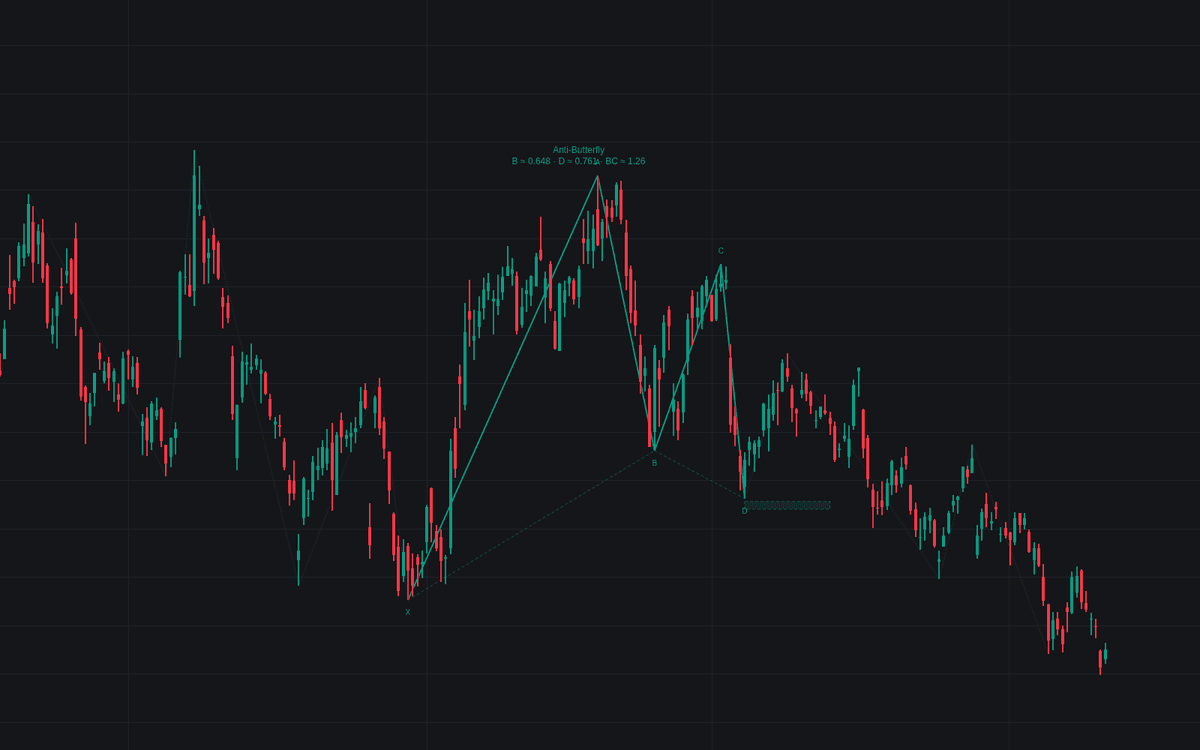

Anti-patterns brings the reciprocal-ratio harmonic suite, the anti-patterns, to the chart as one detector for the anti-Gartley, anti-Bat, anti-Butterfly, anti-Crab and anti-Cypher. A zigzag of 10-bar swings supplies the XABCD points, and a candidate must land its B retracement, C point and D completion inside a pattern's ratio windows, within a 5% tolerance, before anything draws.
Published anti ratio tables vary between sources, so the build shows its work: labels can append the measured B retracement, D completion and BC projection so any detection can be audited against another table.
How to Trade the Anti-patterns?
- Bullish completion (D at a trough): look for an upside reaction inside the completion zone; anti-patterns resolve with the newer move rather than against it.
- Bearish completion (D at a peak): the mirror read.
- Completion Zone box: spans the XA-based completion level (XC-based for the anti-Cypher) and the reciprocal BC projection level, extending until a reaction swing confirms.
- Disappearing drawings: an extending D redraws the same structure and can exit every ratio window. The removal itself is information.
Anti-patterns Settings
- Swing Length (default 10): pivot half-length for the swings; larger finds larger structures, confirmed later.
- Ratio Tolerance % (default 5): allowed deviation around each ratio window, absorbing table differences.
- BC Projection Cross-Check (default on): accepts completions only with a BC projection between 1.128 and 4.236.
- Anti-Gartley, Anti-Bat, Anti-Butterfly, Anti-Crab, Anti-Cypher (all on by default): enable each table individually.
- Style toggles cover point labels, measured ratios, the dashed triangle lines, the completion zone and the swing zigzag.
Frequently Asked Questions

Original indicatorBuilt in-house by LuxAlgo
The Library is free. Quant makes it yours.
Pull any concept or indicator into Quant: rebuild it, retune it, or turn it into a backtested strategy of your own.