Chaikin Oscillator
 By LuxAlgoApr 13, 2020
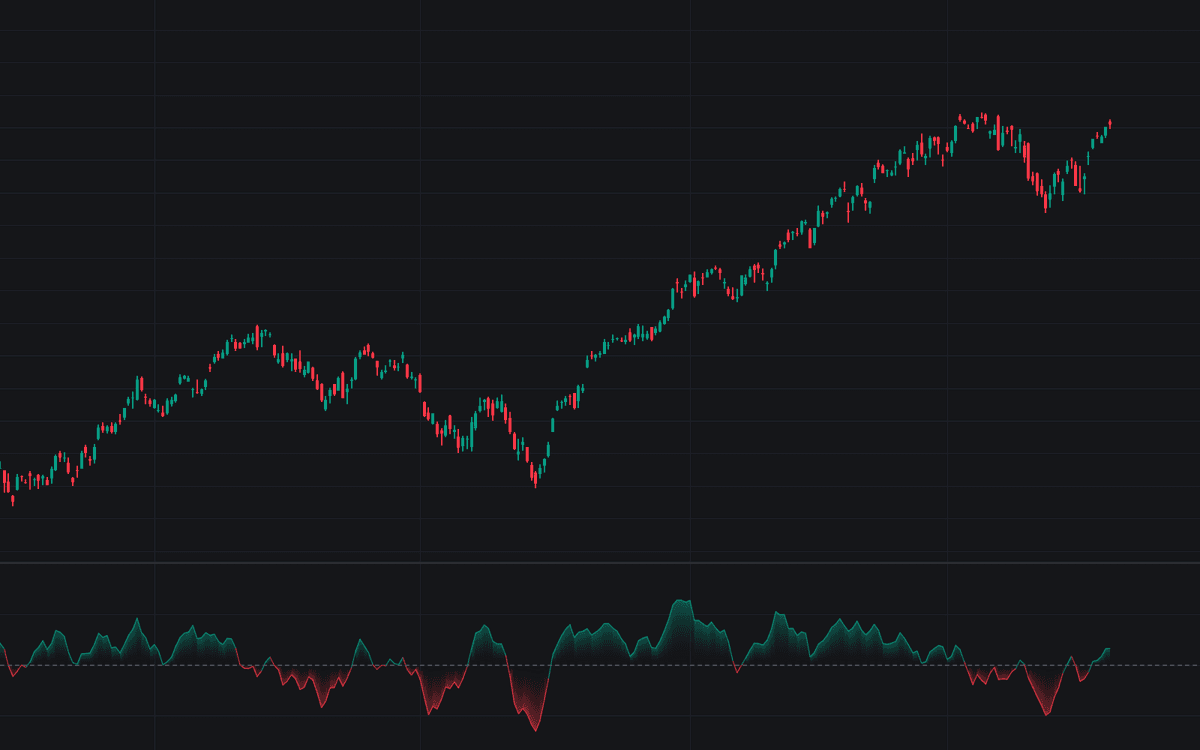

The Chaikin Oscillator plots the difference between a 3-period EMA and a 10-period EMA of the Accumulation/Distribution Line, producing a zero-centered line that tracks shifts in the momentum of volume flow. The script accumulates money flow volume bar by bar into the A/D Line, then differences the two EMAs of that series, so the plot crosses zero whenever short-term accumulation overtakes or falls behind its longer trend. It is implemented here as the standard raw form of Marc Chaikin's oscillator, with the classic 3 and 10 EMA lengths as defaults.
How to Trade the Chaikin Oscillator?
- Cross above the Zero Line: accumulation momentum has turned positive, commonly read as bullish confirmation.
- Cross below the Zero Line: flow momentum turning negative, the bearish counterpart.
- Slope between crosses: a rising oscillator says flow is building behind the move; a falling one says it is thinning before any cross prints.
- Divergence: a fresh price high against a lower oscillator high questions the volume behind the advance; the bullish mirror applies at lows.
Expect whipsaws around zero in quiet tape; treat the line as a second opinion: a breakout arriving while the oscillator climbs through zero carries volume momentum that the same break against a falling line lacks.
Chaikin Oscillator Settings
- Fast Length (default 3): the fast EMA applied to the accumulation/distribution line. Raising it slows reactions and mutes small swings.
- Slow Length (default 10): the slow EMA forming the baseline. Widening the gap between the lengths exaggerates swings; narrowing it flattens them.
Alerts
The script includes Zero Cross Up and Zero Cross Down alert conditions, triggered when the oscillator crosses above or below zero.
Frequently Asked Questions

The Library is free. Quant makes it yours.
Pull any concept or indicator into Quant: rebuild it, retune it, or turn it into a backtested strategy of your own.