Channel Continuation
 By LuxAlgoJul 24, 2026
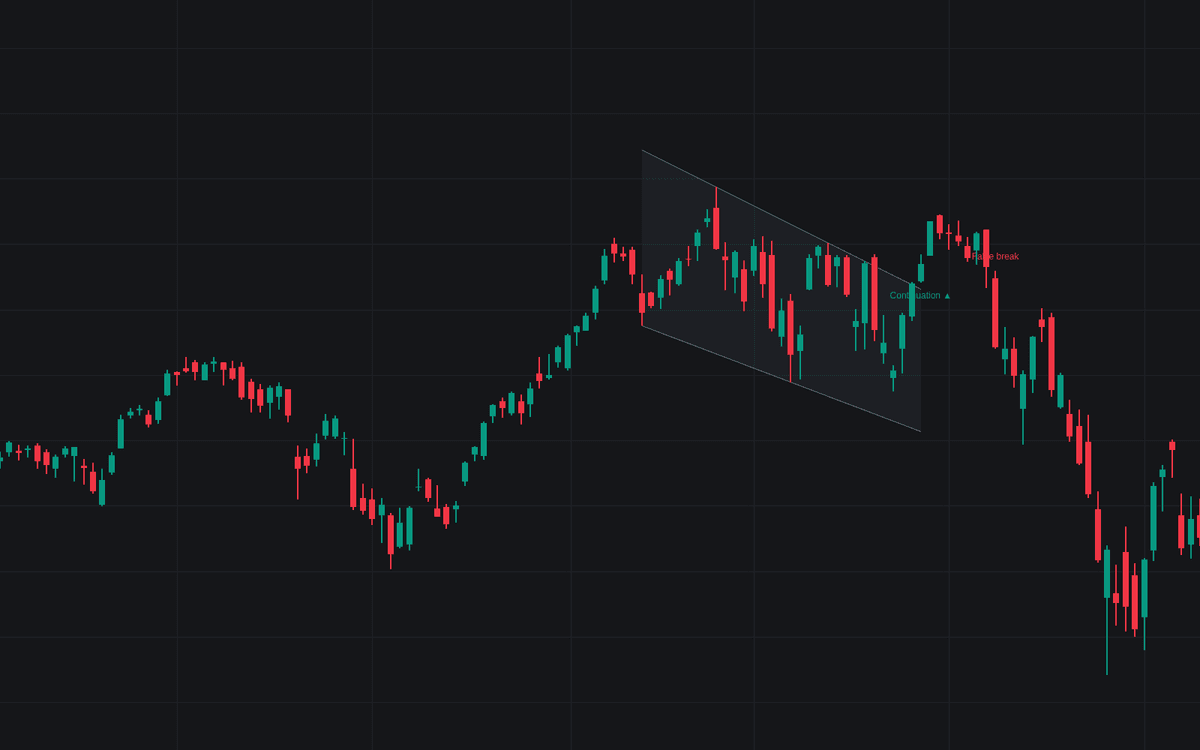

Channel Continuation implements the channel continuation pattern as a complete setup, not a drawing aid. It demands a prior impulse (3+ ATR net over the preceding 20 bars), then fits parallels through confirmed pivots: two touches per side, contained closes and, by default, a countertrend slope. A decisive break with the trend projects the channel's width and the impulse's height as dotted objectives.
How to Trade the Channel Continuation?
- Continuation ▲ / ▼: a decisive close past the boundary resumes the prior trend; Width target and Measured move lines mark the objectives.
- Corrective parallel touch: a test of the parallel opposite the expected break, the entry zone.
- Trend change?: a break against the prior trend, possibly reversal, not pause.
- False break: a close back inside within 8 bars deletes the targets. Exit fast.
Channel Continuation Settings
- Pivot Length (default 5): bars each side confirming the pivots.
- Min Touches Per Side (default 2): the classic minimum.
- Channel Length Min / Max (defaults 15 / 80): duration bounds.
- Parallel Tolerance % (default 25) and Touch Tolerance % (default 15): required cleanliness of the fit.
- ATR Length (default 14): normalizes the filters.
- Impulse Lookback (default 20) and Min Impulse Strength (ATR) (default 3): the prior-trend gate.
- Require Countertrend Slope (default enabled) and Min Channel Drift (ATR) (default 1): only corrective slopes pass.
- Max Retracement % (default 80) and Max Duration (x Impulse) (default 2.5): too-deep or too-long corrections expire.
- Breakout Buffer % (default 5): extra penetration for a decisive break.
- False-Break Window (default 8): bars in which a close back inside fails the break.
- Volume Filter (default disabled) with Volume Expansion (x Average) (default 1.5): the classic volume signature.
- Width Target / Measured-Move Target (default enabled): the objectives.
Frequently Asked Questions

Original indicatorBuilt in-house by LuxAlgo
The Library is free. Quant makes it yours.
Pull any concept or indicator into Quant: rebuild it, retune it, or turn it into a backtested strategy of your own.