On Balance Volume
 By LuxAlgoApr 13, 2020
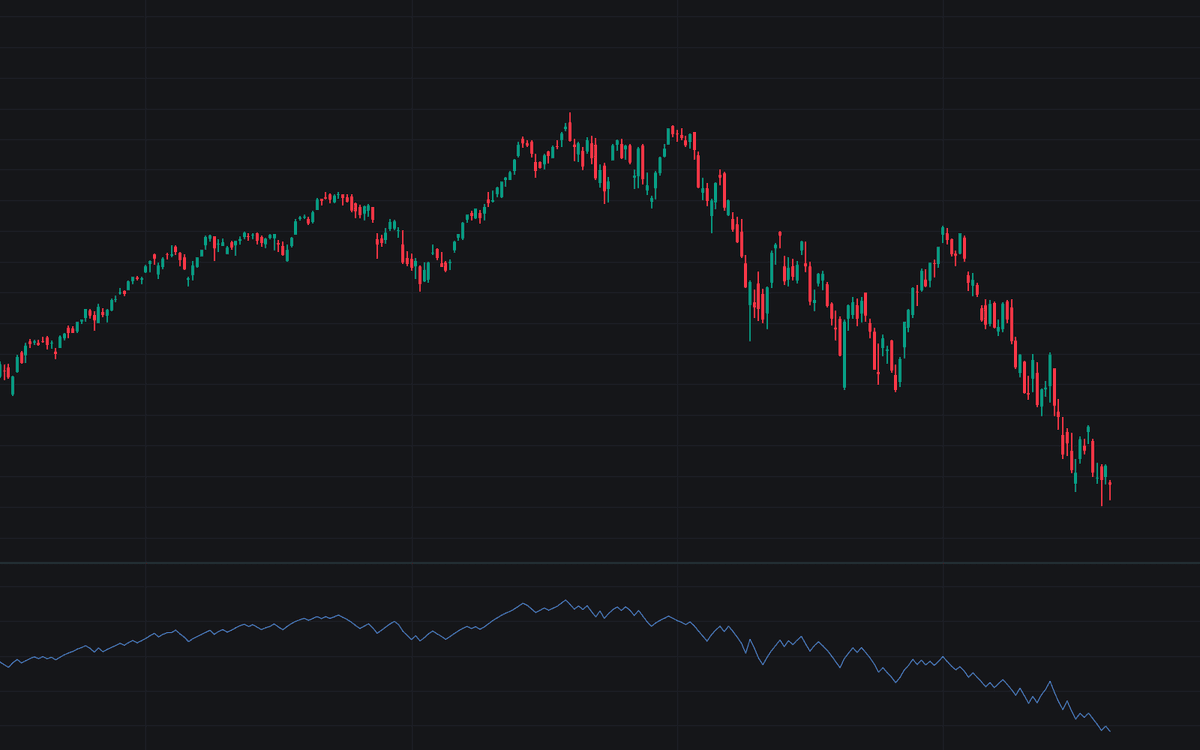

The On Balance Volume indicator keeps a cumulative running total of volume: each bar's volume is added when the close is higher than the prior close, subtracted when it is lower, and skipped when unchanged. The result is a single line traders read against price to judge whether volume is flowing with advances or with declines: Joe Granville's indicator in its standard unmodified form, cumulative from the first available bar, with an optional smoothing moving average overlay. Since the running total depends on where the loaded history starts, the printed level carries no meaning: direction, swing structure, and agreement with price do all the work.
How to Trade the On Balance Volume?
- OBV rising with price: the advance is carrying participation: volume flow confirms the move.
- OBV refusing to confirm a price extreme: the classic divergence read; a new price high without a new OBV high suggests the push ran on thinner volume.
- OBV breaking its own prior swing while price still ranges: volume flow resolving ahead of price, worth watching for the move it may precede.
- OBV crossing its Smoothing MA (when enabled): an objective trigger for the line's own trend turning, useful precisely because raw OBV has no fixed scale.
On Balance Volume Settings
- Smoothing MA (default disabled): displays a moving average of OBV to act as a smoothing/signal line.
- MA Type (default SMA): moving average type used for the smoothing line; options are SMA, EMA, WMA, and RMA (SMMA).
- MA Length (default 20): bars in the smoothing MA. Longer confines crosses to sustained flow shifts.
Frequently Asked Questions

The Library is free. Quant makes it yours.
Pull any concept or indicator into Quant: rebuild it, retune it, or turn it into a backtested strategy of your own.