Speed Resistance Lines
 By LuxAlgoMay 28, 2026
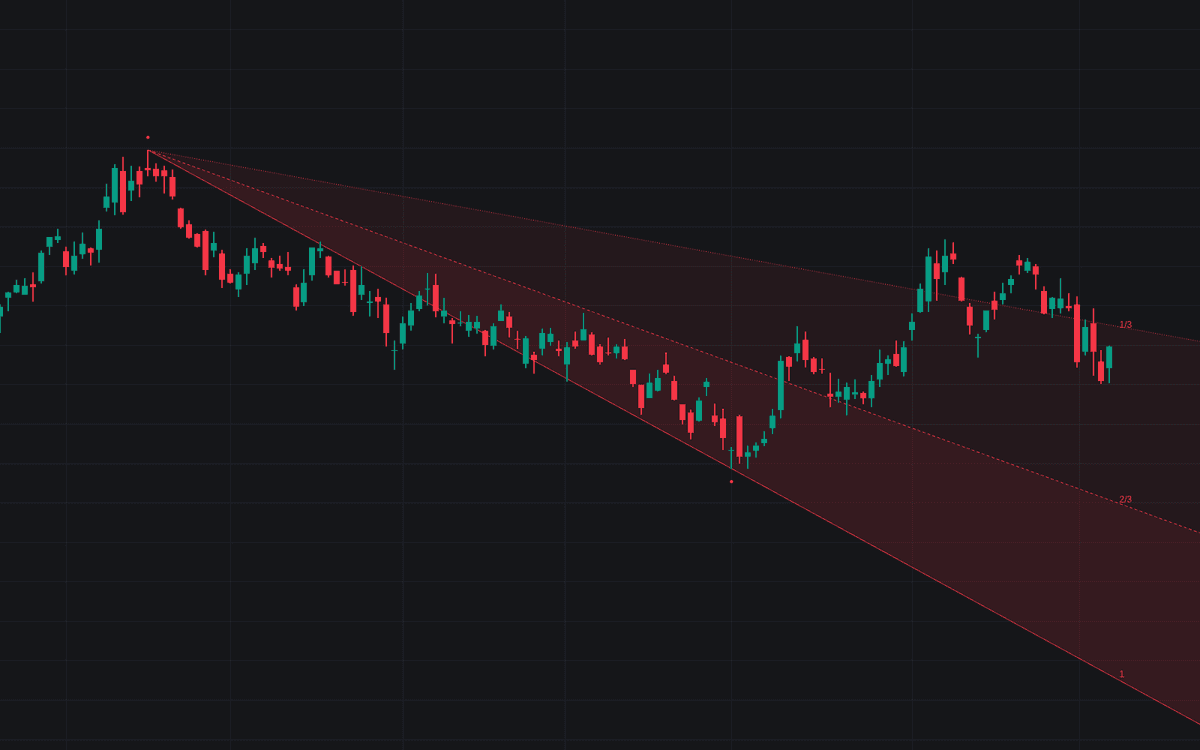

Speed Resistance Lines measures a swing and fans three rays of falling slope from its origin, the definitive clean implementation of speed resistance lines with automatic anchoring. In Auto mode the fan redraws whenever a swing leg completes, its end pivot confirming Swing Length bars after the extreme; Manual mode measures between Point A and Point B instead, optionally snapped to bar wicks.
How to Trade the Speed Resistance Lines?
- 2/3 speedline holds: a correction defended there preserves most of the trend's tempo, the cascade's primary line.
- Cascade breaks: losing the full line, then the 2/3, then the 1/3 downgrades the trend's rate step by step; the 1/3 giving way marks the pace as broken even while the swing extreme holds.
- Intrabar holds: a speedline tested within the bar closing back on the trend side shows the correction respecting the fan.
- Role-reversal retests: price returning to a broken ray and getting rejected at the close plays support-turned-resistance logic in fan form.
The fan is no better than the swing it measures; the markers show which leg was used.
Speed Resistance Lines Settings
- Anchor Mode (default Auto (Swings)): swing-detected or manual anchoring.
- Swing Length (default 25): bars each side confirming pivots in Auto mode; larger values anchor to bigger legs and re-anchor less often.
- Fan Direction (default Latest Swing): redraw on every completed leg, or keep Rising Only / Falling Only fans.
- Point A Time / Point A Price and Point B Time / Point B Price: the manual swing, set by clicking the chart.
- Snap to High/Low (default on): uses the anchor bars' wicks instead of the exact selected prices.
- Style: Speed Labels (default on), Fan Fill (default on), Anchor Markers (default on), Break Markers (default off), Line Width (default 1).
Frequently Asked Questions

Original indicatorBuilt in-house by LuxAlgo
The Library is free. Quant makes it yours.
Pull any concept or indicator into Quant: rebuild it, retune it, or turn it into a backtested strategy of your own.