Volume Signature per Pattern
 By LuxAlgoJun 14, 2026
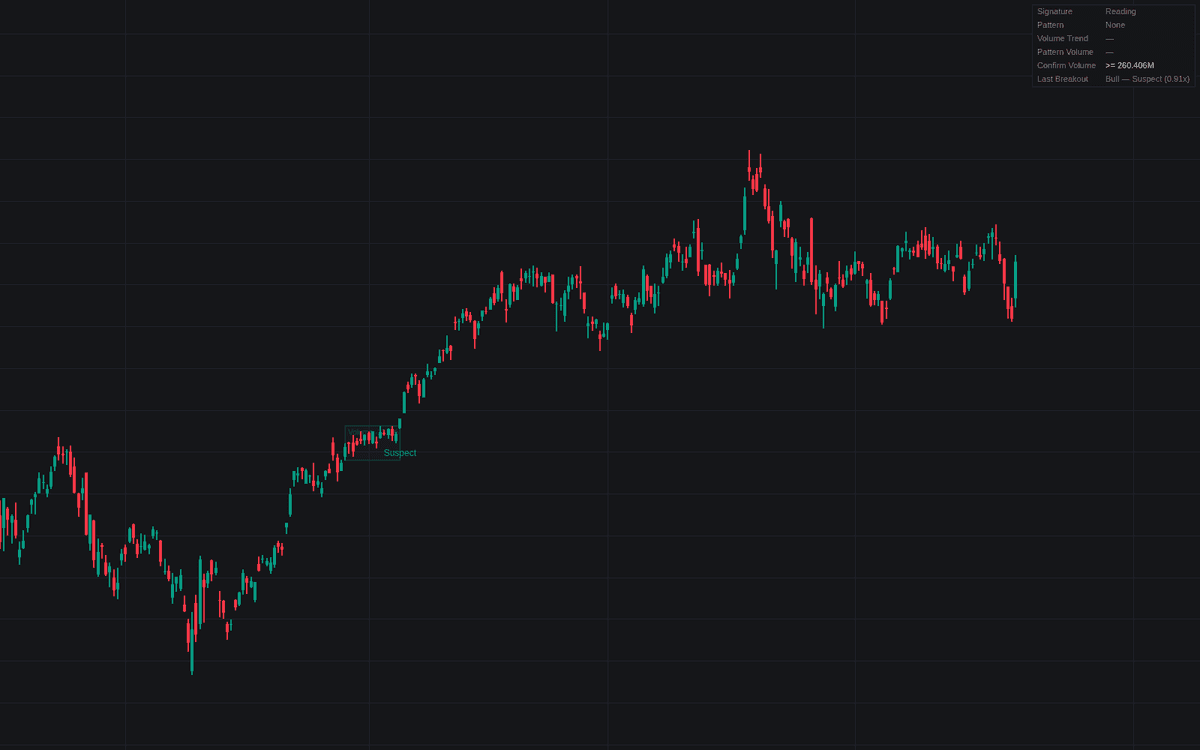

Volume Signature per Pattern automates the classical audit behind the volume signature per pattern idea. When a consolidation is flagged (a 14-bar span compressed to within 2 times the 200-bar ATR), a zone box locks onto the window's extremes and the audit begins: the least-squares drift of volume across the formation, and the expansion demanded at the break. A break on contracting formation volume and at least 1.5x average volume is tagged Confirmed; anything else is Suspect, and the resolved zone fades to match.
How to Trade the Volume Signature per Pattern?
- Confirmed tag: both legs of the textbook signature passed. Quiet while coiling, expansion at the boundary.
- Suspect tag: the signature failed on one leg or both, the breaks charting texts warn about; consider waiting for a retest.
- Formation Volume read: the running drift inside the zone. Negative and falling is the textbook shape.
- Dashboard: the live audit, the volume a breakout needs right now, and the last verdict.
Five alerts cover new consolidations and both directions of confirmed and suspect breakouts; hovering a tag shows the full audit.
Volume Signature per Pattern Settings
- Detection Window (default 14): bars whose high-low span must compress to flag a consolidation.
- Volatility Baseline (default 200): the long-run ATR yardstick of the compression test.
- Compression Threshold (default 2): span at or below this ATR multiple flags the coil.
- Breakout Basis (default Close): resolve on a close beyond the zone, or any wick with High / Low.
- Average Volume Length (default 20): the volume SMA snapshotted before the pattern and reread at the break.
- Breakout Expansion Multiple (default 1.5): what the break bar must reach versus recent average.
- Dashboard and style toggles cover zones, Show Last (default 10), the formation read, and the quality tags.
Frequently Asked Questions

The Library is free. Quant makes it yours.
Pull any concept or indicator into Quant: rebuild it, retune it, or turn it into a backtested strategy of your own.