Awesome Oscillator
 By LuxAlgoApr 13, 2020
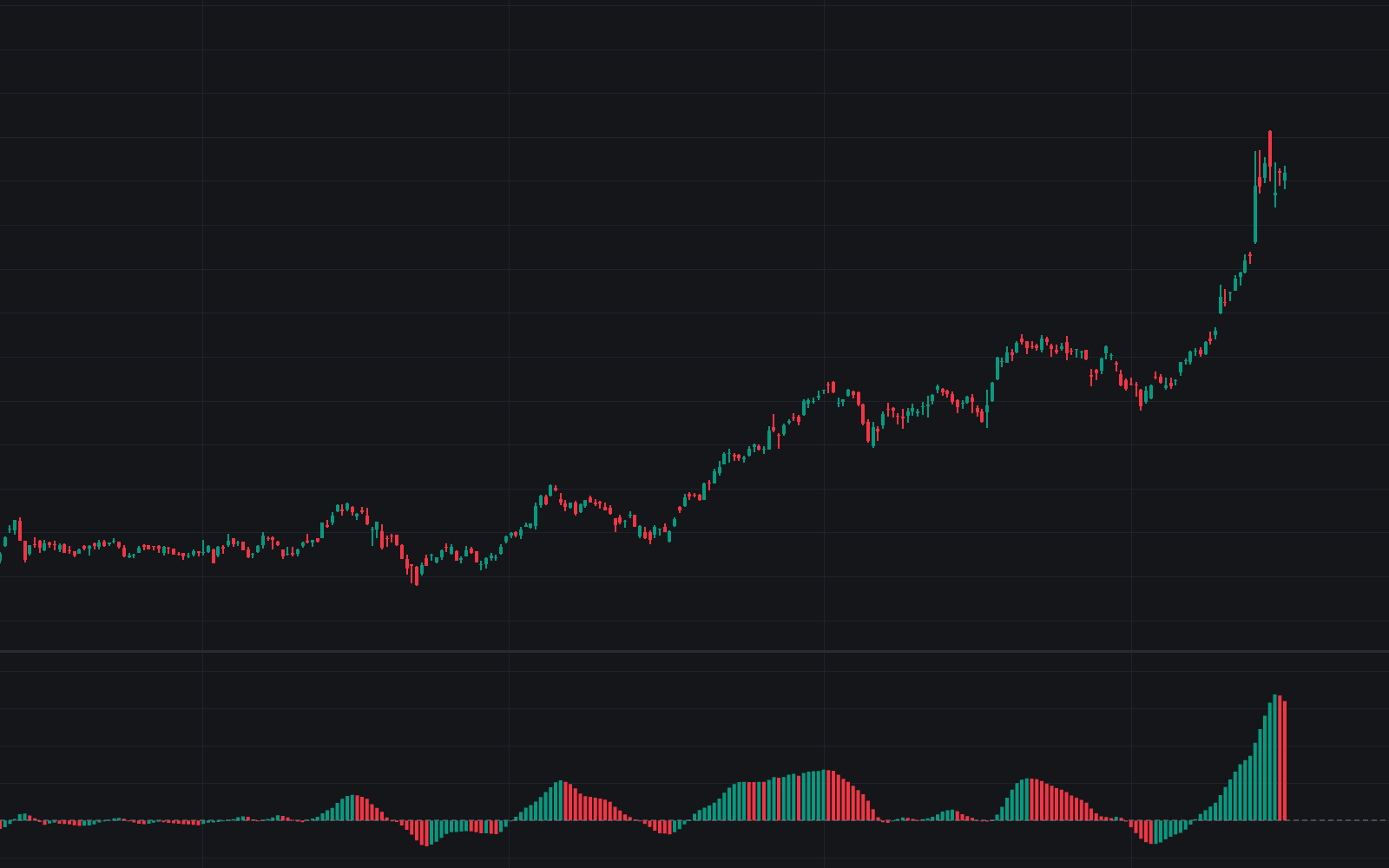

The Awesome Oscillator takes the spread between a 5-period and a 34-period simple moving average of the bar midpoint (hl2) and draws it as a histogram around a zero line: short- versus long-run momentum, one column per bar. Bill Williams fixed the 5/34 lengths and the median-price input by design, and this build honors that: the standard raw oscillator.
How to Trade the Awesome Oscillator?
- Zero-line cross: the histogram changing sign marks a regime change, the slowest signal here, and the one the built-in alerts track.
- Saucer: with the histogram positive, two falling columns followed by a rising one show a pause resolving upward; the same shape under zero is the bearish version.
- Twin peaks: a momentum double bottom: below zero, one deep trough, then a shallower one, confirmed when the next column turns up; void if the histogram pokes above zero in between. Mirrored above zero for tops.
- Divergence: a fresh price extreme met by a smaller histogram extreme shows the move running on less thrust, a caution, not a standalone reversal call.
Column color encodes bar-to-bar change (rising means the column exceeds the previous one). Color tracks acceleration, position against zero tracks regime. Two alert conditions, Zero Cross Up and Zero Cross Down, follow the regime shift.
Awesome Oscillator Settings
The 5/34 construction on median price defines this oscillator, so no numeric inputs are exposed. Altering the lengths would make a different indicator. The inputs are style only:
- Rising / Falling / Zero Line: colors for the two histogram states and the reference line; falling applies when a column is lower than or equal to the previous one.
Frequently Asked Questions

The Library is free. Quant makes it yours.
Pull any concept or indicator into Quant: rebuild it, retune it, or turn it into a backtested strategy of your own.