Parabolic Phase
 By LuxAlgoJul 25, 2026
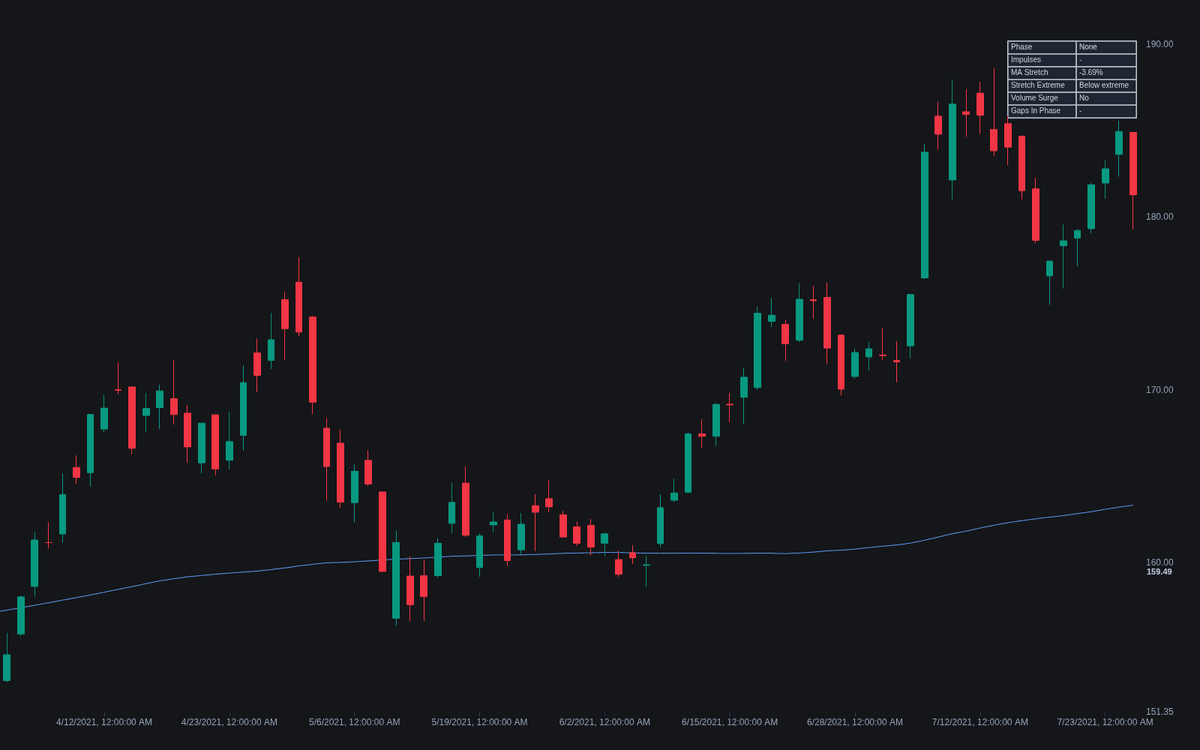

Parabolic Phase is a rules-based detector for the parabolic phase, the terminal stage where a trend's legs steepen, pullbacks shrink and the slope bends toward vertical. The first faithful implementation of the concept in the library, it demands accelerating impulses, rising structure, contracting retracements and steepening trendlines all at once, then filters candidates through a long-term stretch extreme. Confirmed phases tint the background, print a label and manage the steepest trendline in real time.
How to Trade the Parabolic Phase?
- Parabolic Phase label: the acceleration tests passed. The job shifts from judging trend health to managing the exit.
- Steepest trendline: extends right and re-draws steeper as new anchors form; a close through it ends the phase.
- Phase End label: prints with its reason: trendline break, or a pullback deeper than anything seen inside the phase.
- 50% retracement: after the end, a dotted level marks the midpoint of the accelerated move as a reference for the give-back that often follows.
The dashboard tracks the symptom set live: impulse count, MA stretch, volume surge and runaway gaps inside the phase.
Parabolic Phase Settings
- Swing Length (default 5): pivot half-window behind every leg and trendline; larger values track bigger structures with more lag.
- Accelerating Impulses (default 3): consecutive legs that must pass the acceleration tests.
- Acceleration Factor (default 1.2): minimum slope ratio between successive impulses.
- Require MA Stretch Extreme (default on), with Long-Term MA (default SMA, length 200), Stretch Percentile (default 95) and Stretch History (default 500).
- Require Volume Surge (default off), with Volume Average (default 20) and Mult (default 1.5).
- Style toggles: trendlines, retracement level, gradient fill, background, MA plot, all on by default.
Frequently Asked Questions

The Library is free. Quant makes it yours.
Pull any concept or indicator into Quant: rebuild it, retune it, or turn it into a backtested strategy of your own.