IPO Base
 By LuxAlgoMay 3, 2026
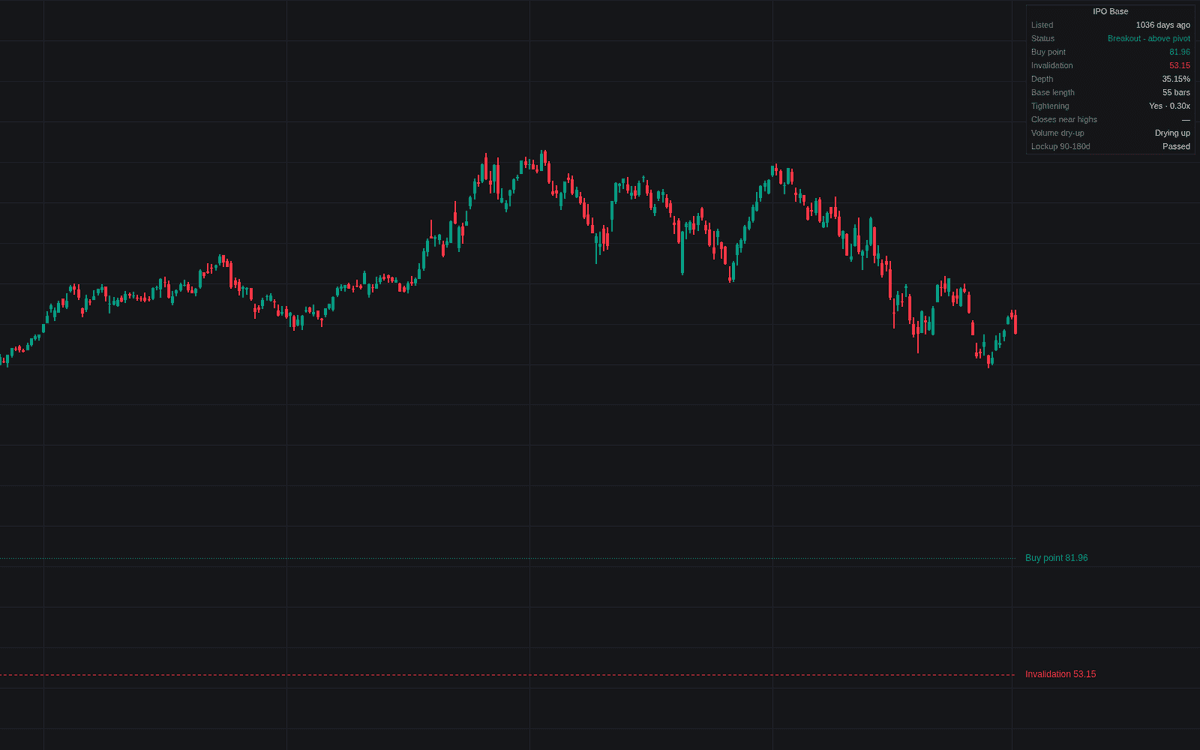

IPO Base tracks a recent listing's first consolidation through a full state machine, from post-debut pullback to defined base to breakout. The IPO base is the deliberate exception to standard base rules, and the build relaxes them the same way: a 10-bar minimum, a depth floor with no ceiling, and the first chart bar treated as the debut.
How to Trade the IPO Base?
- Defined base: buy point at the base high, invalidation at the base low: a watchlist flag, not an automatic entry.
- Volume-confirmed breakout: a triangle marks a close above the base high with volume 40% over average, the conventional buy point.
- Quiet breakout: a circle marks a clear without the pickup. Thin floats push through on noise, so treat it as unconfirmed.
- Shakeout vs invalidation: a snap-back probe below the low prints a diamond, a supply test; one that holds prints a cross, and the base rebuilds from the same high.
Best on daily charts of recent listings; the dashboard reads like a watchlist row, from depth and tightening to volume dry-up and the lockup countdown.
IPO Base Settings
- Recent Listing Window (Days) (default 365): detection arms only while the listing is younger than this.
- Lockup Window (Days) (default 90 to 180): bounds of the shaded insider-lockup expiration window.
- Pullback Confirmation (Bars) (default 5) and Minimum Pullback Depth (%) (default 5): when a decline off the debut high starts a base.
- Minimum Base Length (Bars) (default 10): bars before the range earns a buy point.
- Shakeout Snapback (Bars) (default 2): closes below the base low tolerated before invalidation.
- Volume Average Length (default 50) and Volume Pickup Above Average (%) (default 40): the breakout-confirmation yardstick.
- The dashboard, level price tags, event markers, and lockup shading are display options.
Frequently Asked Questions

Original indicatorBuilt in-house by LuxAlgo
The Library is free. Quant makes it yours.
Pull any concept or indicator into Quant: rebuild it, retune it, or turn it into a backtested strategy of your own.