Reflex/Trendflex
 By LuxAlgoJul 11, 2026
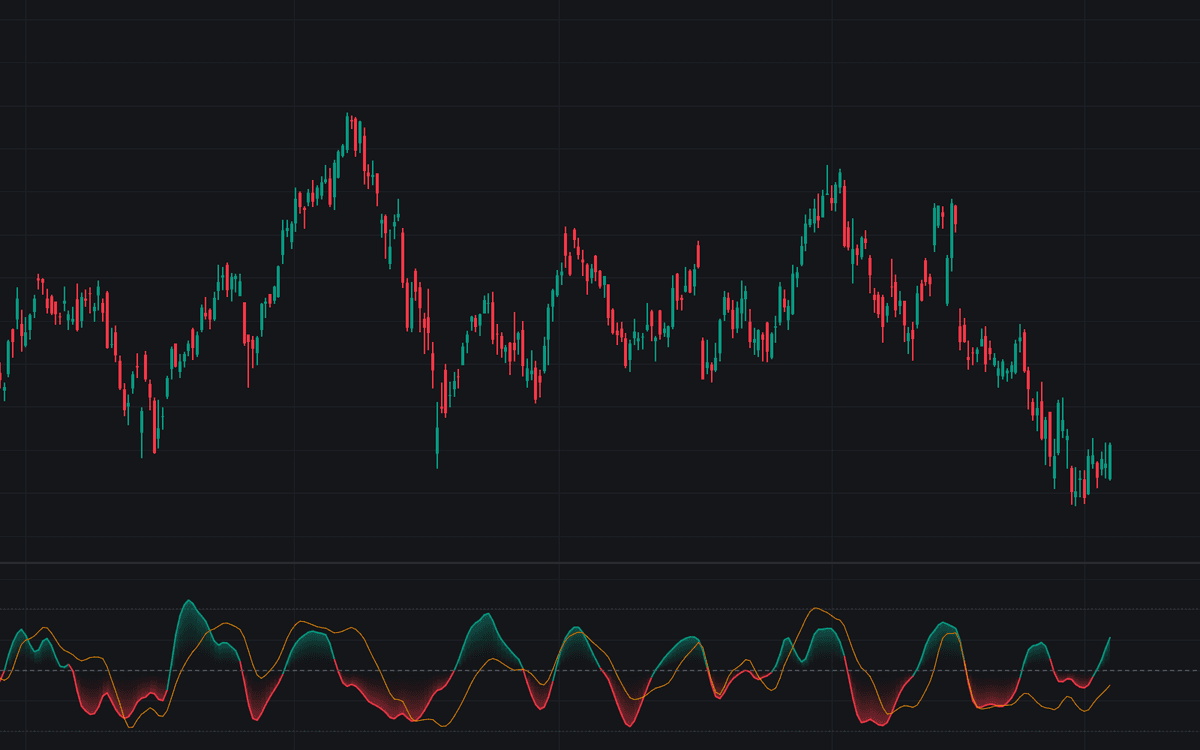

Reflex/Trendflex puts John Ehlers' 2020 oscillator pair on one pane, splitting the cycle read from the trend read. The source first runs through a SuperSmoother at half the chosen period; the Reflex and Trendflex calculations then average the filtered series' deviations from two references: a straight line across the window for Reflex, which strips trend and isolates cycle swings, and the current filter value for Trendflex, which keeps trend in. Each sum is self-normalized, so both read in comparable units around zero with dotted bands at +2 and -2 marking typical extremes.
How to Trade the Reflex/Trendflex?
- Reflex zero cross: the cycle inflection. Reflex turns quickly and suits timing; crossings are alerted in both directions.
- Trendflex sign: the regime. Positive argues sustained upward pressure, negative the reverse, with its own zero-cross alerts.
- Trend-aligned combination: Reflex crossing above zero while Trendflex is positive (and the bearish mirror) carries dedicated alerts (timing from the cycle, permission from the trend).
- Divergences: optional regular divergences on the chosen oscillator draw dashed lines with Bull and Bear tags, warnings rather than signals.
Reflex/Trendflex Settings
- Length (default 20): the lookback window; the straight-line reference and both deviation averages span it, and the SuperSmoother runs at half this period. Shorter windows respond faster but raise the false-cross count.
- Source (default close): the series fed to the filter.
- Show Divergences (default off) with Divergence Oscillator (default Reflex) and Pivot Lookback (default 5): detection lags by the pivot length.
- Style: visibility and colors per oscillator, plus Gradient Fill (default Reflex; also Trendflex, Both or None).
Frequently Asked Questions

Original indicatorBuilt in-house by LuxAlgo
The Library is free. Quant makes it yours.
Pull any concept or indicator into Quant: rebuild it, retune it, or turn it into a backtested strategy of your own.