Upthrust After Distribution
 By LuxAlgoJun 26, 2026
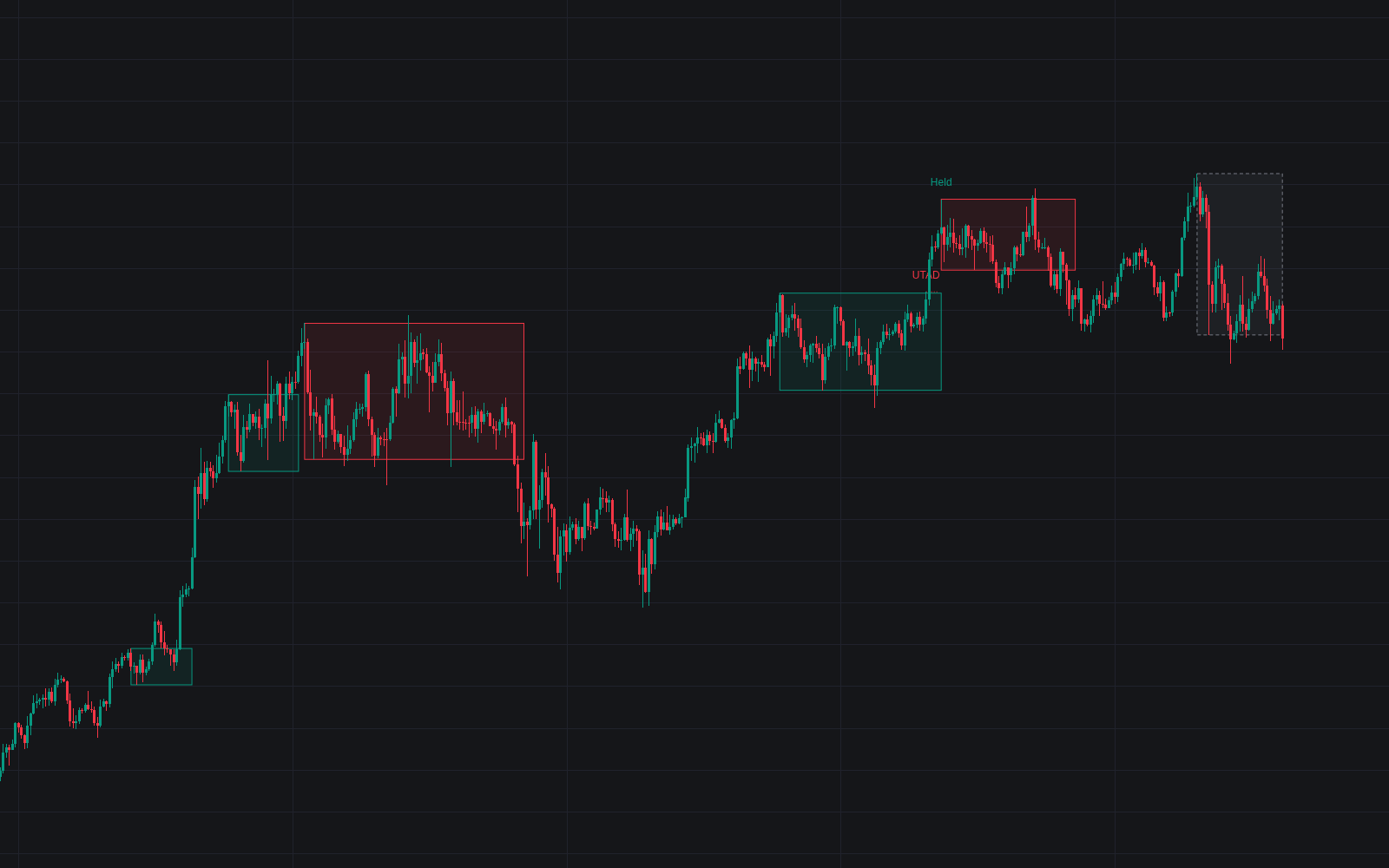

Upthrust After Distribution works the full distribution sequence so its terminal event can be called honestly. A stall high atop a qualified advance opens a candidate; once the pause becomes an established, boundary-tested range, a late break above resistance failing back inside within the failure window earns the upthrust after distribution label. The UTAD high extends as a dotted invalidation level; a projection sits one range height below support.
How to Trade the Upthrust After Distribution?
- UTAD label: the failed terminal break (mature, boundary-tested range, expanded participation); earlier pokes count as failing rallies, never UTADs.
- Test label: a weak swing rolling over near the UTAD high on lower volume and narrower spread, the classic entry evidence, stops just above; alerted.
- SOW label: support breaking or a wide, heavy down bar closing deep in the range corroborates markdown; the box resolves bearish.
- Held label: acceptance above the broken level refutes the reading. The range resolves bullish, the projection is removed.
Upthrust After Distribution Settings
- Advance Lookback (Bars) (default 50), Minimum Advance (xATR) (default 2.0), ATR Length (default 14): the required markup leg.
- Swing Length (default 5), Minimum Range Duration (Bars) (default 15), Terminal Maturity (Bars) (default 40), Minimum Boundary Tests (default 1), Support Grace (Bars) (default 3): the range's structural requirements.
- Failure Window (Bars) (default 5), Breakout Volume Multiple (on, default 1.2), Volume Average Length (default 20): breakout-versus-UTAD separation.
- Test Proximity (% of Range Height) (default 25), Test Swing Length (default 2), Shrinking Volume & Narrower Spread (on), Wide Down-Bar (xATR) (default 1.5): post-UTAD evidence.
- Display: Show Range Box, Show UTAD High Level, Show Downside Projection (all on), Range Fill Transparency (default 90).
Frequently Asked Questions

Original indicatorBuilt in-house by LuxAlgo
The Library is free. Quant makes it yours.
Pull any concept or indicator into Quant: rebuild it, retune it, or turn it into a backtested strategy of your own.