Monte Carlo Mean Reversion Heatmap
 By LuxAlgoFeb 17, 2026
Monte Carlo Mean Reversion Heatmap is an indicator on Vela, our next-generation charting platform, written in Pine Script®.
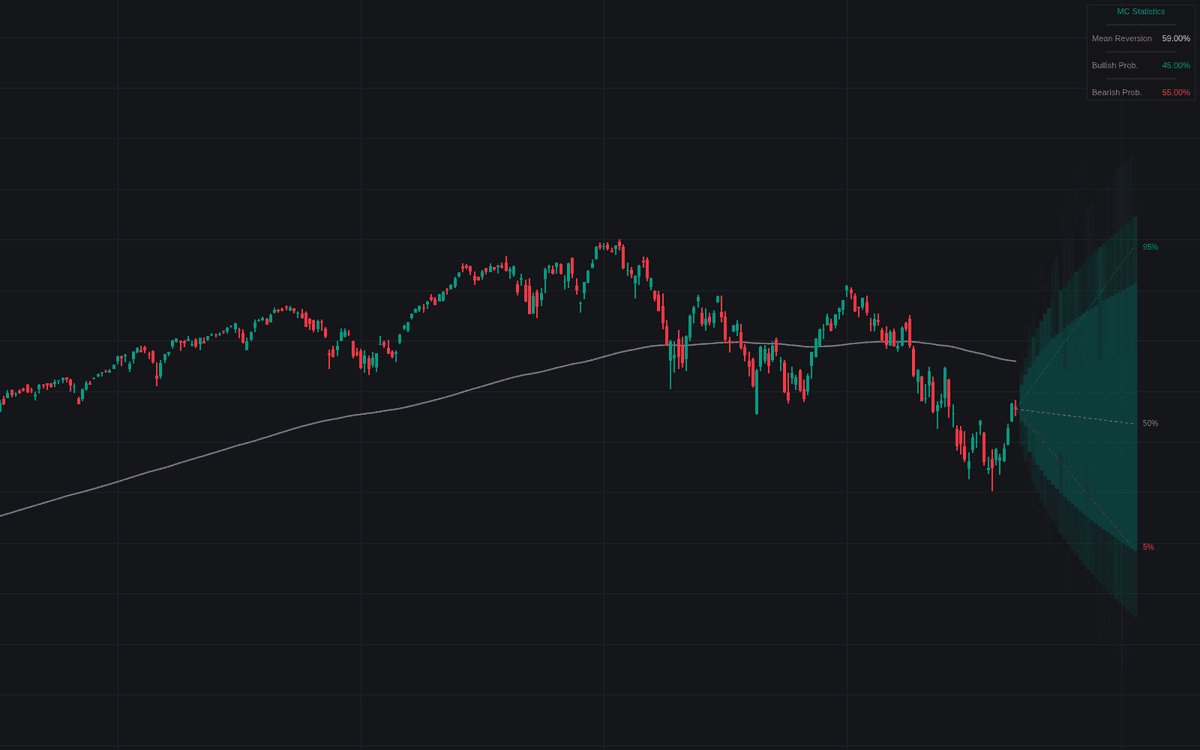

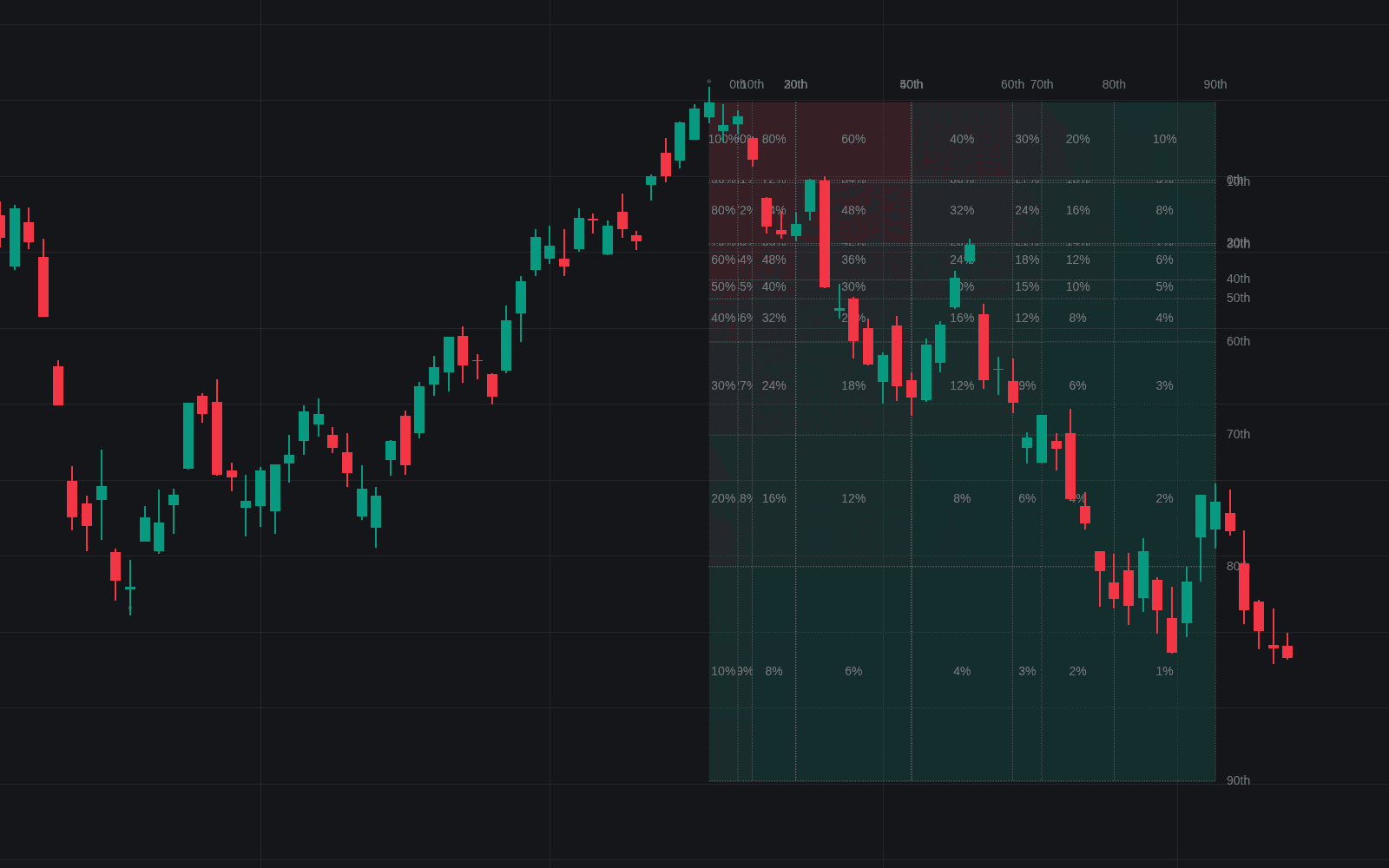
The Monte Carlo Mean Reversion Heatmap turns "price looks stretched" into a number. It projects a forward probability cloud from 100+ simulated price paths (Geometric Brownian Motion runs built from historical log-volatility, with optional drift taken from the EMA slope) and counts how many of those paths touch or cross the current EMA value inside the projection window, reported as a Mean Reversion % on its dashboard.
How to Trade the Monte Carlo Mean Reversion Heatmap?
- Mean Reversion % above 70: statistical overextension, conditions that favor counter-trend setups targeting a return to the mean.
- Below 30: strong drift or elevated volatility; short-term reversion is unlikely, as in parabolic or breakout phases.
- Beyond the 5% or 95% percentile line: price sits in territory reached in roughly one of twenty modeled scenarios, a profit-taking and exhaustion watchlist, not an automatic fade.
- The 50% median line: drawn from the current close to the median simulated end price, a central trend reference and a benchmark for whether price is out- or under-running expectations.
- Heatmap shading: darker zones hold more simulated paths; narrow clouds signal controlled volatility, wide ones elevated dispersion.
Monte Carlo Mean Reversion Heatmap Settings
- Mean Length: the EMA period used as the reversion target: shorter for fast strategies, longer for swing horizons.
- Simulations: number of random paths; more improves statistical smoothness at a performance cost.
- Projection Length / Volatility Lookback: the forward window and the history used to estimate volatility.
- Include Drift: folds the EMA slope into the simulation; disabled, the model runs as a pure volatility random walk.
- Price Bins, Show Percentile Lines, and dashboard controls handle resolution and display.
Frequently Asked Questions
Free to use
Run it on Vela. Go further with a paid plan.
- Up to 500 strategy alerts, with webhook automation
- Up to 10× the chart history of Free
- Orderflow lookback up to full history
- More Quant usage to customize it, plus extra usage when you need it
- Futures data alongside crypto, stocks, forex and commodities
Also works on

Related indicators
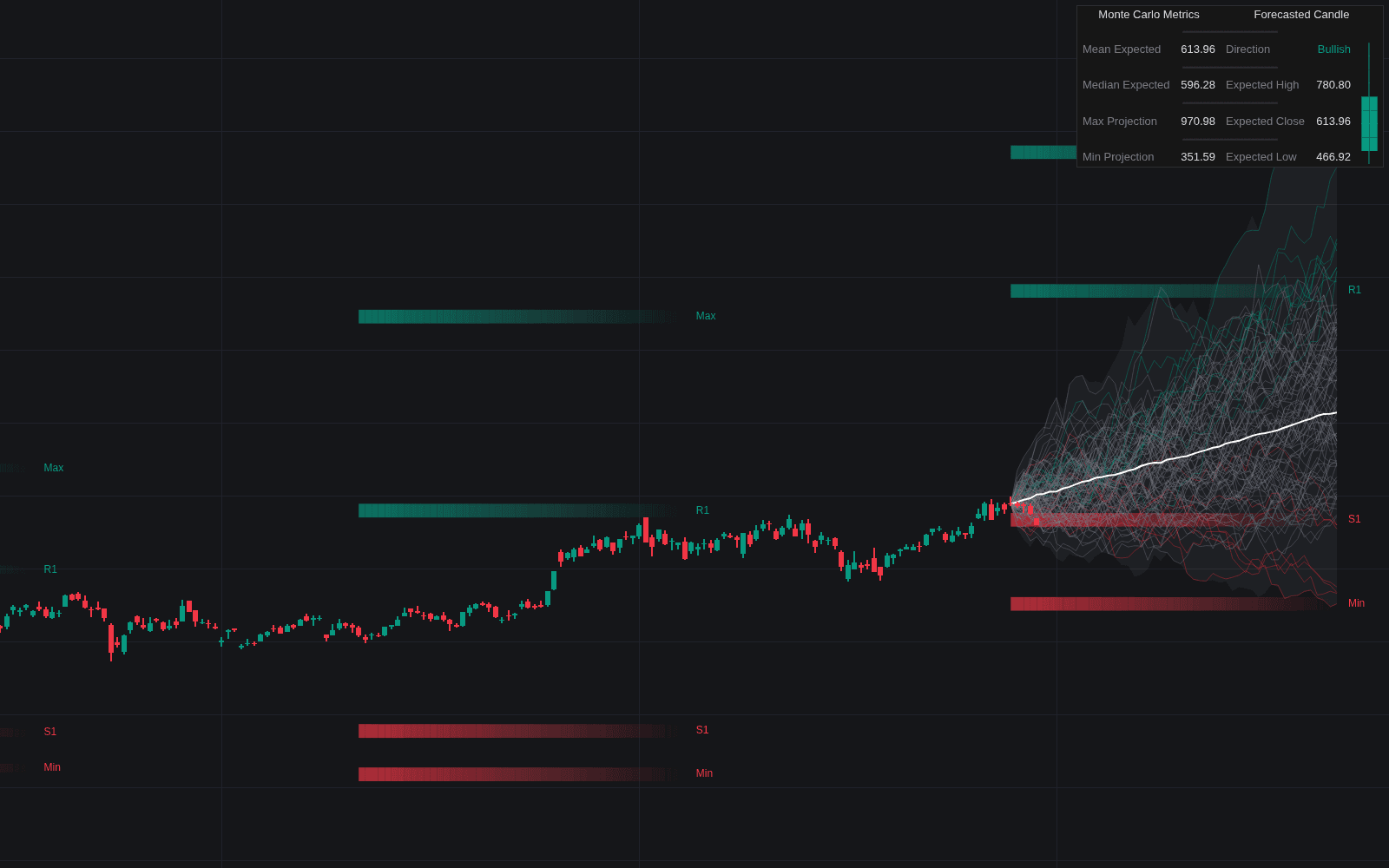
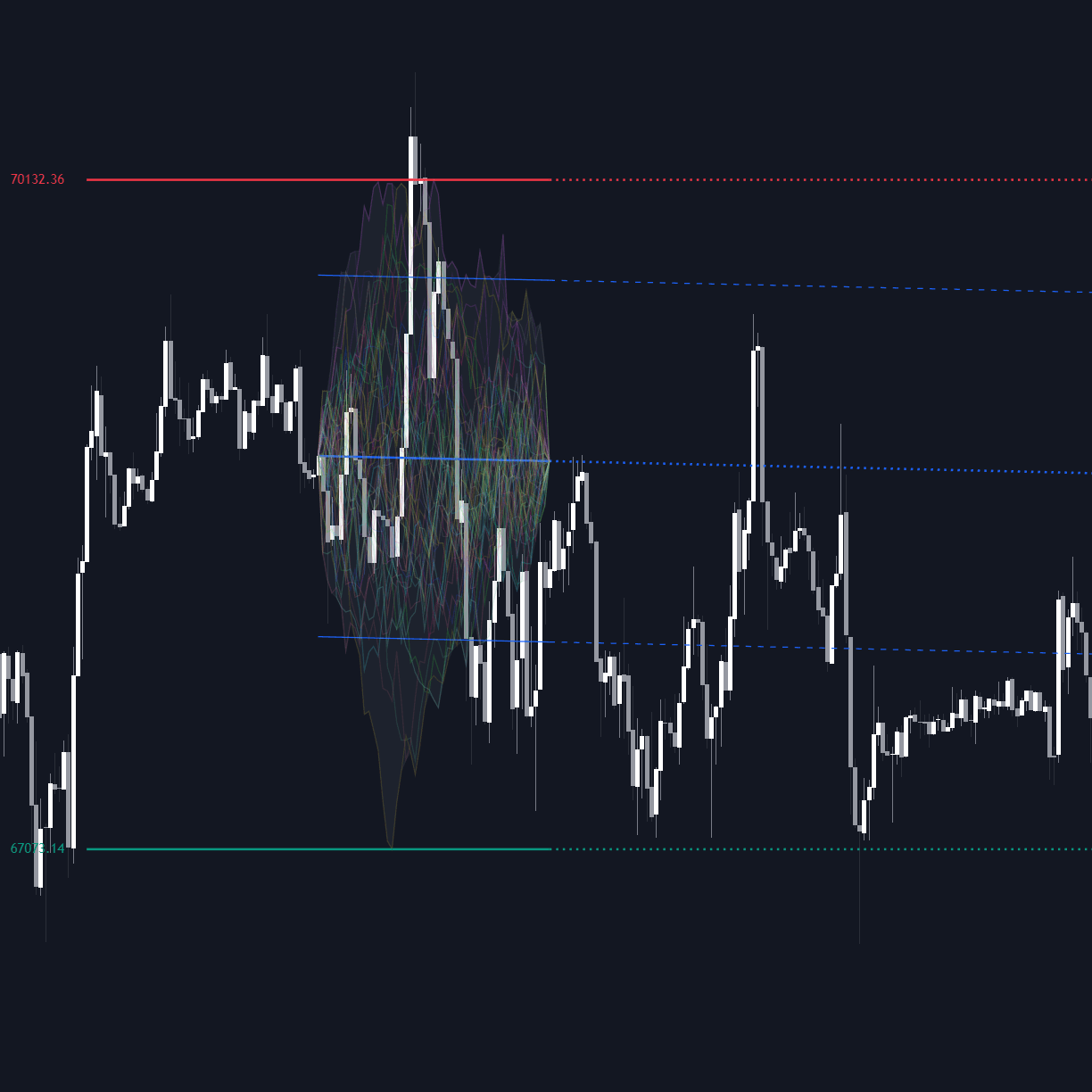
All 5 Monte Carlo Price Paths indicators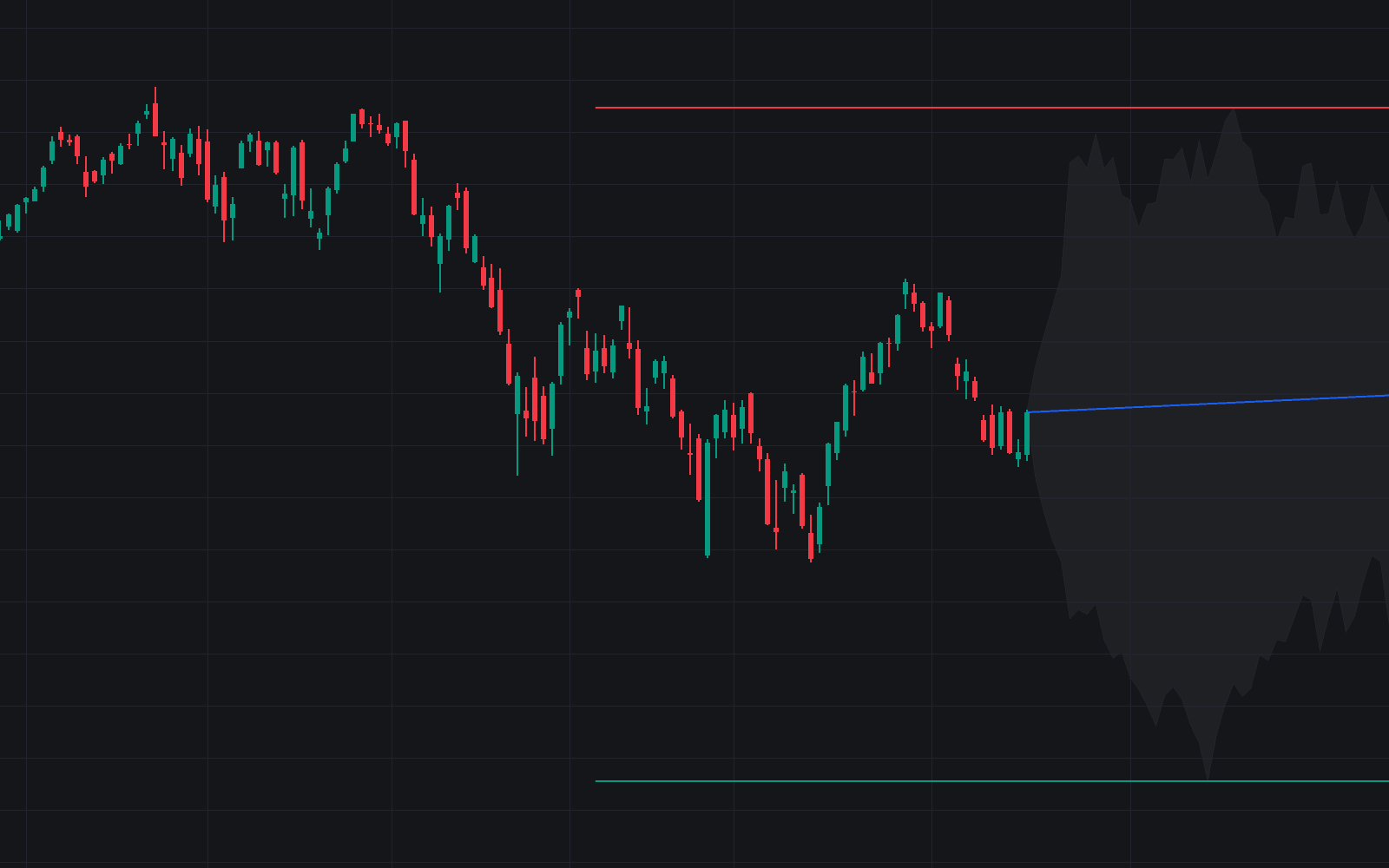
Run it on Vela. Make it yours with Quant.
Open this indicator free on Vela, our next-generation charting platform. Then ask Quant, our coding agent built into Vela, to retune it or turn it into a backtested strategy of your own.