1-2-3 Reversal
 By LuxAlgoMay 29, 2026
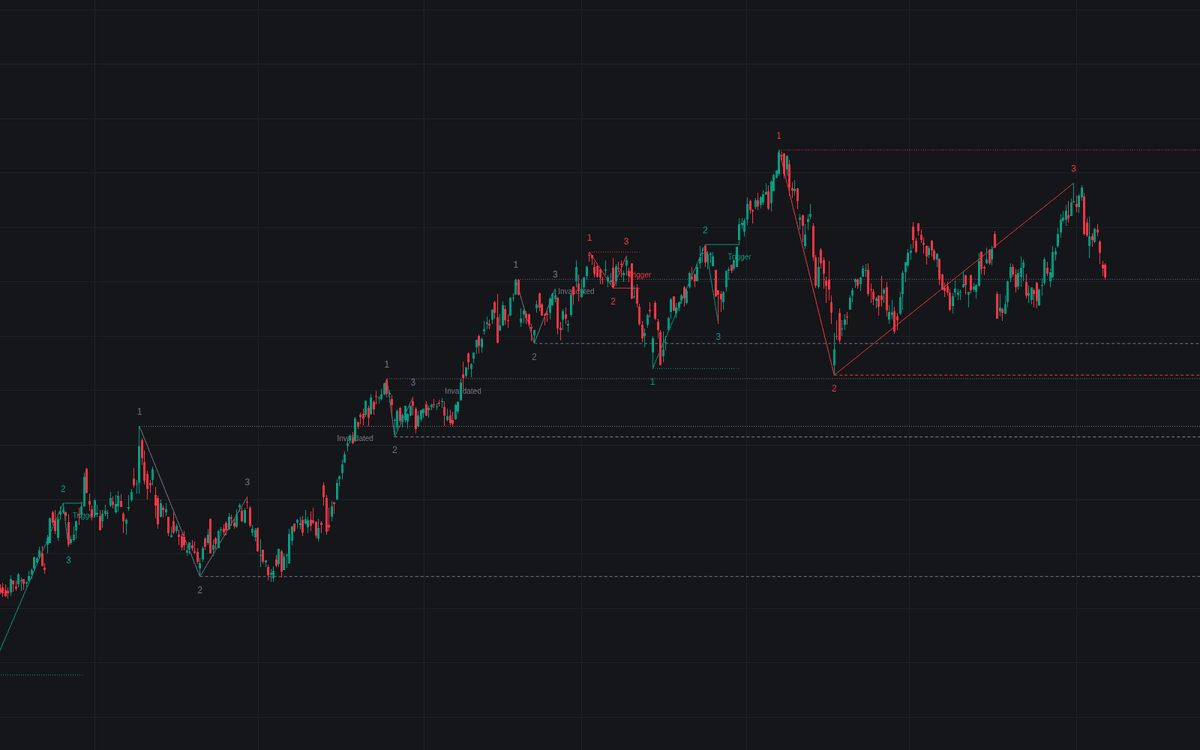

1-2-3 Reversal detects, numbers and manages the classic three-point trend-change setup directly on the chart, the definitive clean build of the 1-2-3 reversal. An objective swing rule pins points 1, 2 and 3, the point 2 trigger level extends right as a dashed line, the point 1 invalidation level as a dotted one, and event labels tag the bar that completes or kills each setup. One candidate is tracked at a time: bullish setups hunted after a decline, bearish after an advance.
How to Trade the 1-2-3 Reversal?
- Trigger level broken: a break of point 2 (close or wick, per the break rule) completes the pattern, prints a Trigger label, turns the dashed level solid and flips the tracked trend.
- Invalidation level hit: a fresh extreme beyond point 1 kills a formed candidate; with the keep option on, it fades to the invalidated color as a record.
- Stop placement: point 1 is full invalidation; the optional point 3 level shows the tighter placement that risks less but gets clipped by noise more often.
The build only starts counting once a trend worth reversing exists, filtering the endless candidates a sideways market prints. It slots in beside the other market structure tools reading the same pivots.
1-2-3 Reversal Settings
- Swing Length (default 5): bars on each side a high or low must dominate to confirm a pivot. Around 2 gives a Williams-fractal-style rule; larger values build slower structures.
- Point 2 Break Rule (default Close): Close demands a bar close beyond the trigger, filtering false pokes; Wick accepts any trade beyond it.
- Display toggles: Point Labels & Legs, Trigger & Invalidation Levels, Event Labels and Keep Invalidated Setups (all on) plus Point 3 Stop Level (off) control what stays visible.
Frequently Asked Questions

The Library is free. Quant makes it yours.
Pull any concept or indicator into Quant: rebuild it, retune it, or turn it into a backtested strategy of your own.