Chaos Weighted RSI
 By LuxAlgoFeb 9, 2026
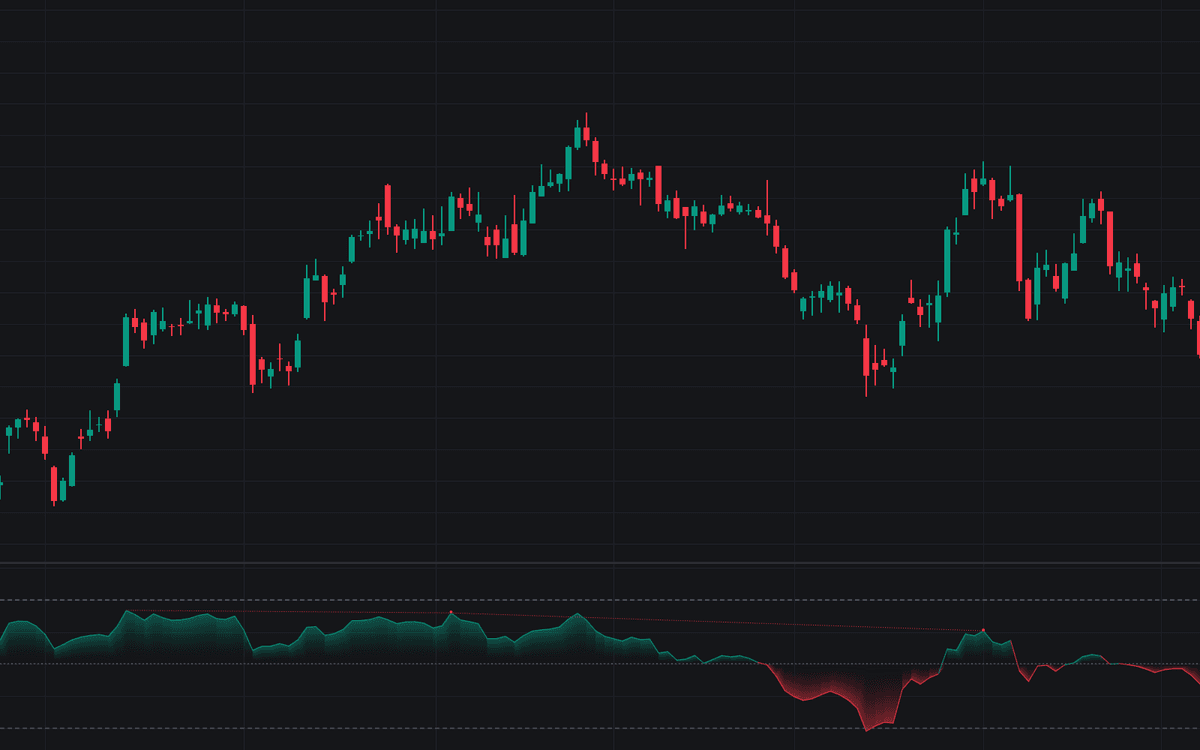

Chaos Weighted RSI is a Relative Strength Index that decides for itself how much smoothing each moment deserves. A Sevcik-method fractal dimension reading scores how disorderly recent price action is: chaotic tape slows the oscillator down to mute whipsaws, while efficient trends speed it back up so momentum is tracked closely. The familiar 70/30 levels, a color-shifting line, and automatic divergence detection round out the build.
How to Trade the Chaos Weighted RSI?
- Green line above 50: bullish momentum dominance; red below 50 flags the bearish side.
- 70/30 extremes: classic overbought and oversold territory, with gradient fills emphasizing how deep an excursion runs.
- Regular divergences: pivot-confirmed bullish and bearish divergences draw with markers and connecting lines, flagging potential reversals or momentum shifts.
The adaptive weighting is the point: a chaos value scaled between 0 and 1 drives the smoothing factor, so the same chart gets a slow, stable oscillator during consolidation and an agile one during expansion. Divergences inherit that stability: they form on self-smoothed pivots rather than on every minor fluctuation.
Chaos Weighted RSI Settings
- RSI Length: base calculation period before chaos weighting applies.
- Disorder Lookback: window used to measure chaos via the Fractal Dimension Index.
- Weight Sensitivity: how strongly chaos bends the smoothing. Higher values smooth harder in disorderly markets.
- Divergence Strength: bars required on each side of a pivot; larger values confirm fewer, longer-horizon divergences.
- Show Bullish/Bearish Divergence: display toggles, alongside fill-color and background-transparency controls.
Frequently Asked Questions
Free indicator
Get free access to this indicator on the platforms below.

The Library is free. Quant makes it yours.
Pull any concept or indicator into Quant: rebuild it, retune it, or turn it into a backtested strategy of your own.