STARC Bands
 By LuxAlgoMar 27, 2026
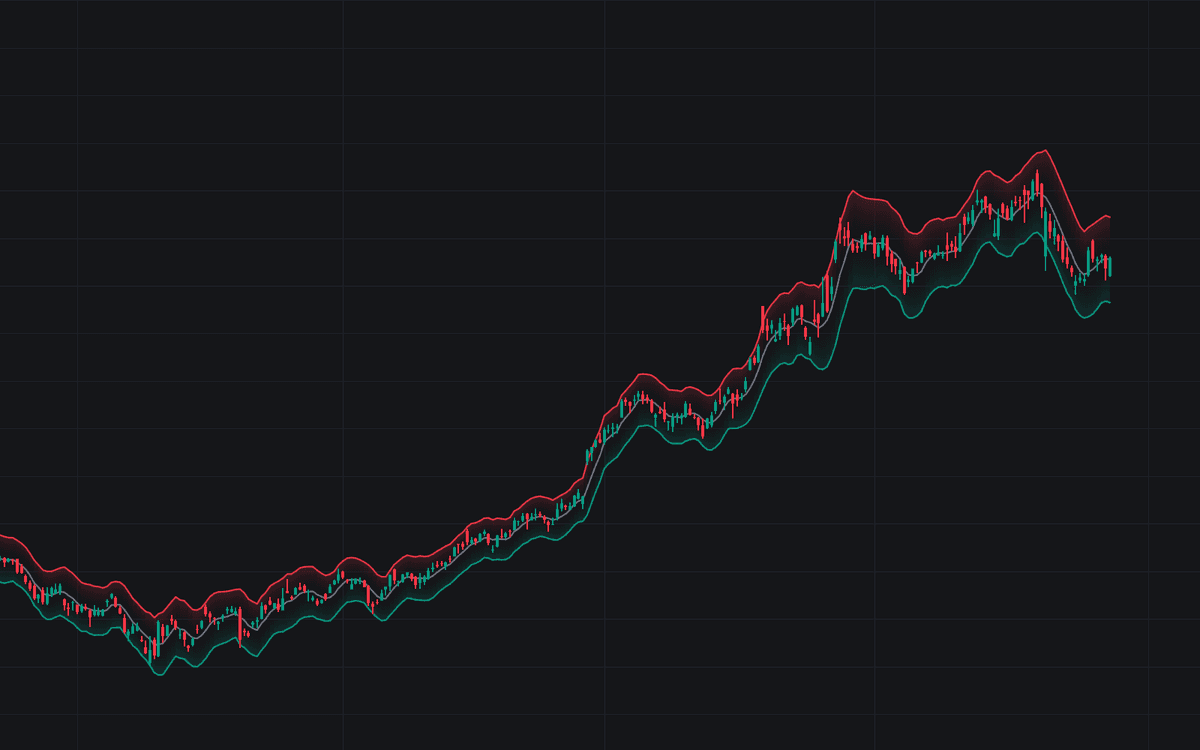

STARC Bands rebuilds Stoller's range channel with the contrarian reading intact, the definitive clean version of STARC Bands for the Library. A deliberately short simple average forms the centerline and the bands sit a chosen ATR multiple above and below, so the channel expands when the tape runs hot and contracts when it goes quiet, gaps included.
How to Trade the STARC Bands?
- Band tag: price pushing into a band has already traveled beyond its recent typical range. The level warns against fresh entries in that direction rather than inviting a chase.
- Single-tag rejection: a tag closing back inside argues for rotation toward the centerline, the countertrend setup the channel was built to frame.
- Band-hugging closes: a run of closes pressed against one band marks a trend willing to stay extended; put fades on hold while that persists.
- Centerline cross: the stretch has fully reset at the neutral reference, and centerline-trailing exits are triggered.
The band offset is published to the data window as multiplier × ATR, doubling as a stop-distance and sizing reference alongside the other volatility studies.
STARC Bands Settings
- Source (default close): the series the centerline averages; the offset always comes from true range.
- Average Length (default 5): the short centerline that keeps a band touch meaning stretch against the immediate swing rather than the broader trend.
- ATR Length (default 15): lookback of the range estimate behind the offset.
- ATR Multiplier (default 2): how far out the bands sit: far enough that a touch is genuine stretch, close enough that touches happen.
- Outer Extreme Bands (default off) with Multiplier (default 3): a second, lighter ring marking exceptional range.
- Channel Gradient Fill (default on) and Band Tag Markers (default off): presentation; the alerts fire either way.
Frequently Asked Questions

Original indicatorBuilt in-house by LuxAlgo
The Library is free. Quant makes it yours.
Pull any concept or indicator into Quant: rebuild it, retune it, or turn it into a backtested strategy of your own.