Wave Extension
 By LuxAlgoJul 5, 2026
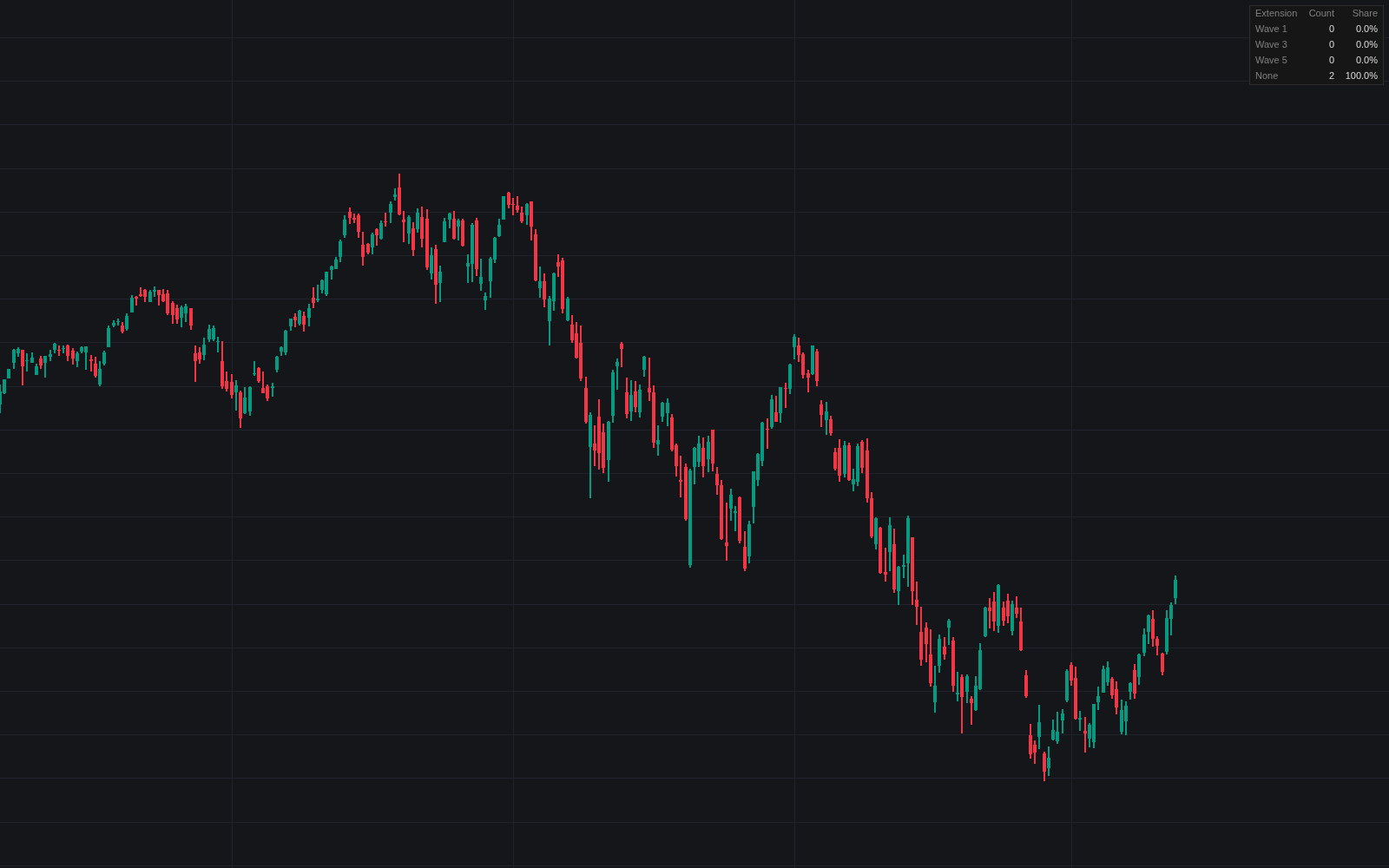

Wave Extension identifies which motive wave of an impulse did the traveling and turns the guidelines around that fact into drawings, the first faithful detector built on the wave extension. Confirmed swings are validated as five-wave impulses under the hard rules; an extension is labeled when the largest motive wave reaches the ratio threshold over the next largest and divides internally into five clean sub-waves.
How to Trade the Wave Extension?
- Extended third underway: once wave 3 dwarfs wave 1 at the wave 4 pivot, dotted targets set wave 5 at wave-1 equality and at 0.618 of the 0-3 distance. Expect a normal fifth.
- Extended 5th watch: waves 1 and 3 near equality means neither extended; since most impulses contain one extension, the label warns against fading strength at the first hesitation.
- Post-extension zone: after a fifth-wave extension, a shaded box marks the second sub-wave's territory, the area the ensuing correction traditionally revisits, alerted when price returns.
The dashboard tallies impulses by extended wave. A dominant None count invites re-examining the structures.
Wave Extension Settings
- Swing Length (default 10): bars each side confirming the swings that define the five waves, effectively the degree read.
- Sub-wave Length (default 4): finer zigzag inspecting the extended wave's internal subdivision; kept below Swing Length.
- Extension Ratio (default 1.618): minimum multiple over the next largest motive wave; lower to flag milder elongation.
- Require Internal Five-Wave Subdivision (default on): demand at least four interior sub-pivots before labeling.
- Waves 1-3 Equality Tolerance (%) (default 10): the closeness raising the extended-fifth watch.
- Tools (all on): Wave 5 Targets While Wave 3 Extends, Extended Fifth Watch, Post-Extension Retracement Zone, Extended Wave Sub-Structure and Extension Statistics.
Frequently Asked Questions

Original indicatorBuilt in-house by LuxAlgo
The Library is free. Quant makes it yours.
Pull any concept or indicator into Quant: rebuild it, retune it, or turn it into a backtested strategy of your own.