One-timeframing
 By LuxAlgoMar 12, 2026
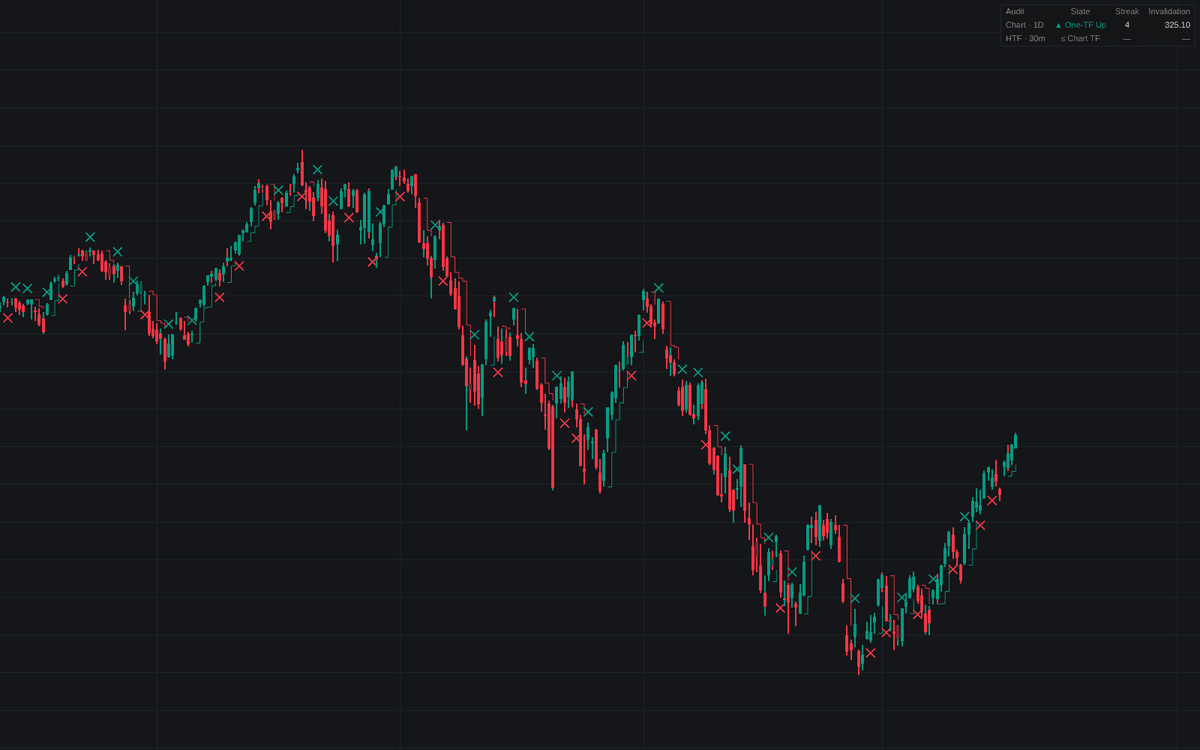

One-timeframing audits completed periods for the auction-theory control test of one-timeframing: an up sequence holds every prior period's low, a down sequence every prior high. The audit runs twice (on each chart bar and on a higher timeframe bracket, 30-minute by default, accumulated from chart bars so nothing repaints) and shows as bar coloring, rolling invalidation step lines, break crosses, a bracket background tint, and a dashboard with each audit's state, streak, and invalidation price.
How to Trade the One-timeframing?
- One-TF Up / One-TF Down: one side is running the auction. Trade with it rather than fade it.
- Invalidation Level: the prior period's opposite extreme, rolled forward each completed period: the first trade through it ends the sequence; the natural stop line.
- Break markers: a cross prints at the violated side; a close beyond upgrades the break from probe to acceptance, each with its own alert.
- HTF background: the bracket is one-timeframing. Entries against it fight the side in control.
Inside periods (holding the extreme without extending the range) tint lighter: the sequence survives but has stalled. Alerts cover starts, continuations, breaks, and accepted breaks on both audits, a staple of the volume and order-flow family.
One-timeframing Settings
- Minimum Sequence Length (default 2): completed periods before a sequence counts as active.
- Equal Extreme Holds (default enabled): a period that only matches the prior extreme keeps the sequence alive; disable for the stricter reading.
- Run Higher Timeframe Audit (default enabled) and Bracket Timeframe (default 30).
- Show Dashboard (default enabled), plus Position and Size.
- Style toggles: Color Bars, Invalidation Level, HTF Invalidation Level, Break Markers, HTF Background, all enabled by default.
Frequently Asked Questions

The Library is free. Quant makes it yours.
Pull any concept or indicator into Quant: rebuild it, retune it, or turn it into a backtested strategy of your own.