Concept
Whale-wallet Tracking
Whale-wallet Tracking is a Breadth, Sentiment & External Data concept. The Library holds 1 implementation, a working definition you can pull into Quant.
Top Whale-wallet Tracking indicator
The top custom implementation, built on the original standard Whale-wallet Tracking formula.
1 total
From studying Whale-wallet Tracking to trading it: take the implementation below into Quant and backtest it instantly.
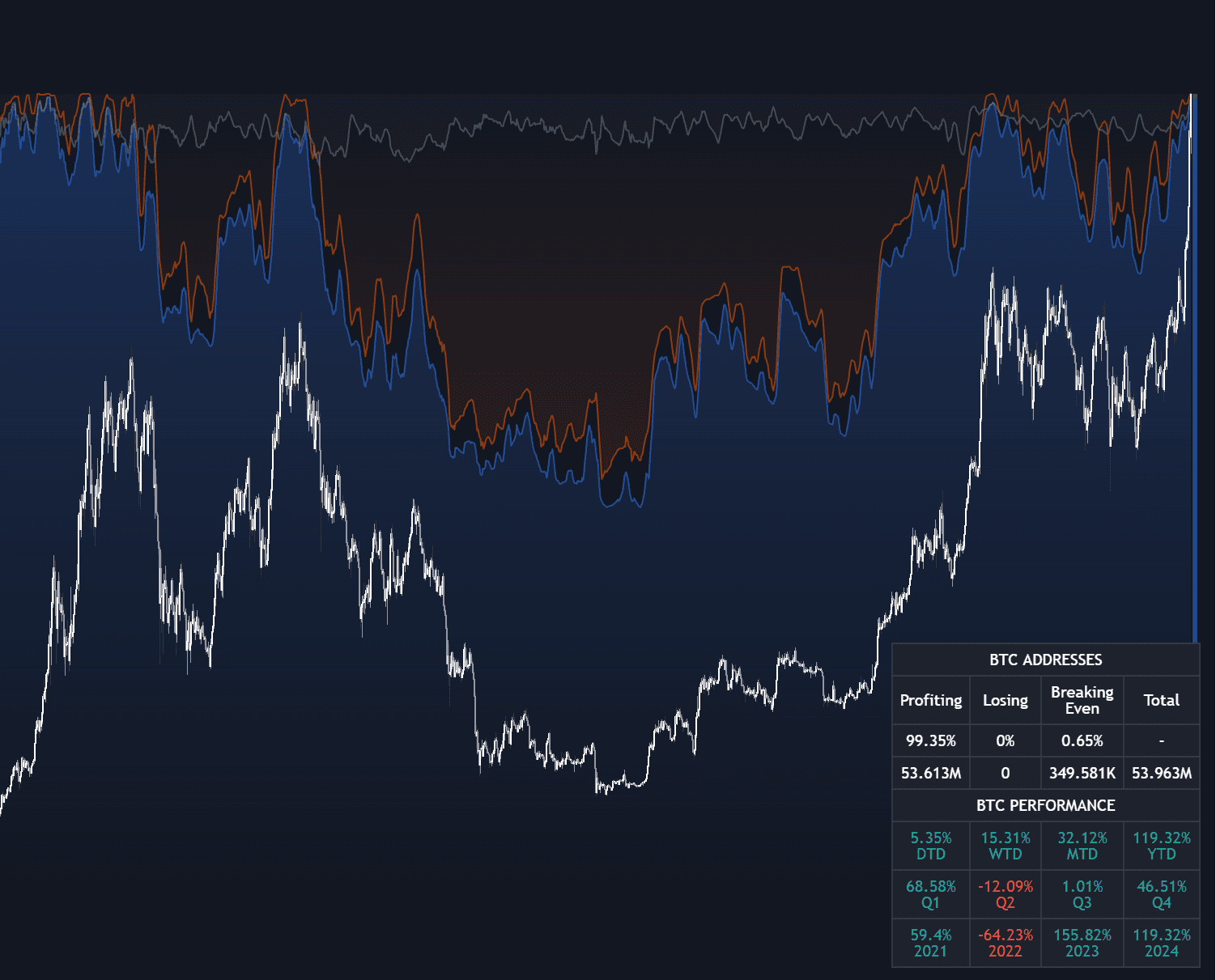
What is Whale-wallet Tracking?
Whale-wallet tracking is the practice of monitoring blockchain addresses that hold or move unusually large balances in order to infer what the biggest holders are doing. Public blockchains are transparent ledgers, so anyone can watch a large address's balance changes, its transfers to and from exchanges, and how long its coins sit dormant. Analytics providers extend this by clustering addresses into entities using heuristics such as common-input ownership, labeling known exchange and custodian wallets, and bucketing supply by holder size, which turns raw transfers into cohort-level accumulation and distribution series.
The core caveat is that an address is neither an identity nor an intention. One entity can control thousands of addresses, a single custodial wallet can pool thousands of clients, and routine custody migrations or internal exchange shuffles regularly masquerade as dramatic whale moves. It is the crypto-native cousin of COT analysis: a positioning read that supplies context, not signals.
The tooling spans a spectrum. At the raw end sit block explorers and public transfer-alert feeds that broadcast single large transactions; in the middle, analytics platforms turn labeled entities into cohort dashboards, supply-by-holder-size curves, and dormancy metrics; at the chart end, studies such as LuxAlgo's Crypto Wallets Profitability & Performance bring wallet-cohort behavior, including whether large holders sit in aggregate profit or loss, onto the price panel itself. That profit dimension matters because cohorts behave differently under water than in profit, the same logic the broader on-chain valuation suite applies to the whole market.
Interpretation has to respect what the data cannot say. A wallet's spot position reveals nothing about derivatives: a whale moving coins to an exchange may be collateralizing a hedge rather than preparing to sell, which is why serious reads cross-check flows against open interest and funding rather than trusting transfers alone. Labels are probabilistic and go stale as entities rotate wallets; privacy tools and cross-chain hops break the trail entirely. And the loudest events are the most ambiguous: single spectacular transfers attract attention precisely because they are rare, while the durable information sits in slow cohort trends.
How to identify whale activity on-chain
The workflow runs from defining who counts as a whale to corroborating what their movements might mean, with labeling doing most of the real work.
- 1Define the cohort: pick a size threshold appropriate to the network (analytics providers commonly draw the Bitcoin line near 1,000 BTC) and decide whether the unit is addresses or labeled entities.
- 2Exclude the plumbing: filter out known exchange, custodian, ETF, and treasury wallets, since their mechanical movements dwarf and contaminate any behavioral read.
- 3Track flows against venues: sustained transfers from whale entities toward exchange deposit addresses lean supply-side, sustained withdrawals to self-custody lean accumulation, judged as multi-week trends rather than single events.
- 4Watch dormancy: long-idle coins moving is a higher-information event than active wallets shuffling, though the destination still decides whether it reads as distribution or reorganization.
- 5Corroborate before concluding: set transfer events against price reaction, open interest shifts, and dense liquidation clusters nearby, which determine whether a large move can cascade or will be absorbed quietly.
How traders use it
- As a supply-flow read: large transfers into exchange deposit addresses are watched as potential sell-side supply, and sustained withdrawals to self-custody as accumulation, usually cross-checked against broader exchange and stablecoin flows rather than judged from single transactions.
- As a cohort trend: a rising share of supply held by large-balance cohorts during drawdowns is read as whale accumulation, while a falling share into strength suggests distribution; the trend over weeks matters more than any one transfer.
- As a volatility heads-up: alerts on dormant coins waking or on single outsized transfers are used to anticipate potential turbulence rather than direction, because the purpose of a transfer cannot be read from the transfer itself.
- As a profitability lens: dashboards that track whether large-holder cohorts sit in aggregate profit or loss add a behavioral prior, since cohorts deep in profit can distribute patiently while cohorts under water tend to defend or capitulate at their cost basis.
- As a filter on narratives: when commentary claims whales are buying or dumping, the labeled cohort data either supports the story or exposes it as an exchange reshuffle, which is itself a tradeable piece of information hygiene.
Whale-wallet Tracking vs other positioning reads
Exchange & Stablecoin Flows: Flow metrics aggregate everyone's movements to and from venues; whale tracking isolates the largest entities specifically. The aggregate answers how much potential supply or dry powder moved; the entity view asks who moved it, at the cost of heavier reliance on labeling.
On-chain Valuation Suite: Valuation metrics like MVRV compare market price to the whole network's cost basis, a market-level judgment. Whale tracking narrows the same ledger data to the behavior of a specific cohort. One says whether the asset looks stretched; the other says what the largest holders are doing about it.
Open Interest: Open interest reads positioning in derivatives, where intent is leveraged and often hedged; wallet tracking reads spot holdings, where coins either moved or did not. Neither alone reveals net exposure, which is why flow reads that ignore derivatives routinely misread hedging as selling.
Concept family
Breadth, Sentiment & External Data
63 concepts mapped · 63 in the Library
Whale-wallet Tracking FAQ
Turn Whale-wallet Tracking into a trading strategy.
Take the implementation from this page into Quant, then build on it, backtest it on real data, and keep refining it in conversation.