Concept
Exchange & Stablecoin Flows
Exchange & Stablecoin Flows, also known as reserves, supply, are Breadth, Sentiment & External Data concepts. The Library holds 2 implementations, each one a working definition you can pull into Quant.
Top Exchange & Stablecoin Flows indicators
The top custom implementations, built on the original standard Exchange & Stablecoin Flows formula.
2 total
Any of the 2 Exchange & Stablecoin Flows implementations below can become a backtested trading strategy — describe your rules and Quant writes the code.
What are Exchange & Stablecoin Flows?
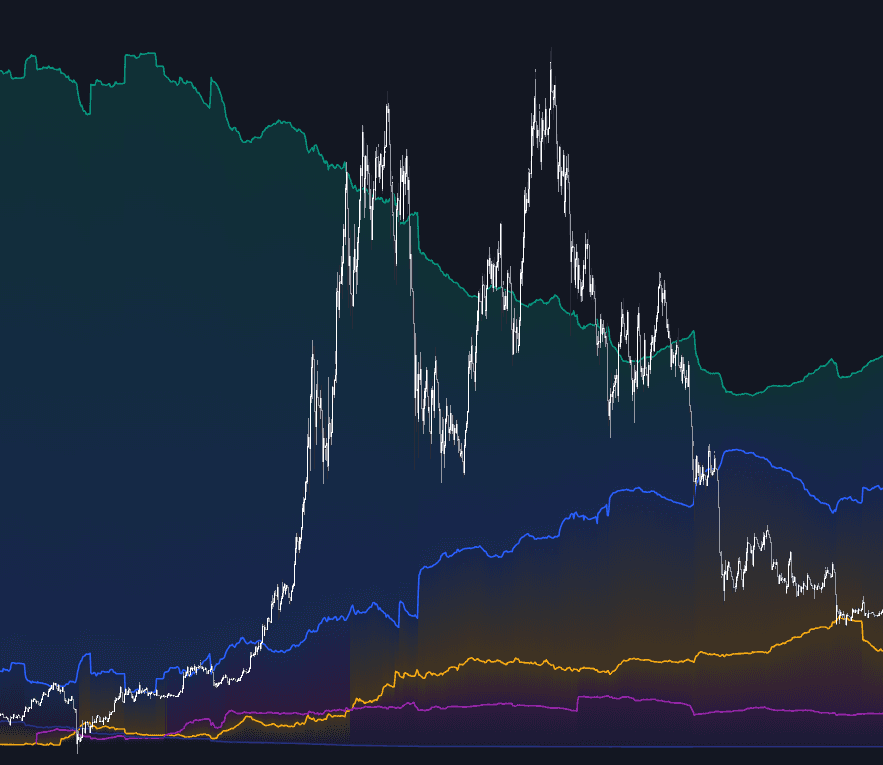
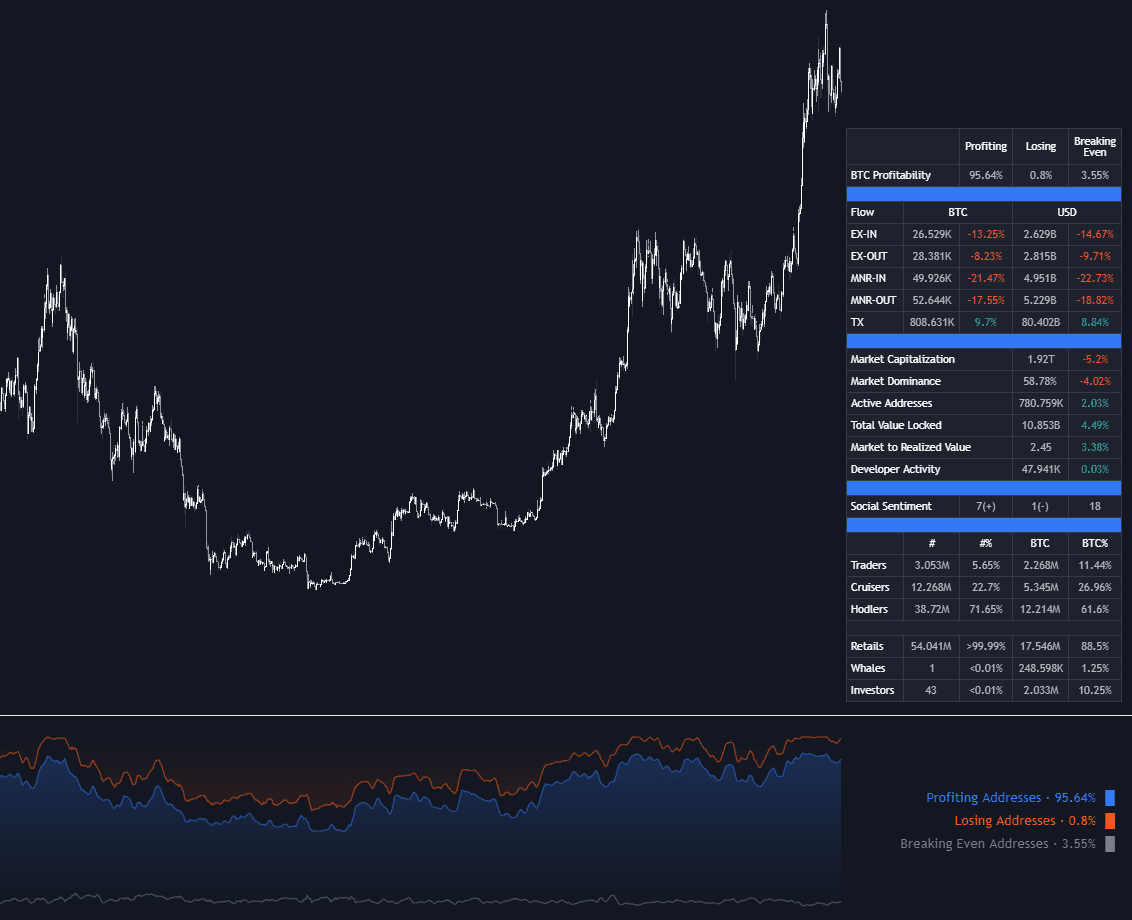
Exchange and stablecoin flows are on-chain supply metrics built from labeled exchange wallets. Coin inflows count units moving onto centralized exchanges, outflows count units withdrawn from them, and reserves track the running balance held on exchange addresses. Stablecoin versions track the same movements for dollar-pegged tokens, plus total stablecoin supply. The common reading treats coin inflows as growth in immediately sellable supply, coin outflows as coins moving into storage, and rising stablecoin balances on exchanges as potential spot buying power sitting at the point of sale.
The metrics are products of the on-chain analytics industry that matured in the late 2010s, when providers began publishing datasets built by tagging exchange deposit addresses and tracing wallet linkages. Every transfer on a public blockchain is visible, so anyone can count coins moving to and from tagged addresses; the hard part, where providers compete, is label completeness and accuracy. Stablecoin data adds issuance: mints and burns change total supply, which analysts read as capital entering or leaving crypto rails.
These metrics are estimates, not ledger truths. Wallet labeling is heuristic, exchanges shuffle funds internally between hot and cold storage, and custody or collateral migrations can print large flows with no directional intent. Reserve levels also drift structurally over multi-year periods as self-custody and collateral practices change, so most analysts read flows as a supply-and-demand backdrop, normalized against recent history, rather than as trade signals.
Within a sentiment-and-breadth toolkit these flows do the job market internals do in equities. Where an index trader reads advance/decline internals to judge participation, a crypto trader reads reserves and stablecoin balances to judge potential supply and demand. The stablecoin side also supports relative analysis: stablecoin dominance, the share of total crypto market value parked in dollar pegs, is a ratio chart that acts like a fear gauge, loosely comparable to the VIX except that it measures allocation rather than option prices.
How to Read Exchange & Stablecoin Flows
These are data series plotted beneath price rather than shapes on the chart, so identification means setting them up and defining what counts as unusual.
- 1Plot exchange reserves, netflow (inflows minus outflows), and exchange stablecoin balances from a data provider or an indicator that ingests them, aligned under price.
- 2Normalize before judging: compare today's flow with its own recent distribution, such as a 90-day average and extremes, since raw units drift across eras and assets.
- 3Separate sustained shifts from spikes: weeks of net outflows during flat price is a supply story; a single giant inflow is an event to investigate, not a trend.
- 4Check benign explanations: internal reshuffles, custody migrations, and collateral moves print large flows with no directional intent.
- 5Read both sides together: falling coin reserves with rising exchange stablecoin balances is the classic accumulation configuration; the reverse is the distribution warning.
- 6Return to price: flows frame conditions; entries, exits, and invalidation come from chart structure.
How traders use it
- As swing-timeframe context: sustained coin outflows alongside growing stablecoin reserves are read as accumulation conditions, while heavy coin inflows during rallies flag distribution risk. Price structure still decides the trade.
- As an event-risk flag: an unusually large single inflow to an exchange, judged against the metric's own recent distribution, warns that a major holder may be positioning to sell, and is often cross-checked against whale-wallet trackers before it is acted on.
- As one input in a broader on-chain stack, alongside valuation gauges such as MVRV and SOPR from the on-chain valuation suite, to frame where in the cycle supply is moving.
- As cycle context: multi-year reserve trends and stablecoin supply growth are read against crypto cycle models, since flow behavior near cycle extremes differs from mid-cycle churn.
- As a spot-versus-leverage check: pairing flows with open interest distinguishes rallies backed by coins leaving exchanges from rallies built on derivatives positioning, the same cross-checking instinct behind intermarket analysis.
Exchange & Stablecoin Flows vs Related Metrics
Open Interest: Open interest counts outstanding derivative contracts, capturing leverage and positioning. Exchange flows track spot coins and stablecoins physically moving. Major moves usually involve both, but they regularly diverge, and the divergence is informative.
On-chain Valuation Suite: Valuation gauges such as MVRV and SOPR ask whether holders are in profit and are realizing it. Flows ask where supply physically sits. One prices the crowd's position, the other maps its logistics.
Crypto Cycle Models: Cycle models frame multi-year expectations from halvings and long moving averages. Flows are a rolling supply-and-demand backdrop that updates daily; the two run on different clocks and answer different questions.
Concept family
Breadth, Sentiment & External Data
63 concepts mapped · 63 in the Library
Exchange & Stablecoin Flows FAQ
Turn Exchange & Stablecoin Flows into a trading strategy.
Take any implementation from this page into Quant, then build on it, backtest it on real data, and keep refining it in conversation.