Concept
Asset-class Seasonality
Asset-class Seasonality, also known as commodity harvest/weather, FX fiscal-year flows, is a Time, Sessions & Seasonality concept. The Library holds 1 implementation, a working definition you can pull into Quant.
Top Asset-class Seasonality indicator
The top custom implementation, built on the original standard Asset-class Seasonality formula.
1 total
Want to trade Asset-class Seasonality? The implementation below is one prompt away from a backtested strategy in Quant.
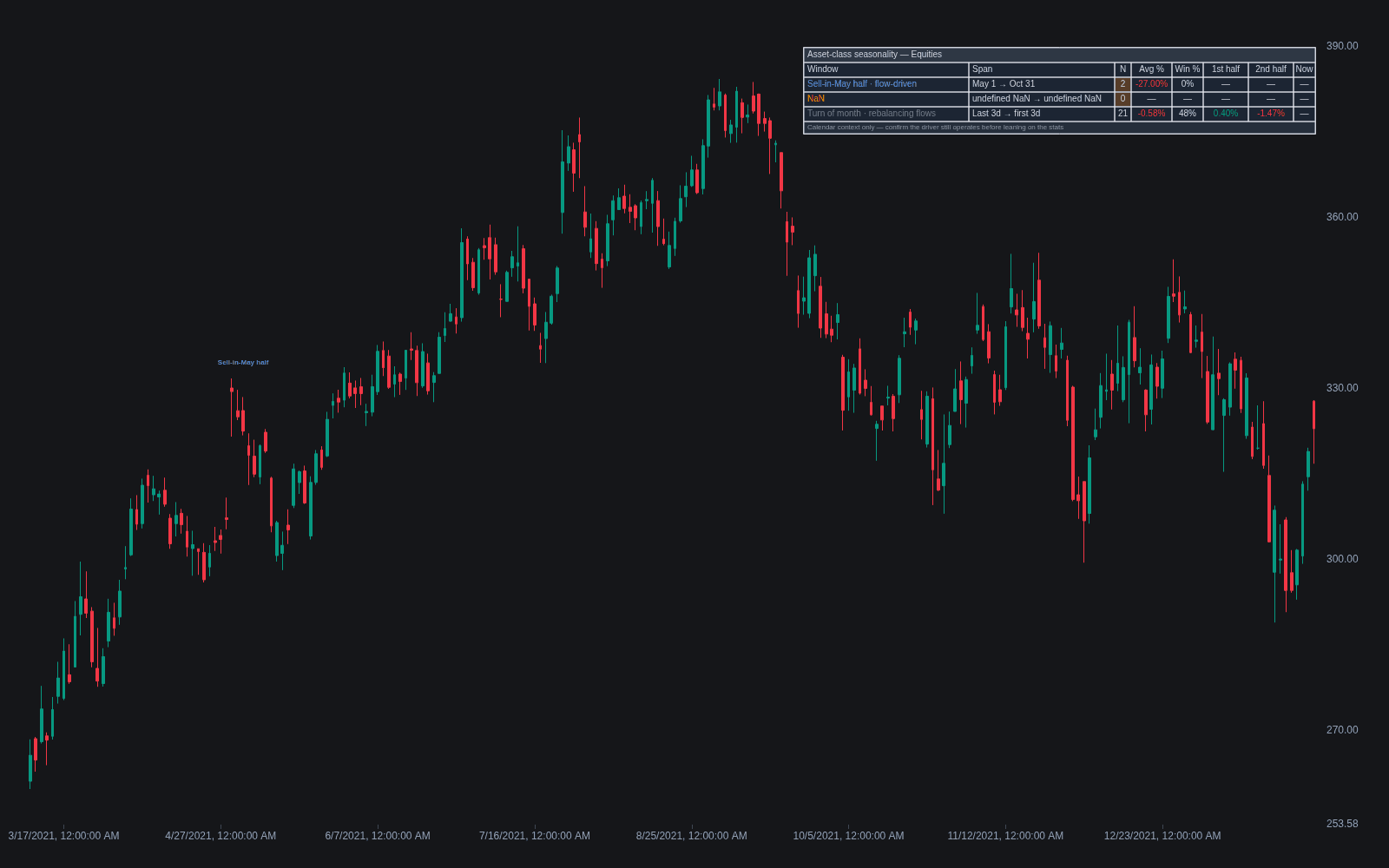
What is Asset-class Seasonality?
Asset-class seasonality is the observation that calendar patterns differ fundamentally across asset types because the drivers differ. Equities show flow-based effects tied to the fiscal calendar and investor behavior; commodities show physical supply-and-demand patterns often summarized as commodity harvest/weather seasonality; currencies show FX fiscal-year flows tied to corporate and institutional accounting calendars. Applying an equity-style seasonal template to natural gas, or a grain-market template to a currency pair, misreads why the pattern exists in the first place.
The commodity examples are the most mechanically grounded. Grain prices historically carry a weather-risk premium into the northern-hemisphere growing season and tend to soften into harvest as supply arrives; natural gas demand peaks with winter heating and storage injections dominate summer; gasoline demand builds into the summer driving season. In FX, the Japanese fiscal year-end in March has long been associated with repatriation flows affecting yen pairs, and month-end portfolio rebalancing produces recurring pressure around fixing windows. Equity effects such as sell in May and turn-of-month strength are flow and behavior stories, while crypto's main calendar structure comes from the halving cycle rather than the seasons.
The caveat is that knowing the driver does not rescue a weak statistic. Annual patterns give one observation per year, so even decades of data are a small sample, and futures markets price known seasonality into the curve, meaning the spot pattern is not freely harvestable through futures positions. Weather shocks, policy changes, and shifting production geography can also break patterns that held for decades, so the driver behind each seasonal claim needs to still exist today.
How traders use it
- Commodity traders use seasonal windows as context for positioning, for example expecting weather-premium volatility in grains from planting through pollination, while confirming with current fundamentals such as storage and crop-condition data rather than the calendar alone.
- FX traders watch known calendar flows, such as Japanese fiscal year-end and month-end rebalancing windows, mainly to anticipate liquidity and pressure around fixings rather than to hold multi-week directional positions.
- Relative plays are common: because seasonality is often priced into individual futures contracts, practitioners express seasonal views through calendar spreads, where the seasonal shape of the curve matters more than outright direction.
- Portfolio-level users tilt exposure modestly with effects like turn-of-month strength in equities, sized as a small edge layered on other signals, never as a standalone system.
- Whatever the asset, the discipline is the same as for month-of-year seasonality: split the sample, check the pattern's stability across decades, and confirm the underlying driver still operates.
Asset-class Seasonality vs Related Concepts
Month-of-year Seasonality: Month-of-year work is the generic measurement: bucket returns by calendar month for any instrument. Asset-class seasonality is the interpretive layer, asking which physical or flow driver explains the pattern for this particular asset type.
Seasonality Tooling: Tooling renders the historical seasonal path on the chart. The asset-class lens tells you what the rendered pattern can and cannot mean: a harvest-driven grain pattern and a flow-driven equity pattern deserve different confidence.
Crypto Halving Cycle: The halving cycle is calendar-like but anchored to a protocol event roughly every four years, not the seasons. It illustrates the broader point that each asset's recurring structure comes from its own mechanism.
Long-horizon Calendar Cycles: Multi-year cycles such as the US presidential cycle span asset types and rest on political and macro calendars, whereas asset-class seasonality operates within the year and rests on asset-specific supply, demand, and flow mechanics.
Concept family
Time, Sessions & Seasonality
32 concepts mapped · 32 in the Library
Asset-class Seasonality FAQ
Turn Asset-class Seasonality into a trading strategy.
Take the implementation from this page into Quant, then build on it, backtest it on real data, and keep refining it in conversation.