Concept
Expiration Effects
Expiration Effects, also known as OpEx week, triple/quad witching, VIX expiry, are Time, Sessions & Seasonality concepts. The Library holds 1 implementation, a working definition you can pull into Quant.
Top Expiration Effects indicator
The top custom implementation, built on the original standard Expiration Effects formula.
1 total
The Expiration Effects implementation below can become a backtested trading strategy — describe your rules and Quant writes the code.
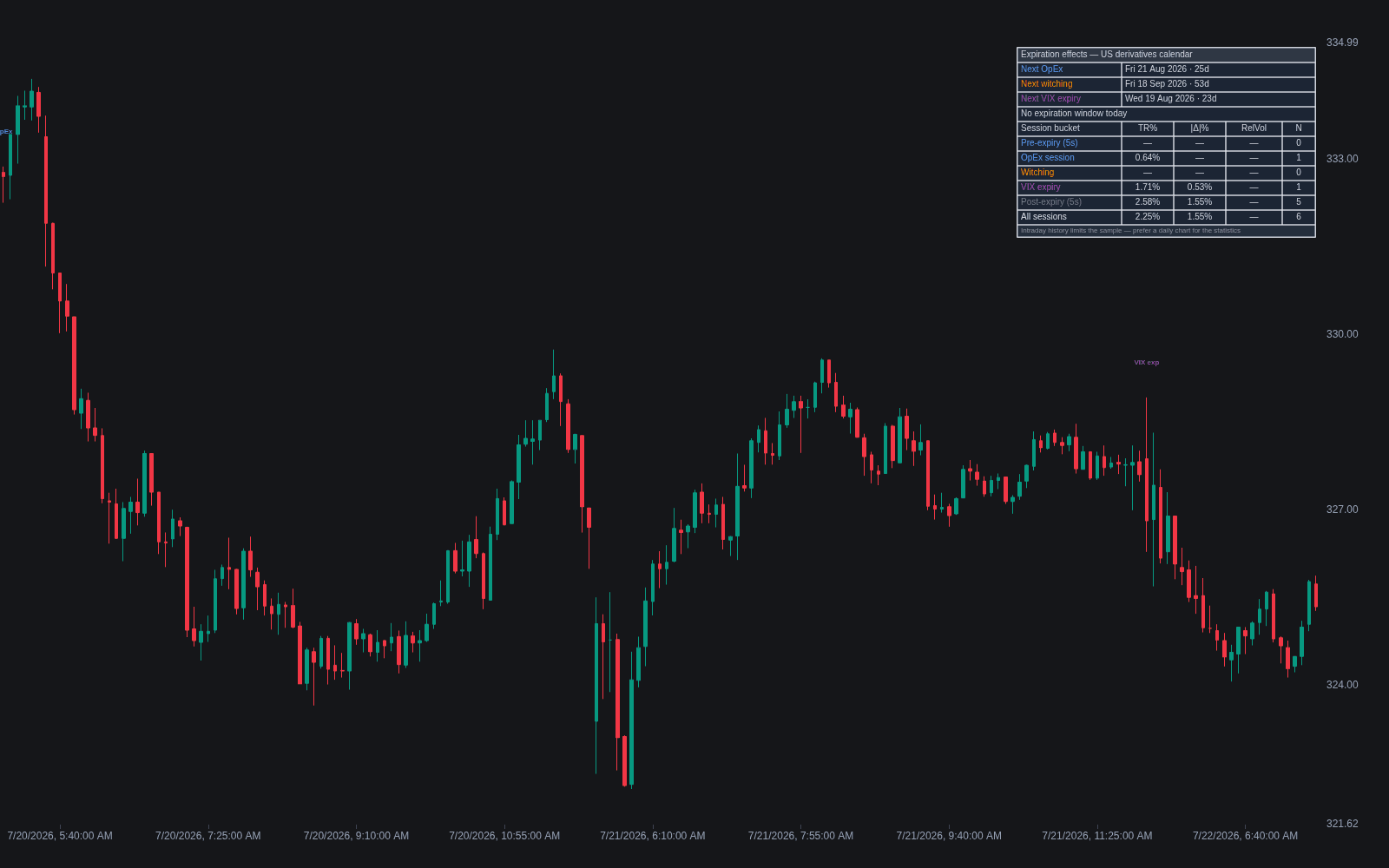
What are Expiration Effects?
Expiration effects are the recurring price and volume behaviors that surround the scheduled expiration of derivatives. The main dates traders track are monthly equity option expiration (OpEx, the third Friday in US markets), the quarterly dates when index futures, index options, and stock options expire together (called triple or quadruple witching), and VIX expiry, which settles on a Wednesday tied to the following month's option cycle. The week containing these dates, often just called OpEx week, has its own folklore and its own measurable flow mechanics.
The mechanics come from hedging. Dealers who are short or long options hedge with the underlying, and as expiration approaches those hedges concentrate around strikes with large open interest. This can produce pinning, the tendency for a stock or index to gravitate toward a heavily traded strike into the close of expiration day, and it links expiration behavior directly to gamma exposure and to strike-level analysis such as max pain. After expiry, hedges tied to the expiring contracts are unwound or rolled, which is why the days following large expirations sometimes see freer, more directional movement.
The honest caveats: expiration effects are tendencies, not schedules for direction. Pinning is real but modest in academic studies, post-OpEx drift patterns vary by regime, and the rise of weekly and same-day options has spread expiration flow across the calendar, diluting the significance of the monthly date. The quarterly witching days remain distinctive mainly for their enormous volume, particularly in the expiration-morning and closing auctions.
How traders use it
- Index and stock traders note OpEx dates in advance and expect elevated volume, strike-level magnetism, and occasionally muted trends into the date, adjusting expectations for breakout trades accordingly.
- Options-aware traders map large open-interest strikes near price, using option strike walls as candidate pinning zones on expiration day and as levels where hedging flow may dampen movement.
- Some frameworks distinguish the window before expiration, where dealer hedging often suppresses range, from the window after it, where the roll-off of expiring positions can release movement; both tendencies deserve verification on current data given how much 0DTE flow has changed the landscape.
- VIX expiry is tracked separately because VIX derivatives settle on a morning print, and positioning into that settlement can affect volatility products and, indirectly, index behavior around the VIX term structure.
- Volume-based signals need context in witching weeks: quarterly expirations produce some of the year's largest prints for mechanical reasons, so volume spikes on those dates should not be read as ordinary conviction.
Expiration Effects vs Related Concepts
Gamma Exposure: Gamma exposure is the continuous measure of dealer hedging pressure at any time. Expiration effects are the calendar events where that positioning concentrates, resolves, and resets.
Max Pain: Max pain names the specific strike where expiring option holders lose the most, one popular way to guess a pinning target. Expiration effects cover the broader set of behaviors around the date, of which pinning is only one.
Futures Roll Dates: Rolls migrate futures positions to the next contract in the days before expiration; expiration itself settles what remains. Both happen in the same weeks but generate different flows, roll spreads versus hedge unwinds.
0DTE Flow Effects: Same-day options create expiration mechanics every session in major indices. Their growth is the main reason classic monthly OpEx statistics from earlier decades need re-verification.
Concept family
Time, Sessions & Seasonality
32 concepts mapped · 32 in the Library
Expiration Effects FAQ
Turn Expiration Effects into a trading strategy.
Take the implementation from this page into Quant, then build on it, backtest it on real data, and keep refining it in conversation.