Shortening of the Thrust
Shortening of the Thrust, also known as SOT, is a Wyckoff concept. The Library holds 1 implementation, a working definition you can pull into Quant.
Top Shortening of the Thrust indicator
The top custom implementation, built on the original standard Shortening of the Thrust formula.
1 total
Want to trade Shortening of the Thrust? The implementation below is one prompt away from a backtested strategy in Quant.
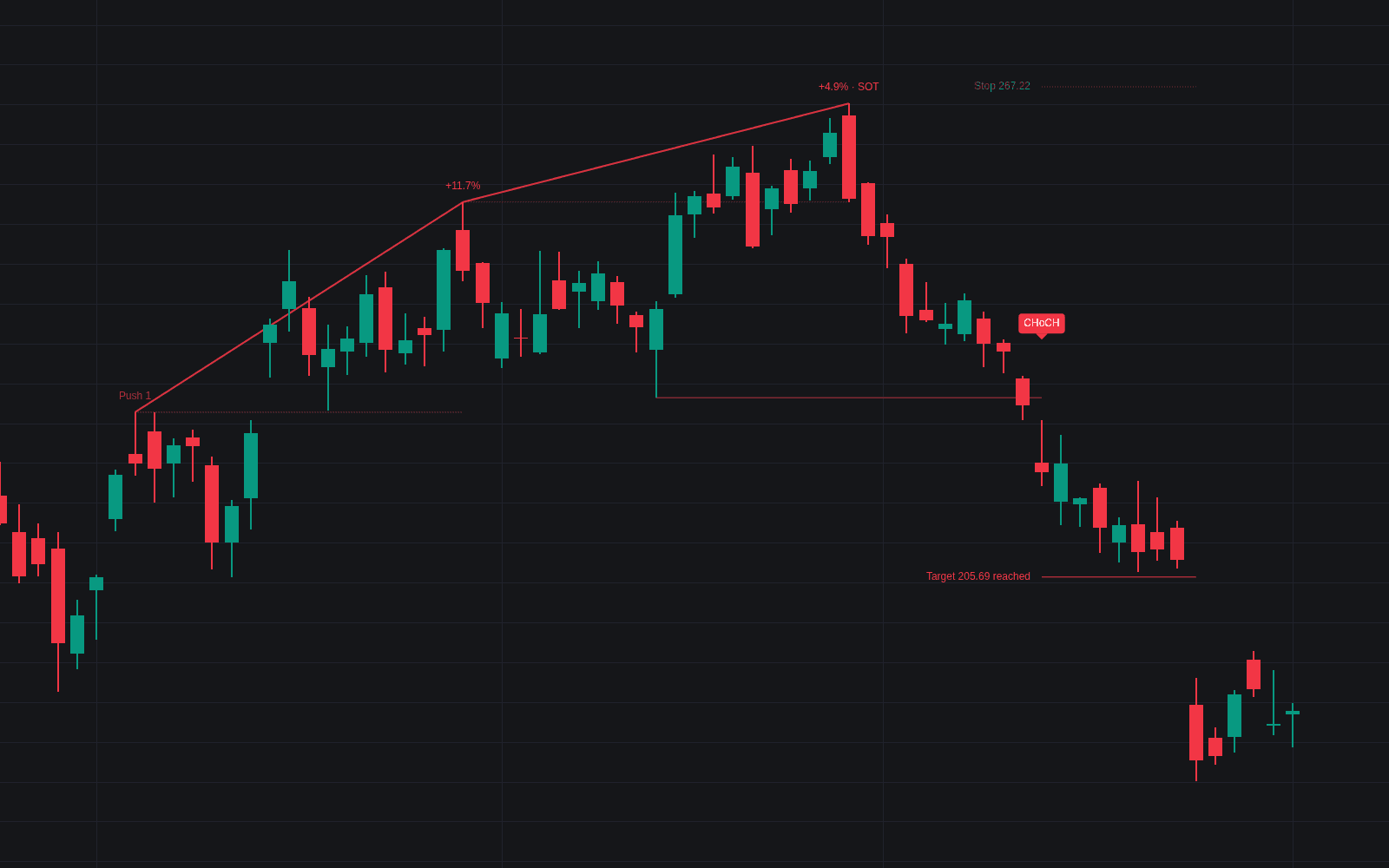
What is shortening of the thrust?
Shortening of the thrust (SOT) is the Wyckoff observation that each successive push to a new high or low gains less ground than the one before. The trend is still printing new extremes, but the distance each one adds beyond the previous extreme keeps shrinking, which reads as the force behind the move tiring.
The term comes from the Wyckoff tradition of reading price and volume together, and David Weis treats it in detail in Trades About to Happen (2013), his modern adaptation of the method. Volume decides the interpretation, following effort vs result: shortening on heavy volume is read as effort buying little progress because the other side is absorbing it, while shortening on light volume is read as the trend's own participants withdrawing.
SOT describes deceleration, not reversal. Trends can keep shortening for several more pushes, so practitioners wait for a change of character, such as a forceful move the other way on expanding volume, before treating it as a turn.
How to identify shortening of the thrust
SOT is a sequence, not a single bar:
- 1Find at least three consecutive pushes to new extremes in the same direction.
- 2Measure each push's gain beyond the prior extreme: new high minus previous high, or previous low minus new low.
- 3Check that the gains shrink in order, with the latest push the smallest.
- 4Compare the volume behind each push, then wait for a change of character before acting.
How traders use it
- Protecting positions: shrinking thrusts in a held trend are a cue to tighten stops or take partial profits rather than add.
- Inside Wyckoff ranges: shortening declines into support, or shortening rallies into resistance, set the context for the tests at those edges, such as a spring or an upthrust.
- Measured by wave: Wyckoff wave and volume studies make the volume side explicit by totaling the volume behind each push.
Shortening of the thrust vs related reads
Effort vs Result: Weighs volume against progress on any bar or swing. SOT is a price-only sequence of shrinking gains, which effort vs result then explains.
Momentum Expansion vs Contraction: Momentum contraction reads deceleration from an oscillator. SOT reads it directly from the distance between successive price extremes, with no indicator involved.
Trend Exhaustion: The broader diagnosis, assembled from several kinds of evidence. SOT is one specific piece of that evidence, measured from the extremes themselves.
Concept family
Wyckoff
18 concepts mapped · 18 in the Library
Shortening of the Thrust FAQ
Turn Shortening of the Thrust into a trading strategy.
Take the implementation from this page into Quant, then build on it, backtest it on real data, and keep refining it in conversation.