Concept
Sizing Bases
Sizing Bases, also known as equal-R, percent-of-equity, fixed-dollar, notional-vs-risk, are Risk, Sizing & Exits concepts. The Library holds 1 implementation, a working definition you can pull into Quant.
Top Sizing Bases indicator
The top custom implementation, built on the original standard Sizing Bases formula.
1 total
From studying Sizing Bases to trading it: take the implementation below into Quant and backtest it instantly.
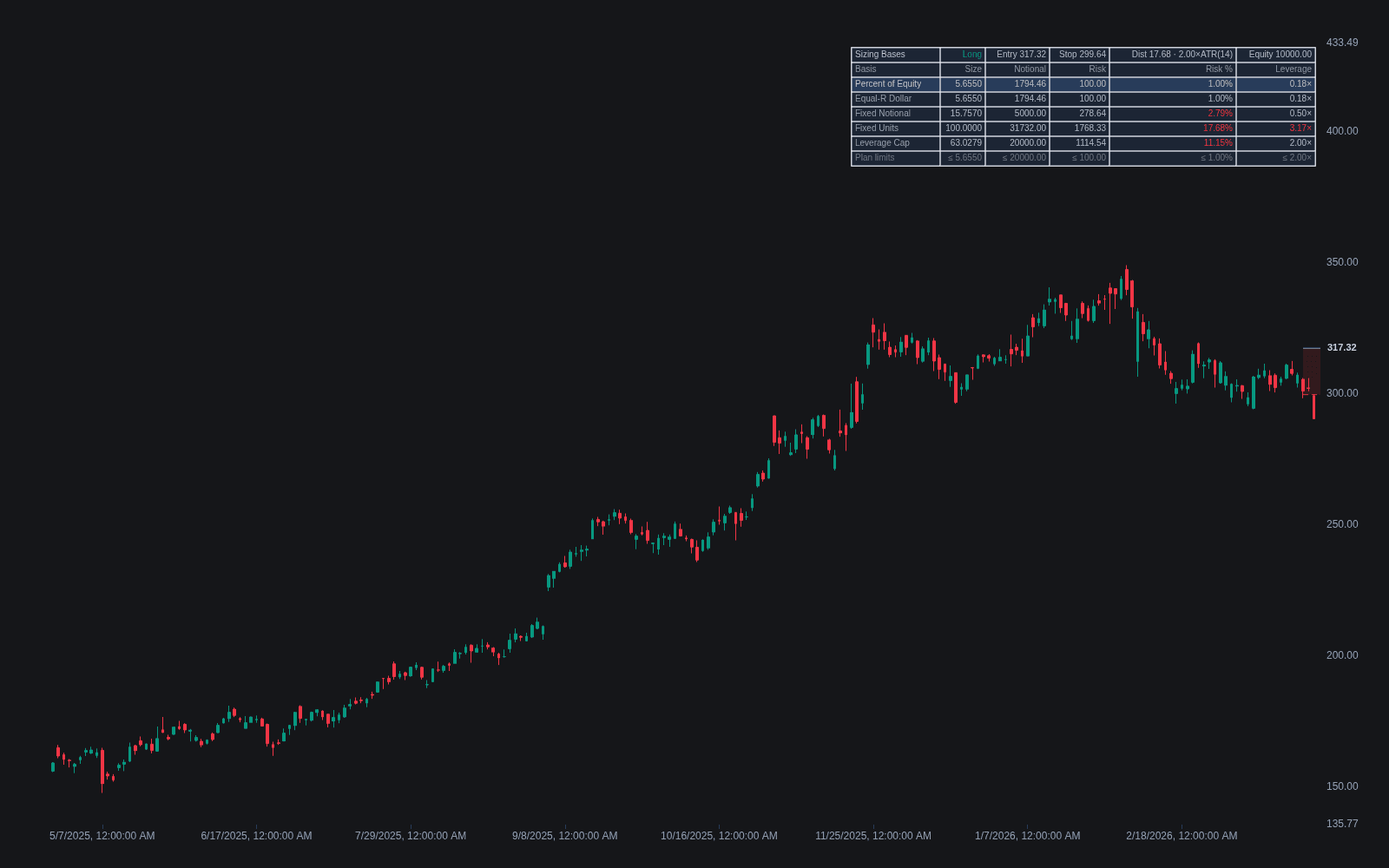
What are Sizing Bases?
A sizing base is the reference quantity a position's size is computed from, and naming it is the first decision in any sizing scheme. Risk-based bases measure loss at the stop: equal-R keeps the same dollar risk on every trade, and percent-of-equity risks a fixed fraction of the current account, the fixed fractional rule. Notional bases measure exposure instead: a fixed dollar value, fixed lots or shares, or leverage rules that cap position value at a multiple of equity.
The distinction that matters most is notional versus risk. A small position with a wide stop can risk more than a large position with a tight one, so a leverage cap and a percent-risk rule constrain different things, and written plans commonly state both. The second axis is compounding: percent-of-equity risk grows and shrinks with the account, while fixed-dollar risk stays constant through win streaks and drawdowns alike, which changes how the same strategy's equity curve behaves.
A worked example makes the machinery concrete. A $10,000 account risking one percent budgets $100 per trade; with a stop 50 ticks away on a contract worth $2 per tick, the loss at the stop is $100 per contract, so the size is one contract. Halve the stop distance and the same budget buys two contracts: double the notional, identical risk. That inversion is the point of risk-based sizing, and it is also why the R-multiple framework pairs with it so naturally: with every trade risking one R, outcomes measured in R are comparable across instruments, stop widths and account sizes.
In the wild, bases are often imposed rather than chosen. Evaluation and prop-firm rules cap daily loss in fixed dollars, pushing traders toward fixed-dollar bases; crypto venues cap leverage, a notional constraint that binds regardless of stop placement; and the stop methodology itself, a volatility stop versus a structure stop, sets the denominator the risk budget divides by. Dashboards like the Library's position-size calculators and execution desks automate the conversion arithmetic. The failure mode they cannot fix is the unnamed base: sizing by feel, where notional comfort masquerades as risk control until the first wide-stop trade exposes the difference.
How to identify and apply a sizing base
The procedure is the same whatever the base; what changes is which quantity gets held constant.
- 1Name the base explicitly: risk-based (equal-R, percent-of-equity) or notional (fixed dollars, fixed units, leverage cap), and whether it compounds with the account.
- 2Set the per-trade budget in the base's units: a percent of current equity, a fixed dollar risk, or a notional ceiling.
- 3Compute the size: for risk bases, budget divided by stop distance times per-point value; for notional bases, the ceiling divided by price.
- 4Check the other constraint: a risk-sized position against the leverage cap, a notional-sized one against the implied loss at its stop, since plans that state only one get surprised by the other.
- 5Record the trade in R terms regardless of base, so the journal stays comparable across instruments and stop widths.
How traders use it
- For plan design: pick the base deliberately. Equal-R keeps journal entries comparable and dollar risk constant through streaks, percent-of-equity compounds with the account, and notional bases suit mandates that cap exposure rather than loss at the stop.
- For conversion: stop distance and per-point value translate between bases, turning a risk budget into shares or contracts, or a notional cap into the implied loss at the stop.
- As the foundation refinements build on: volatility-targeted sizing replaces the stop-distance denominator with a volatility estimate, and portfolio-aware sizing adjusts the base for correlated open risk.
- For expectancy accounting: sizing every trade to one R makes win rate and average R the whole performance story, so strategy comparisons stop being distorted by which trades happened to be sized larger.
- In scaling plans: pyramiding adds and scaling out trims are computed against the remaining risk budget of the whole position, not as fresh standalone trades, which keeps a built-up position from quietly exceeding the base.
Sizing bases vs related sizing concepts
Fixed Fractional: Fixed fractional is one specific base, a constant percent of current equity risked per trade. Sizing bases is the taxonomy it lives in, alongside equal-R, fixed-dollar and notional rules; naming the family clarifies what any single rule is actually holding constant.
Volatility-targeted Sizing: Volatility targeting swaps the stop-distance denominator for a volatility estimate, sizing so each position contributes similar variance. It answers a portfolio question, equalizing risk contributions, where per-trade bases answer a discipline question, bounding the loss when this stop is hit.
DCA: Dollar-cost averaging sizes by schedule, equal notional per interval, with no stop in the arithmetic at all. It is an accumulation policy rather than a trade-risk policy, which is exactly why importing it into leveraged trading without a separate loss bound ends badly.
Concept family
Risk, Sizing & Exits
37 concepts mapped · 37 in the Library
Sizing Bases FAQ
Turn Sizing Bases into a trading strategy.
Take the implementation from this page into Quant, then build on it, backtest it on real data, and keep refining it in conversation.