Concept
PRZ Execution
PRZ Execution, also known as terminal price bars, type I vs type II reversals, is a Elliott & Harmonics concept. The Library holds 1 implementation, a working definition you can pull into Quant.
Carney
Top PRZ Execution indicator
The top custom implementation, built on the original standard PRZ Execution formula.
1 total
From studying PRZ Execution to trading it: take the implementation below into Quant and backtest it instantly.
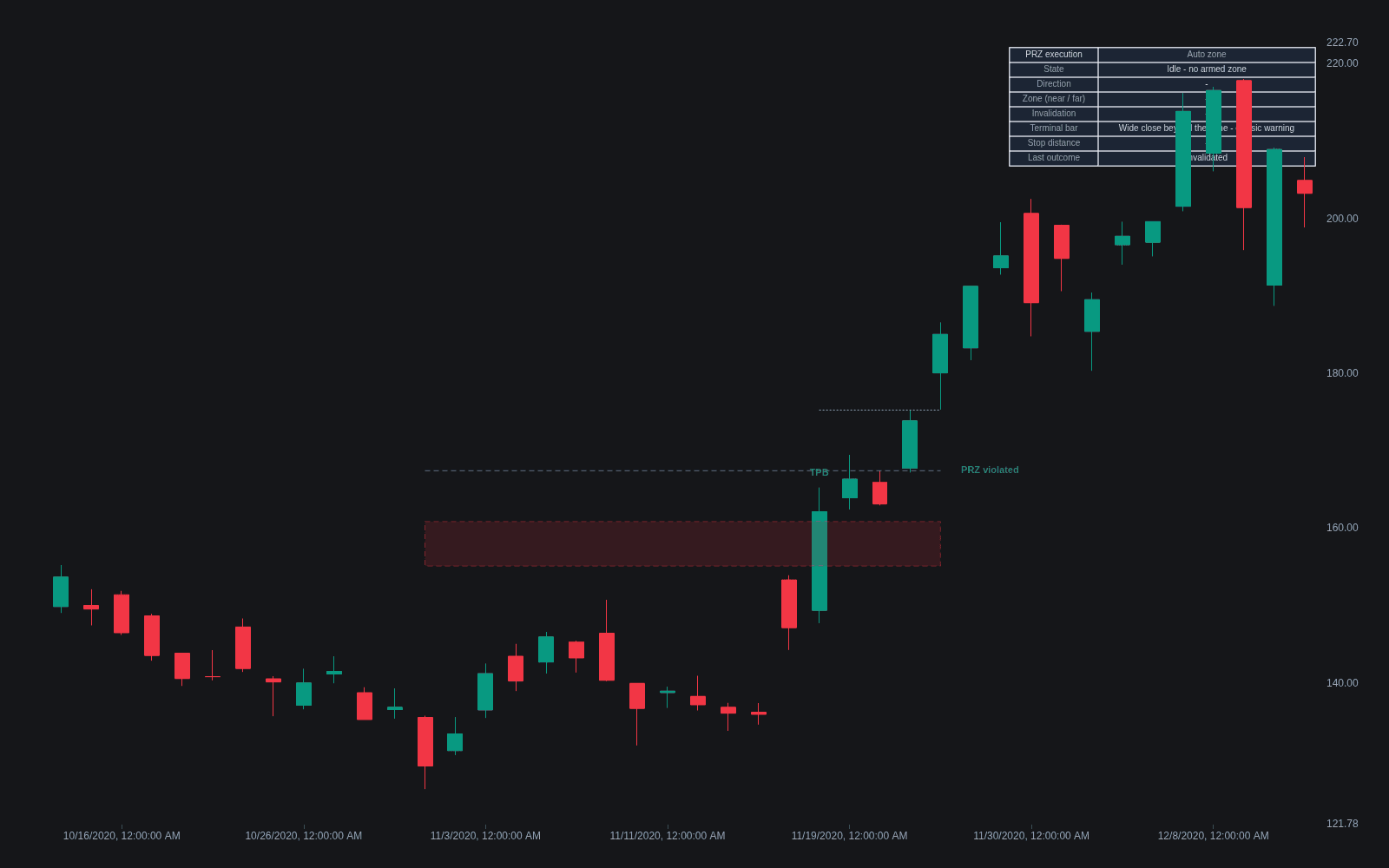
What is PRZ execution?
PRZ execution is the trade-management layer of harmonic trading: the set of techniques, largely codified by Scott Carney, for handling price once it actually enters a potential reversal zone. Identifying a Gartley or Bat tells you where to pay attention; PRZ execution answers the harder questions of when to enter, where the pattern is wrong, and how to react to the different ways a zone can be tested.
Two pieces of Carney vocabulary anchor the topic. The terminal price bar is the bar that tests the full extent of the zone, trading through the range of confluent Fibonacci levels that define it; its character, size, close location, and follow-through carry most of the initial information about whether the completion will hold. The type I versus type II distinction then describes the two common reversal shapes: a type I reversal turns promptly at the zone and runs, while a type II reversal makes an initial reaction, comes back to retest the zone (often more deeply), and only then produces the larger move.
The distinction exists because zone retests are routine, not exceptional. A trader who treats every return to the PRZ as failure gets shaken out of valid type II reversals; a trader who ignores invalidation entirely donates money to every zone that simply breaks. Execution rules, defining acceptable retest depth, requiring reaction evidence, and locating the point beyond which the pattern is void, are what separate the two outcomes.
How to read a PRZ test as it happens
The zone is drawn in advance; execution is about interpreting the bars that arrive in it.
- 1Define the zone before arrival from the pattern's confluent measurements, and mark the level beyond it that would void the pattern entirely.
- 2Watch the terminal price bar, the bar that tests the full zone: a rejection close back inside the structure is constructive, while a wide bar closing beyond the zone is the classic warning.
- 3If price turns promptly and holds, treat it as a type I reversal and manage the position from the initial extreme.
- 4If the first reaction fades and price returns to the zone, assess the retest: a type II reversal typically holds at or near the original extreme before producing the larger move.
- 5Abandon the trade on decisive acceptance beyond the invalidation level; a violated zone is information about trend strength, not a reason to widen stops.
How traders use it
- For entry discipline: rather than placing blind limit orders at D, many practitioners wait for the terminal bar to complete and enter on evidence of rejection, accepting a worse price for a better-qualified trade.
- For stop placement: the invalidation point sits beyond the far edge of the zone, and its distance from entry sets position size; a zone too wide for acceptable risk is a pass, not a bigger stop.
- For managing type II behavior: traders who took the first reaction often reduce size into the initial move and hold a plan for re-entry on a successful retest, since the deeper second test is common.
- For failure harvesting: a cleanly violated PRZ tells you the dominant flow absorbed the reversal attempt, and some practitioners trade the continuation through the zone rather than mourning the failed pattern.
- With honest limits: bar reading in a zone remains judgment; two disciplined traders can grade the same terminal bar differently, and no execution rule converts a losing zone into a winning one.
PRZ execution vs neighboring concepts
Potential reversal zone: The PRZ is the object, the confluence of measurements that defines where completion is expected. PRZ execution is the process applied when price gets there: reading the test, entering, and enforcing invalidation.
BAMM: BAMM covers the leg before the zone, treating the break of B as a signal that price is headed to the completion. Execution takes over at arrival, and a fast BAMM-style arrival usually argues for demanding more reaction evidence.
Concept family
Elliott & Harmonics
33 concepts mapped · 33 in the Library
PRZ Execution FAQ
Turn PRZ Execution into a trading strategy.
Take the implementation from this page into Quant, then build on it, backtest it on real data, and keep refining it in conversation.