Concept
Swing Failure Pattern
Swing Failure Pattern, also known as 2B reversal (Sperandeo), failure swing, is a Market Structure concept. The Library holds 2 implementations, each one a working definition you can pull into Quant.
SFP
Top Swing Failure Pattern indicators
The top custom implementations, built on the original standard Swing Failure Pattern formula.
2 total
Want to trade Swing Failure Pattern? Any of the 2 implementations below is one prompt away from a backtested strategy in Quant.
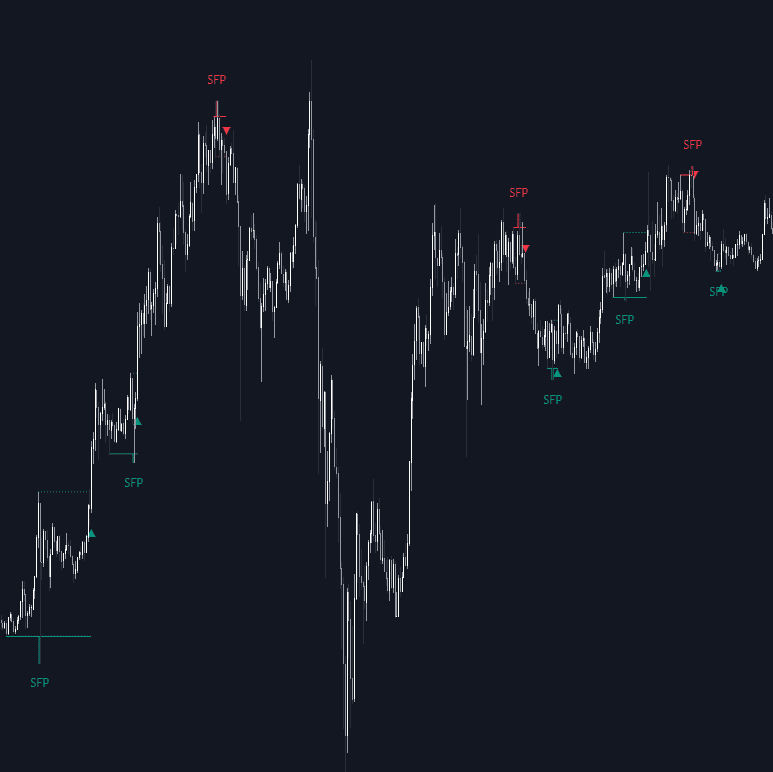
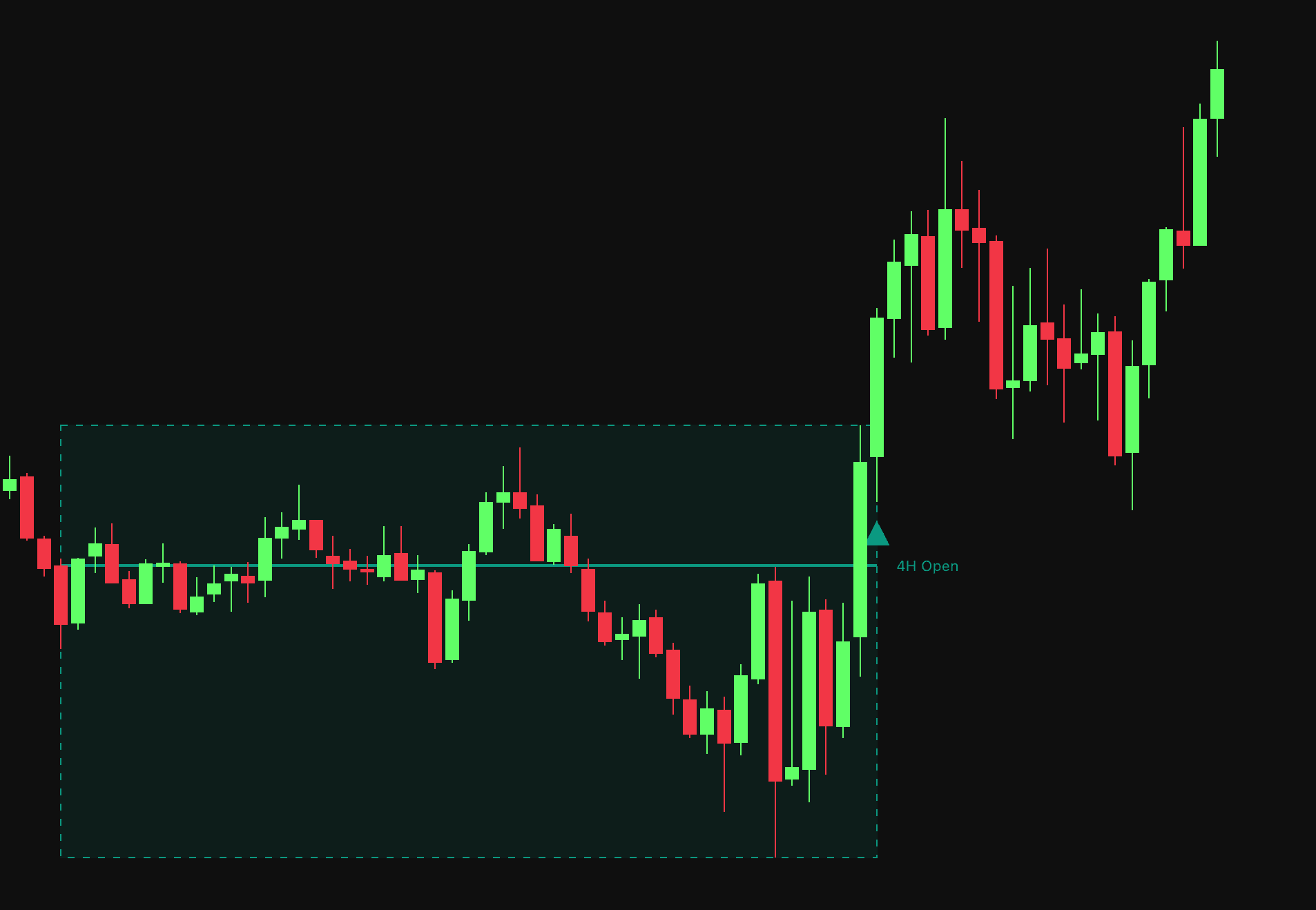
What is a Swing Failure Pattern?
A swing failure pattern (SFP) is a failed raid on a prior swing point. Price trades beyond a previous swing high or low, typically on a wick, but cannot hold there and closes back on the original side of the level. A bearish SFP sweeps a prior high and closes back below it; a bullish SFP sweeps a prior low and closes back above it. The lineage is older than the modern name: Victor Sperandeo described the same event as the 2B rule, and Wilder's RSI failure swing is the oscillator-side namesake. Some sources also use 'failure swing' for the softer case where price never reaches the prior extreme at all, so definitions are worth checking.
The pattern matters because of what sits beyond swing points: stops from existing positions and entry orders from breakout traders, the resting liquidity pool. The push beyond the extreme fills those orders, and the failure to hold suggests that once they were spent, no genuine initiative interest stood behind the new price. What remains is a trapped crowd on the wrong side and fresh evidence that, for now, one direction is empty. That is why SFPs at range extremes and higher-timeframe levels are read as reversal triggers, with the honest caveat that plenty of raids simply pause and continue, which is why many traders demand the close back inside plus confirmation.
How to identify a swing failure pattern
The SFP is defined by three things: a real prior extreme, a violation of it, and a failed close.
- 1Locate a clear prior swing high or low, ideally one that has stood long enough for stops to accumulate beyond it.
- 2Watch for the violation: a candle trades beyond the extreme, printing a marginal new high or low. On its own this is just a sweep or a breakout attempt.
- 3Require the failed close: the candle closes back on the original side of the level. Stricter readings demand it on the same candle; looser ones accept the following candle. The further back inside the close, the cleaner the pattern.
- 4Add confirmation if your model calls for it: a lower-timeframe change of character or a close through the sweep candle's opposite extreme are common follow-through checks.
How traders use it
- As a reversal entry at extremes: short a bearish SFP of a swing high (or buy the bullish mirror) with the stop just beyond the sweep wick, targeting a rotation back through the trading range. The wick gives the trade an unusually well-defined invalidation.
- As sweep-plus-proof in Smart Money workflows: the SFP is the visible candlestick print of a stop run, and many traders treat it as the moment a suspected raid becomes tradeable rather than hypothetical.
- As an exit prompt for trend riders: an SFP against the position at a major level is a common cue to take profit or tighten stops, since the fuel beyond the level has just been spent.
- As the seed of codified setups: Sperandeo's 2B and the turtle soup play both wrap SFP logic, a failed marginal new extreme, in explicit entry and stop rules.
Swing Failure Pattern vs related concepts
Liquidity Sweep: The sweep names the raid itself: stops beyond a level being taken, whatever happens next. The SFP adds the requirement that the raid fails, with a close back inside. Every SFP contains a sweep; a sweep only becomes an SFP once the reclaim prints.
False Breakout: The false breakout is the broader category: any failed break of any level, range boundary, or pattern line, possibly taking several bars to fail. The SFP is the tight, swing-point-specific version, usually judged wick-and-close on one or two candles.
Turtle Soup: Turtle soup is a rule set built on the same failure: fading a marginal break of a 20-day extreme, originally aimed at the entries of mechanical breakout systems. The SFP is the discretionary structure event; turtle soup fixes the lookback and mechanics into a defined setup.
Concept family
Market Structure
31 concepts mapped · 31 in the Library
Swing Failure Pattern FAQ
Turn Swing Failure Pattern into a trading strategy.
Take any implementation from this page into Quant, then build on it, backtest it on real data, and keep refining it in conversation.