Concept
Change of Character
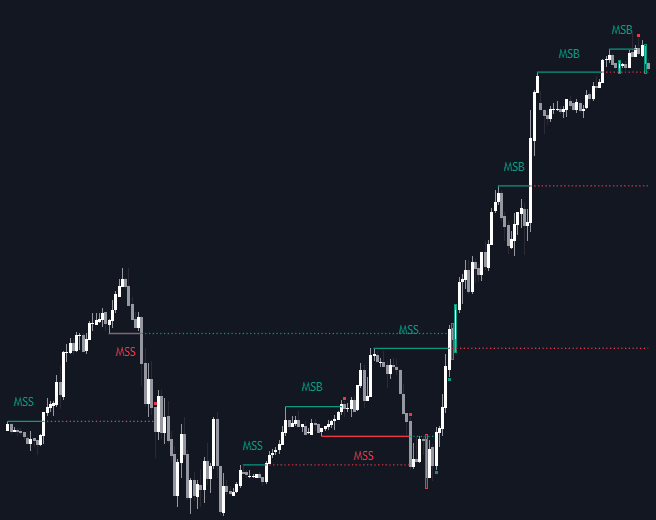
Change of Character, also known as CHoCH+, market structure shift/MSS, is a Market Structure concept. The Library holds 16 implementations, each one a working definition you can pull into Quant.
CHoCH
Top Change of Character indicators
The top custom implementations, built on the original standard Change of Character formula.
16 total
Any of the 16 Change of Character implementations below can become a backtested trading strategy — describe your rules and Quant writes the code.
.png&w=3840&q=75)
What is a Change of Character?
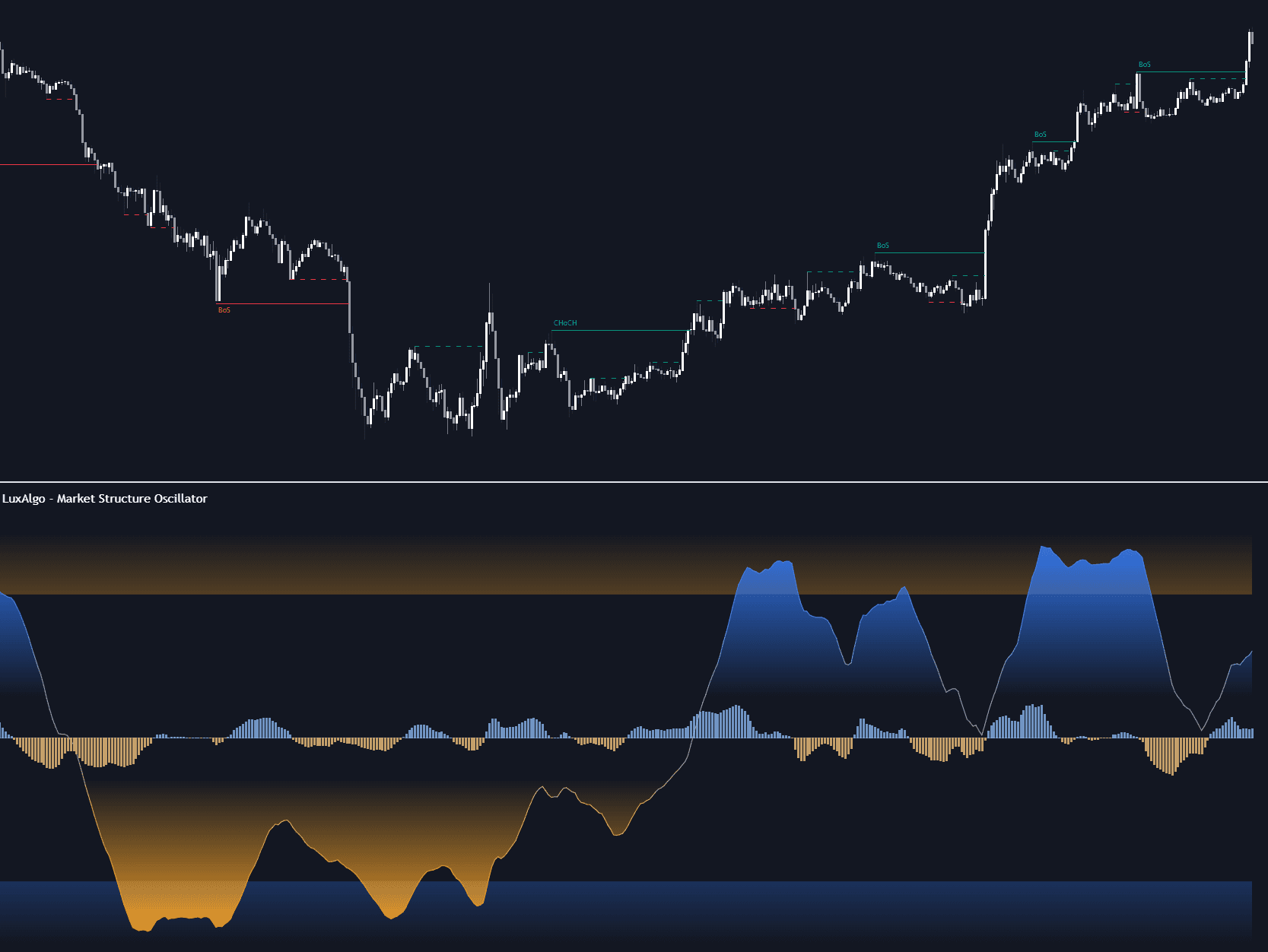
A change of character (CHoCH) is the first structural break against the prevailing trend: in an uptrend, price breaking the most recent meaningful higher low; in a downtrend, breaking the most recent lower high. Where a break of structure confirms continuation, a CHoCH is the earliest structural evidence that the trend's character is shifting, toward reversal or at least toward a range.
Vocabulary in this corner of swing structure is not fully standardized. Many traders use CHoCH and market structure shift (MSS) interchangeably; others reserve MSS for the stronger version, a counter-trend break delivered with displacement right after a liquidity sweep of the trend's extreme. There is also disagreement over which swing counts: the very last higher low, or the higher low that produced the final high. Pick one convention and keep it fixed.
The CHoCH matters because reversal traders need a line in the sand, and it is the earliest objective one structure offers. It is also failure-prone: deep pullbacks in healthy trends routinely break a minor higher low and then resume. That is why most models treat a lone CHoCH as a warning rather than an entry, and stack context around it: a sweep before it, displacement through it, and a retracement entry after it.
How to identify a Change of Character
A CHoCH is only meaningful against a defined trend, so identification starts with the structure map.
- 1Establish the prevailing trend from the swing labels: a run of higher highs and higher lows, or the bearish mirror.
- 2Locate the protected swing: the most recent meaningful higher low in an uptrend, or lower high in a downtrend. Some traders specifically track the swing that produced the trend's final extreme.
- 3Mark the CHoCH when price breaks that swing counter-trend. A body close beyond it, ideally with displacement, is the usual filter against noise and stop runs.
- 4Grade the context: a CHoCH that follows a sweep of the trend's high or low, especially after inducement has pulled early entries into the move, is the version reversal models are built around.
How traders use it
- As a reversal alarm: the first counter-trend break flags that one-sided delivery has been interrupted, prompting trend traders to tighten risk even when they do not reverse position.
- As the trigger inside reversal models: the common sequence is liquidity sweep, then CHoCH, then a retracement into the order block or imbalance left by the breaking leg; the smart money reversal is assembled from exactly these parts.
- As an exit mechanism: an opposing CHoCH serves as a structural trailing exit for trend positions, typically later than momentum-based exits but anchored to price levels rather than indicator readings.
- As timing inside a bias: a lower-timeframe CHoCH printing at a higher-timeframe level is a common confirmation that the level is actually being defended, tying entries into top-down analysis.
Change of character vs related concepts
Break of Structure: The with-trend twin. A BOS breaks the swing in the trend's direction and reads as continuation; a CHoCH breaks the counter-trend swing and reads as a potential turn. Same mechanics, opposite implication.
Reversal: Reversal is the outcome; a CHoCH is one specific early symptom of it. Many reversals begin with a CHoCH, but many CHoCHs resolve as deep pullbacks that never reverse the trend.
Swing Failure Pattern: An SFP is a wick-and-reject at the trend's extreme; a CHoCH is an accepted break of the opposing retracement swing. They chain together in sweep-based reversal models but mark different moments in the sequence.
1-2-3 Reversal: The classical ancestor: point 2 of a 1-2-3 reversal plays the same role as the retracement swing whose break a CHoCH marks. The older pattern and the SMC event describe near-identical geometry in different vocabularies.
More Change of Character implementations
- Market Structure CHoCH/BOS (Fractal)
- Market Structure & Scatter Dashboard
- Market Structure Targets Model
- ICT Anchored Market Structures with Validation
- CISD Projections
- DTFX Algo Zones
- HTF CISD Projections
- MSS Sweep Fib Retrace
- Smart Money Concepts (SMC)
- FVG + Liquidity Sweep + CISD
- Multi Timeframe Market Formation
- Pure Price Action Structures
- Pure Price Action ICT Tools
Concept family
Market Structure
31 concepts mapped · 31 in the Library
Change of Character FAQ
Turn Change of Character into a trading strategy.
Take any implementation from this page into Quant, then build on it, backtest it on real data, and keep refining it in conversation.