Concept
Confluence & Scoring Systems
Confluence & Scoring Systems, also known as weighted voting, checklists/A+ grading, factor stacking, veto conditions, are Meta & Composition concepts. The Library holds 6 implementations, each one a working definition you can pull into Quant.
Top Confluence & Scoring Systems indicators
The top custom implementations, built on the original standard Confluence & Scoring Systems formula.
6 total
From studying Confluence & Scoring Systems to trading it: take any implementation below into Quant and backtest it instantly.
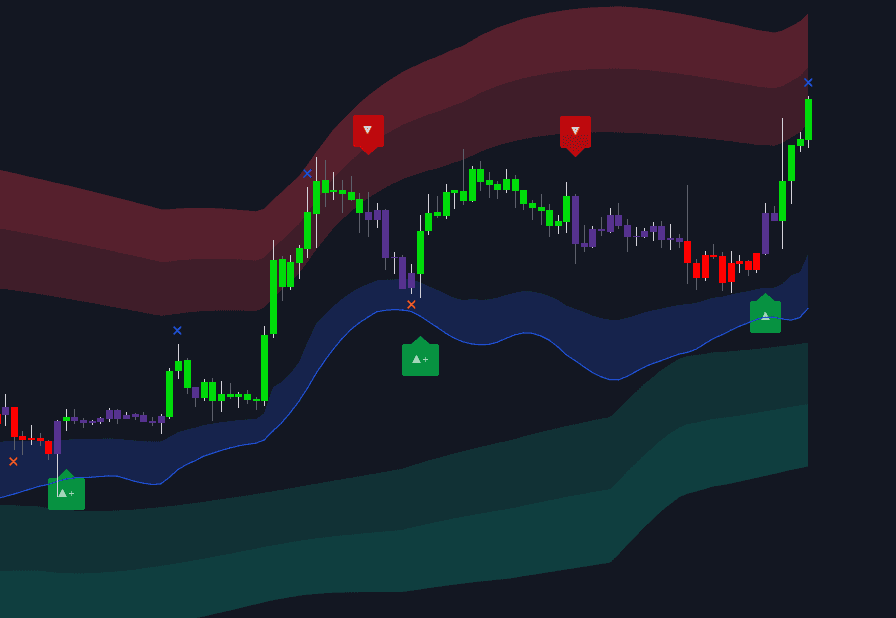
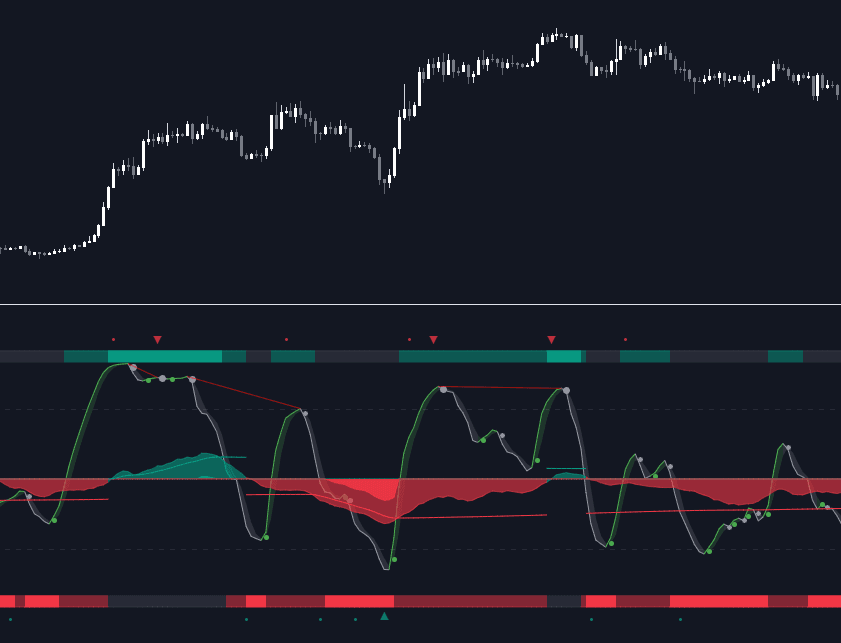
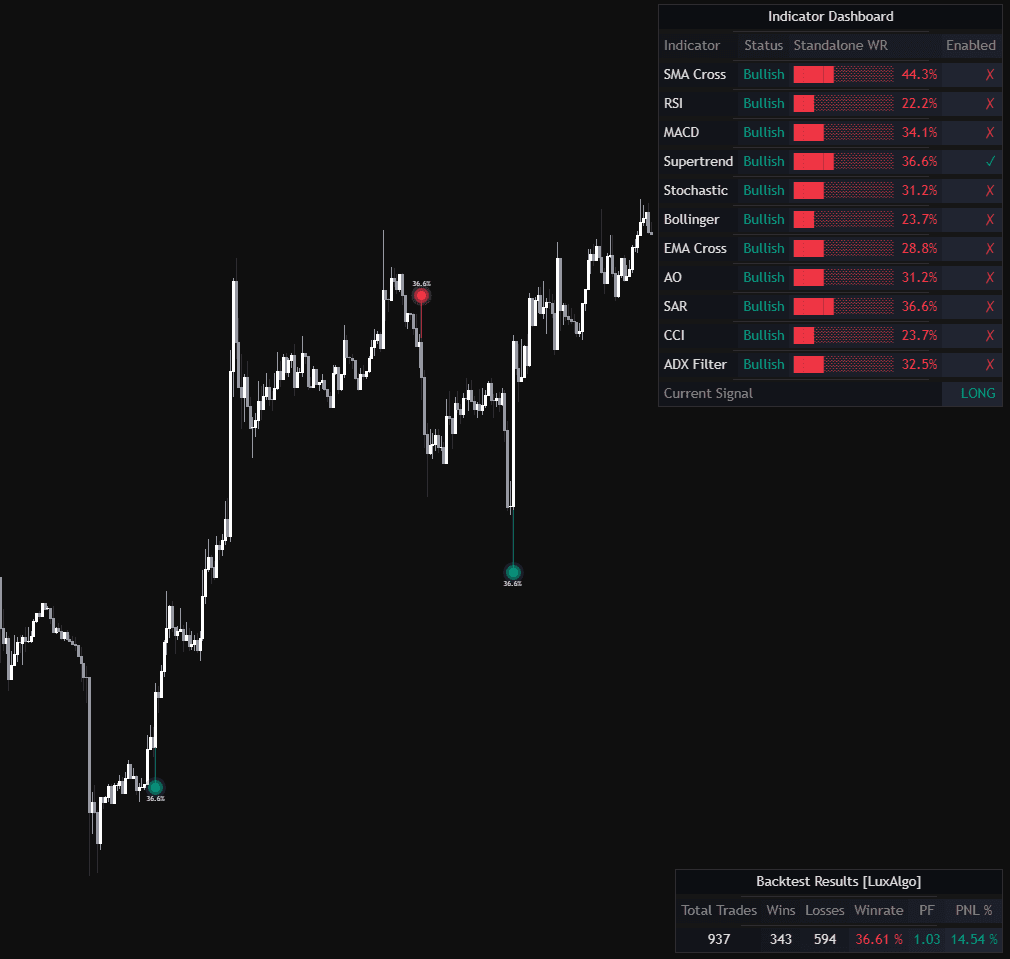
What are Confluence & Scoring Systems?
Confluence is the agreement of multiple independent pieces of evidence at the same time and place: trend, momentum, a key level, and a volume signature all pointing the same way. A confluence or scoring system formalizes that idea, and traders know it under several names: factor stacking, weighted voting, checklist trading. Instead of one condition gating a trade, each factor contributes a vote or a weighted score, and the aggregate expresses how much of the evidence currently lines up.
Common architectures include equal-weight voting (how many of N conditions are true), weighted scoring (factors scaled by assumed importance), A+ grading (setups ranked by how many checklist criteria they meet), and veto conditions (a single disqualifier zeroes the setup regardless of score). Composite oscillators blend inputs into one plotted line and ensemble voting aggregates model outputs; a scoring system does the same job one level up, at the rule layer. The binding design constraint is independence: five momentum oscillators agreeing is one measurement taken five ways, not five factors.
It matters because individual signals fail routinely, and requiring agreement trades frequency for selectivity. It also imposes discipline: the score is computed the same way on every setup, which blocks the habit of counting only the evidence that favors the trade you already want to take. A high score raises the evidence bar; it does not guarantee the outcome.
How to calculate a confluence score
A workable scoring system can be built as a manual checklist or coded; the calculation is the same either way.
- 1Choose factors that measure different dimensions: trend direction, momentum state, volatility regime, location relative to a level, volume behavior. Reject a candidate that mostly correlates with a factor already on the list.
- 2Define each factor as a testable condition with a point value, for example +1 when price holds above a long-term moving average, and add weights only where you can defend them; equal weights are the robust default.
- 3Set the action threshold and the vetoes: a minimum score to act (say 4 of 6) plus hard disqualifiers, such as a scheduled macro event, that stand you down at any score.
- 4Validate the score itself: check out of sample that higher scores actually corresponded to better outcomes, and prune factors that add correlation without adding information.
How traders use it
- As a trade filter: entries are only taken when the score clears a threshold, converting a stream of raw signals into a shorter list of higher-agreement candidates.
- As setup grading: A+, B, and C setups defined by criteria met, with position size scaled to grade rather than treating every signal identically.
- As veto logic: certain conditions (against the higher-timeframe trend, inside a news window, spread too wide) override any score, encoding the judgment that some negatives are not offset by positives.
- As conflict resolution: when trend and momentum disagree, the score makes the disagreement explicit and quantified, and a mixed reading becomes a defined stand-aside state instead of a coin flip.
Confluence scoring vs. related concepts
Composite Oscillators: A composite blends several inputs into one continuous indicator line you read on the chart. A scoring system aggregates discrete rule-level conditions into a decision framework; the output is a grade or count, not a plotted oscillator.
Ensemble Voting of Signals: Ensemble voting aggregates the outputs of multiple models or strategies, usually machine-built with data-driven weights. Confluence scoring is typically hand-designed from chart factors with discretionary weights; the underlying aggregation idea is the same.
MTF Alignment & Confluence Scoring: MTF alignment scores one condition across several timeframes; general confluence scoring pools several different conditions at one time and place. Many systems combine both axes.
Filter-setup-trigger-exit Architecture: Architecture sequences conditions by role: a filter must pass before a setup forms before a trigger fires. Scoring pools conditions simultaneously into one number. Sequenced gates versus pooled evidence.
More Confluence & Scoring Systems implementations
Concept family
Meta & Composition
28 concepts mapped · 28 in the Library
Confluence & Scoring Systems FAQ
Turn Confluence & Scoring Systems into a trading strategy.
Take any implementation from this page into Quant, then build on it, backtest it on real data, and keep refining it in conversation.