Concept
Round Numbers
Round Numbers, also known as 00, quarter levels 25/50/75, big figures, psychological levels, are Support/Resistance & Levels concepts. The Library holds 1 implementation, a working definition you can pull into Quant.
Top Round Numbers indicator
The top custom implementation, built on the original standard Round Numbers formula.
1 total
From studying Round Numbers to trading it: take the implementation below into Quant and backtest it instantly.
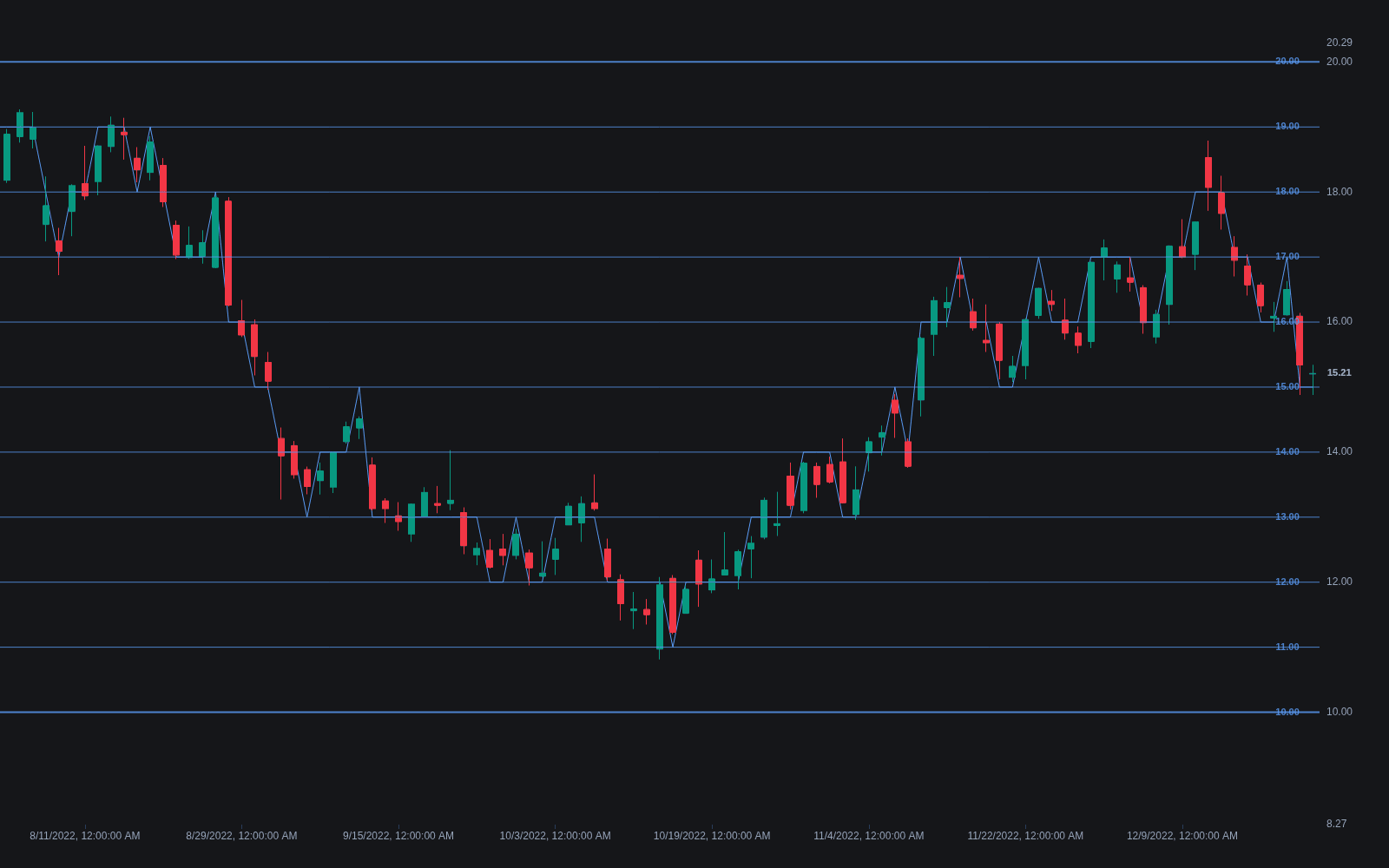
What are Round Numbers?
Round numbers, often called psychological levels, are prices ending in zeros or clean fractions: 1.1000 in FX (a big figure, with the double-zero 00 levels and the 25/50/75 quarter grid between them), $100 in a stock, thousand-point marks in an index. They act as ready-made support and resistance because humans and the systems they configure anchor to memorable prices. Limit orders, take-profits, and stop-losses pile up at round figures, so a shelf of standing interest exists there before any chart history does; order concentration at round increments is among the better-documented regularities in market microstructure research.
The order-book evidence is unusually direct. Carol Osler's studies of a major FX dealer's orders found take-profits bunched precisely at round numbers and stop-losses just beyond them, which fits two familiar behaviors: price reversing at figures more often than chance suggests, and running fast once a figure breaks as stops behind it fire.
What counts as round scales with the instrument: every 100 pips in a major FX pair, whole and half dollars on a low-priced stock, thousand-dollar steps in bitcoin. More trailing zeros generally means more attention. Round numbers also gain weight from the options market, since strikes sit on clean increments and hedging around large option strike walls can pin price near a figure into expiry. These are tendencies, not rules; round numbers break constantly.
They are also the only levels needing no history and no judgment: every participant sees the same grid, making figures natural coordination points and obvious targets. Sweeps that run a figure by a few ticks before reversing are common enough that experienced traders treat the number as a zone, not a line, grading interactions there as at any support level or resistance level.
How to mark round numbers on a chart
Nothing needs detecting; the work is choosing grid density to fit the instrument and timeframe.
- 1Identify the instrument's natural increments: 00 big figures and 50 half-figures in FX, whole and half dollars on cheaper stocks, hundreds and thousands on indexes and crypto.
- 2Draw the grid across the visible range and thin it when lines crowd the chart; levels with more trailing zeros stay, finer subdivisions go first.
- 3Highlight figures that coincide with independently derived levels such as prior period levels, floor pivots, or a Fib retracement; confluence upgrades both.
- 4Treat each figure as untested until price interacts with it, then grade the reaction using the same level interaction rules as anywhere else: rejection, absorption, or acceptance through.
How traders use it
- As a pre-drawn level map: mark the 00 and 50 grid, or the instrument's equivalent, ahead of time and treat reactions there like reactions at any untested level, fading or breakout-trading only with confirmation.
- For stop and target hygiene: stops parked exactly at the figure sit inside an obvious pool of resting orders, so many traders place stops beyond the number and targets slightly in front of it, accepting that price can stall just short of the mark.
- As confluence: a round number that coincides with an independent technical level, a prior day high or a pivot, upgrades both; measured targets are commonly nudged to sit just in front of the nearest figure.
- As breakout fuel: once a defended figure gives way, stops stacked beyond it tend to accelerate the move, so breakout traders distinguish the first tick through a number from acceptance beyond it.
- As session context: a figure near one of the period opens frames early bias, and into expiries price can gravitate toward strike-heavy figures under two-sided hedging flows.
Round Numbers vs other pre-drawn levels
S/R Zone: Classic zones are earned by prior reactions; round numbers exist before the first trade prints. Both work best as areas, and a figure inside an established zone is the stronger case.
Floor Pivots: Both are known before the open, but pivots derive from the prior day's range and close and move every session; the round-number grid is fixed by the number system itself.
Option Strike Walls: Strikes sit on clean increments, so walls and figures usually coincide. The wall adds positioning data, open interest at the strike, to the number's psychology, and the two are watched together into expiry.
Prior Period Levels: Yesterday's high or last week's low mark where the auction actually turned; a figure marks where interest is merely expected. When the two land within a few ticks, traders treat the shared area as one stronger level.
Concept family
Support/Resistance & Levels
38 concepts mapped · 38 in the Library
Round Numbers FAQ
Turn Round Numbers into a trading strategy.
Take the implementation from this page into Quant, then build on it, backtest it on real data, and keep refining it in conversation.