Concept
Support Level
Support Level is a Support/Resistance & Levels concept. The Library holds 1 implementation, a working definition you can pull into Quant.
Top Support Level indicator
The top custom implementation, built on the original standard Support Level formula.
1 total
Want to trade Support Level? The implementation below is one prompt away from a backtested strategy in Quant.
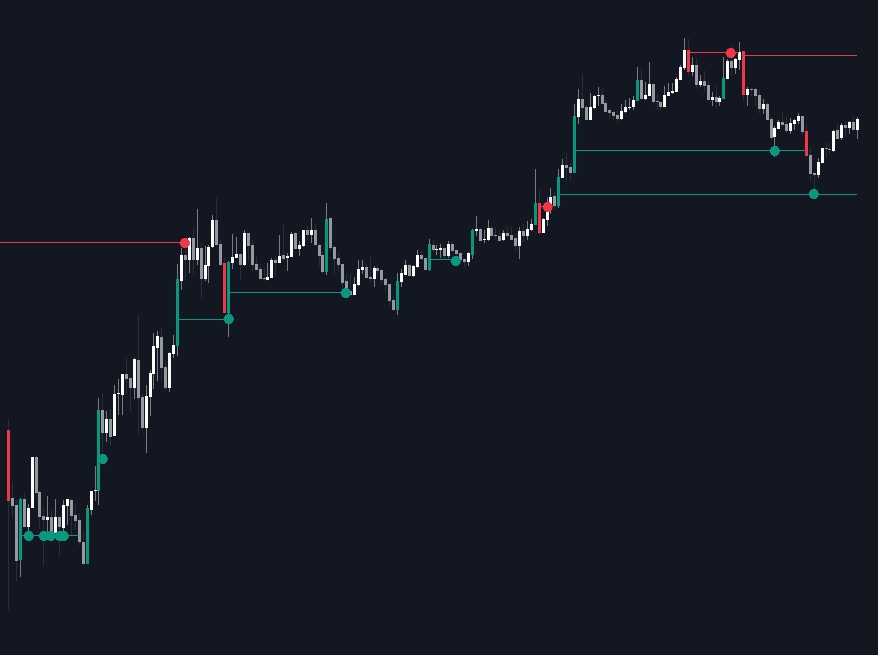
What is a Support Level?
A support level is a price where a market has repeatedly stopped falling and turned higher, drawn as a horizontal line beneath current price. The classical mechanism is resting demand: buyers who acted there before, or missed the first turn and want another chance, are assumed willing to act there again. Support is typically located at prior swing lows, consolidation floors, round numbers, and widely watched prior period extremes.
A level is really a behavior, not a price. Reversals rarely print twice at the same tick, so the line is an idealization of a scatter of lows, and many traders widen it into an S/R zone or keep a body-based line inside a wick-based band. The common reading says more touches, heavier volume at the touches, and greater age strengthen support; the liquidity-based counterargument says every test consumes the demand that made it hold, so the count cuts both ways.
Support organizes decisions on both sides of the market. Bulls stage entries at or just above it and hide stops beneath it; breakout traders watch for a decisive close below, after which the level becomes candidate resistance under the role reversal convention. It matters because so many participants key off the same line, and it fails for the same reason: the stops clustered under obvious support are themselves a target for liquidity sweeps, so holding is never guaranteed.
How to identify a support level
Support is read from prior lows and the behavior around them rather than computed from a formula.
- 1Collect the swing lows. Mark the points where price fell, reversed, and left visible rejection: long lower wicks or strong closes off the low.
- 2Find agreement. A level needs at least two reversals near the same price; run the line through the cluster, using bodies for a conservative read or wick extremes for the full reach of the reaction.
- 3Check what else lives there. A round number, a prior consolidation floor, a high-volume shelf, or a higher-timeframe low at the same price all increase how many participants are watching the level.
- 4Judge it by the next test. A bounce keeps it alive; a decisive close below breaks the map; a wick through that recovers is a false break. Update the level's status instead of defending it.
How traders use it
- For long entries: buying pullbacks into support, either with resting limit orders at the level or after a confirming reaction, a choice that trades fill quality against evidence.
- For risk placement: protective stops sit below support with an allowance for noise, often sized from recent volatility or the structure beneath, because stops set exactly at the level live inside ordinary wick traffic.
- For breakdown trades: a decisive close below support is a common short trigger or long exit, with the caveat that false breakouts beneath obvious support happen often enough that many traders wait for the level to be retested from below.
- For building the map: support levels layered with other references become the skeleton of a plan, defining where longs make sense, where they are wrong, and where the next decision point waits.
Support Level vs related concepts
Resistance Level: The mirror image above price, where selling has repeatedly capped advances. The two swap roles when broken, which is the role-reversal convention.
S/R Zone: The band version. A line claims one price; a zone spans the scatter of actual reversal prints. Same logic, different tolerance for noise.
Supply & Demand Zones: Origin-based rather than touch-based: drawn from the base before an impulsive departure and considered strongest untested, whereas classical support is validated by its touch history.
Trendline: Diagonal support rising under successive higher lows. Its price changes every bar, and both its drawing conventions and its break semantics differ from a horizontal level's.
Concept family
Support/Resistance & Levels
38 concepts mapped · 38 in the Library
Support Level FAQ
Turn Support Level into a trading strategy.
Take the implementation from this page into Quant, then build on it, backtest it on real data, and keep refining it in conversation.