Concept
Level Interaction Rules
Level Interaction Rules, also known as break-and-close, wick rejection, retest, are Support/Resistance & Levels concepts. The Library holds 6 implementations, each one a working definition you can pull into Quant.
Top Level Interaction Rules indicators
The top custom implementations, built on the original standard Level Interaction Rules formula.
6 total
From studying Level Interaction Rules to trading it: take any implementation below into Quant and backtest it instantly.
What are Level Interaction Rules?
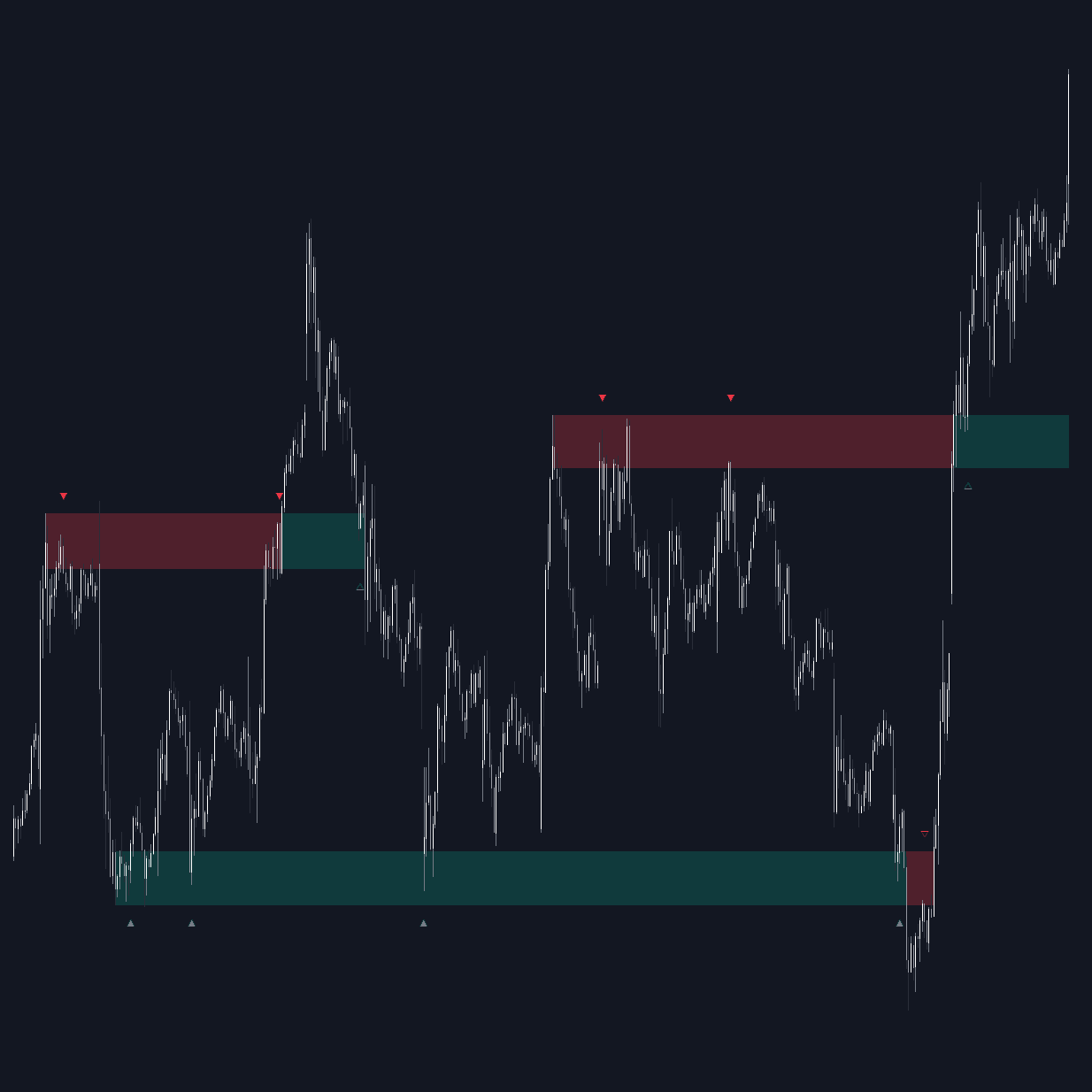
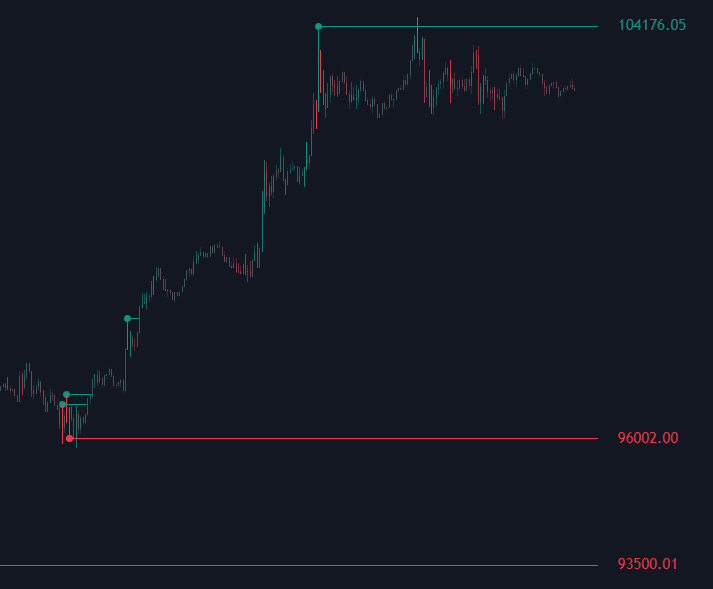
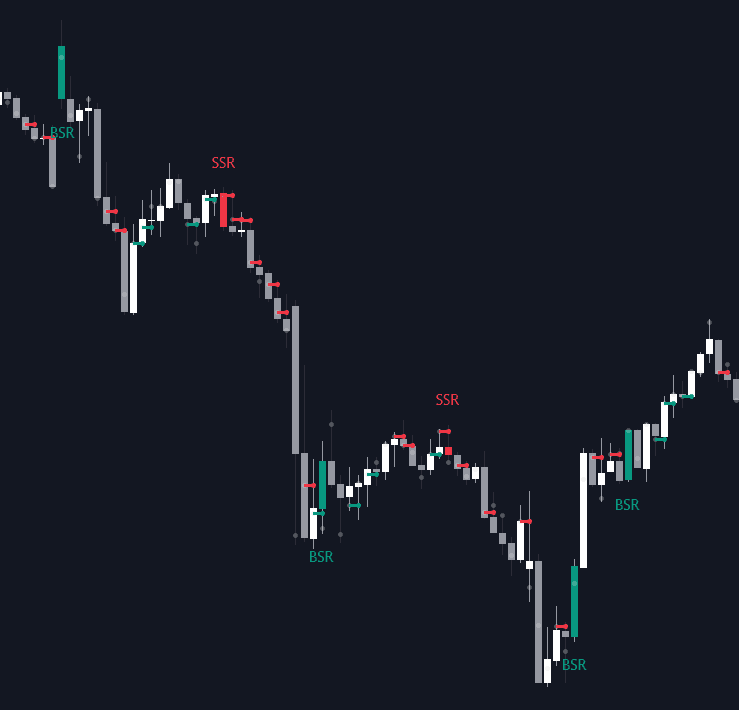
Level interaction rules are the criteria that classify what price actually did at a level. 'Price came to support' is not an event; a wick through that closes back above, a full-bodied close below, and a quiet touch-and-go are three different events with three different meanings. The standard vocabulary covers the test (price reaches the level), the wick rejection (intrabar penetration with a close back on the original side), the break-and-close (a candle body finishing beyond the level), the retest (a return to a broken level from the other side), and the reclaim (a break that fails and closes back through).
Codifying interactions matters for two reasons. First, the same level carries opposite messages depending on the event: a wick rejection argues the level is defended, while a break-and-close followed by a held retest argues for role reversal, old support acting as new resistance or the reverse. Second, precise rules make levels testable: an alert or a backtest has to know whether a break requires one close, two closes, a close a minimum distance beyond, or a higher-timeframe close. No rule set removes failure. Wick-based rules trigger early and absorb more false signals; close-based rules confirm late and give up entry price.
How to read a level interaction
Reading an interaction is a sequence, not a snapshot; the bars after the touch decide the classification.
- 1Treat the level as a band, not a tick: give it a tolerance (a few ticks, a percentage, or an ATR fraction) so near-misses and small overshoots do not flip the reading.
- 2Classify the first penetration: wick-only with a close back on the original side reads as rejection; a candle body closing beyond reads as a provisional break.
- 3Check the follow-through: a break that holds on the next bar or two strengthens the case, while a prompt close back through the level is a reclaim and warns of a false breakout.
- 4If the break holds, watch the return: a retest that holds from the far side supports role reversal, and it is where many traders actually enter.
How traders use it
- Breakout confirmation: requiring a body close beyond the level, or two consecutive closes, filters out wick-through fakeouts at the cost of later entries.
- Rejection fades: long wicks through a level that close back inside are traded as evidence of absorption, especially when the poke ran obvious stops in a liquidity sweep.
- Retest entries: entering on the return to a broken level rather than on the break itself gives better location and a natural stop just beyond the level, in exchange for missing moves that never come back.
- Automation: exact interaction definitions are what let indicators label breaks, retests, and reclaims consistently, and let backtests measure how a market actually behaves at its levels.
Level Interaction Rules vs related concepts
Retest: The retest is one event inside the interaction taxonomy: the return to a broken level. Interaction rules cover the full set, from first touch to reclaim, and define when a retest counts as held.
False Breakout: A false breakout is the after-the-fact diagnosis; interaction rules are the real-time criteria. The reclaim rule, a close back through a broken level, is how the failure gets caught as it happens.
Liquidity Sweep: A sweep is the order-flow narrative for a wick through a level that snaps back: stops were run. The interaction rule describes the same bar mechanically, without claiming why it happened.
More Level Interaction Rules implementations
Concept family
Support/Resistance & Levels
38 concepts mapped · 38 in the Library
Level Interaction Rules FAQ
Turn Level Interaction Rules into a trading strategy.
Take any implementation from this page into Quant, then build on it, backtest it on real data, and keep refining it in conversation.