Concept
Inducement
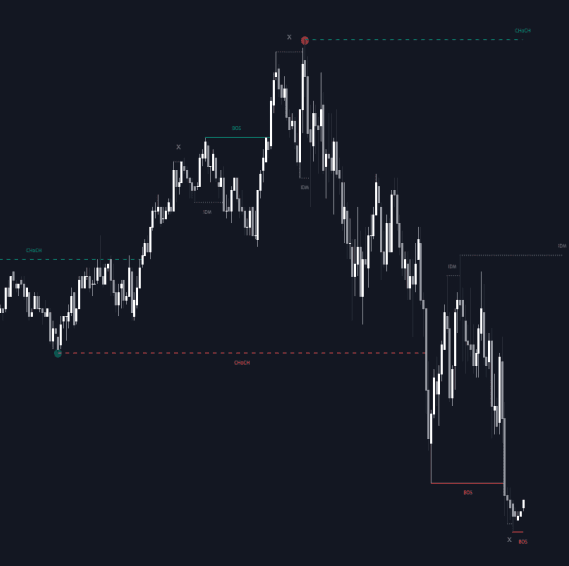
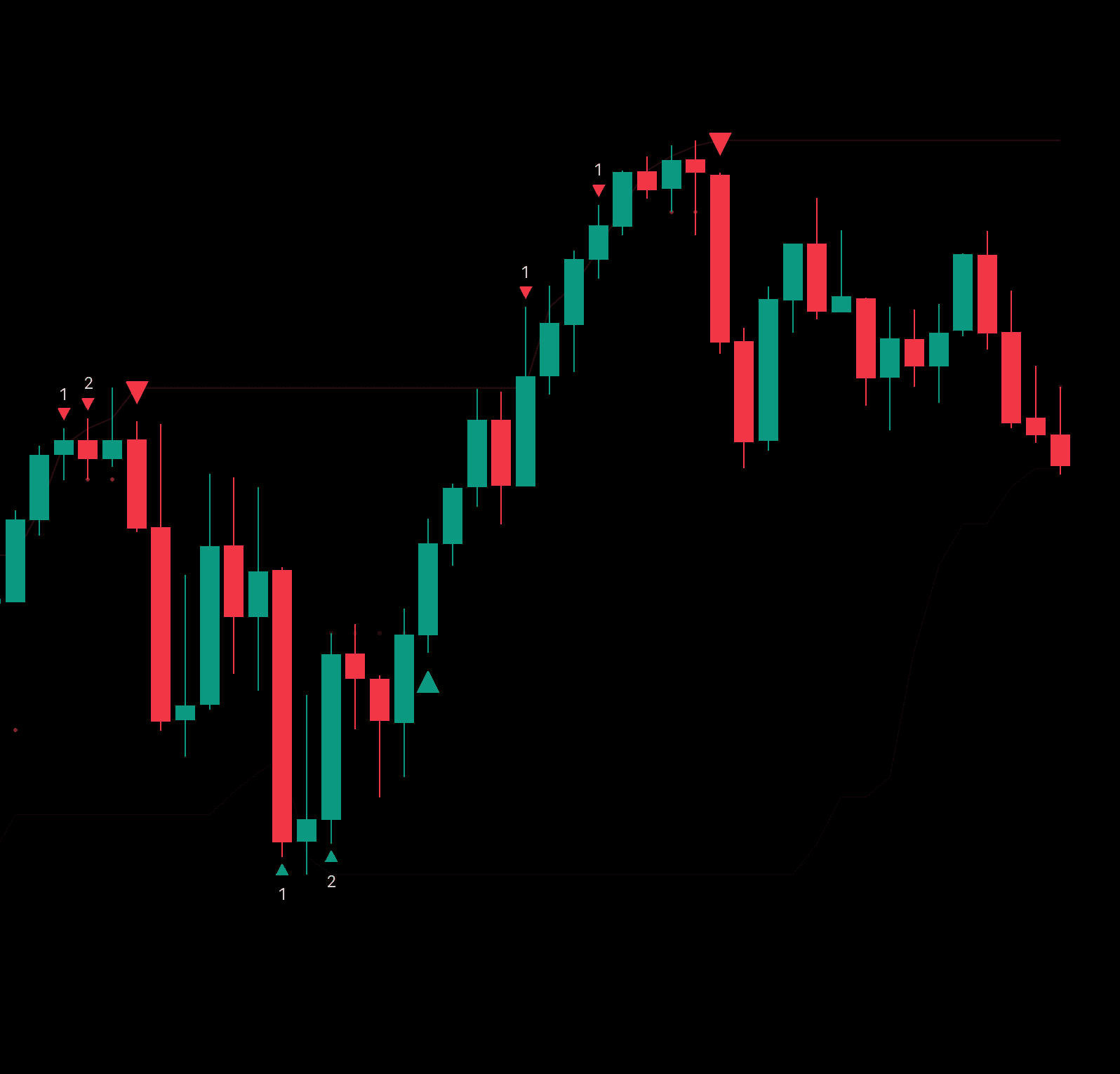
Inducement, also known as engineered liquidity, is a Smart Money Concepts / ICT concept. The Library holds 2 implementations, each one a working definition you can pull into Quant.
IDM
Top Inducement indicators
The top custom implementations, built on the original standard Inducement formula.
2 total
Want to trade Inducement? Any of the 2 implementations below is one prompt away from a backtested strategy in Quant.
What is Inducement?
Inducement (marked IDM on many charts) is liquidity read as bait: in the common usage, the minor pullback high or low sitting in front of a level a larger move is expected to reach. Traders who enter on that shallow pullback park their stops just behind it, turning the pocket into a small liquidity pool, one the framework expects price to collect on the way to the real area of interest. The alias engineered liquidity captures the reading: an inviting early entry whose stops fund the move through it.
The term spread with the Smart Money Concepts current of price-action trading in the late 2010s and early 2020s, building on the liquidity-first teaching of Michael Huddleston, the Inner Circle Trader. The premise is that resting orders behind obvious swing points are fuel that moves tend to route through. Whether that reflects deliberate engineering by large players or ordinary order-driven mechanics cannot be proven from a chart, so the concept is best held as a description of a recurring sequence, not a claim about intent.
Definitions vary between teaching styles, and it's worth knowing both. In strict structure-mapping models, the IDM is specific (the most recent internal pullback before a swing extreme), and a zone behind it, such as an order block, isn't treated as valid until that pullback has been run. In looser usage, inducement covers any engineered trap: a minor liquidity sweep that recruits traders in one direction before the move goes the other way.
Inducement addresses a familiar failure mode of level trading: the zone that looks perfect but only trades after the obvious early entry has been stopped out. In the accumulation-manipulation-distribution reading of a session, the run through inducement is the manipulation step, the false move that funds the real one. It also pairs with time: sweeps around session opens or inside the London and New York killzones carry more weight than the same shapes in dead hours.
How to identify inducement on a chart
Inducement is found by working backward from the level you care about, not by scanning for it in isolation.
- 1Mark the impulse leg into the current extreme and the zone of interest at its origin, such as an order block or the fair value gap it left behind.
- 2Scan between current price and that zone for the first minor pullback high (for shorts) or low (for longs) inside the leg; that internal swing point is the candidate IDM.
- 3Ask where the obvious stops sit: if the pullback is the natural early entry, the pocket just beyond it holds those entrants' stops, which is what makes it inducement.
- 4Watch the approach: the expected sequence is a fast, often wick-heavy run through the IDM, then continuation into the zone behind it.
- 5Treat the zone as live only after the sweep; many models regard entries before the IDM is run as premature by definition.
How traders use it
- As a validity filter: a supply or demand zone with untouched inducement in front of it is treated as not ready; the model waits for the IDM to be swept before considering entries at the level behind it.
- As entry timing: rather than buying the first shallow pullback in an uptrend, inducement-aware traders let that pullback's low get run first, entering after the trap has sprung instead of inside it.
- As a stop-placement warning: the most inviting stop location, just behind the first pullback, is precisely the pocket the concept says gets collected; stops go beyond the inducement, or the trade waits until it has been taken.
- As session context: intraday models read inducement against session liquidity, treating a session's shallow pullbacks and equal highs or lows as bait in front of larger objectives, with timing filtered through ICT time anchors.
- For refined entries: once the IDM is swept, traders look for the reaction at the level behind it, stacking an optimal trade entry retracement or a breaker block left by the trap.
Inducement vs related concepts
Liquidity Pool: The genus. Any pocket of resting orders, from equal highs to trendline touches, is a pool; inducement is a pool cast in a particular role, the near-side bait in front of a bigger objective. Every IDM is a pool, while most pools are not inducement.
Liquidity Sweep: Role versus event. Inducement names a location and its function; the sweep is the act of running it. Taking an IDM is a sweep by definition, but sweeps of major external highs and lows are destinations in their own right, not bait.
Bullish/bearish Order Block: The thing inducement guards. In strict models, the order block at a leg's origin is not ready until the inducement in front of it has been run; the two form a sequence, sweep the bait then trade the zone, rather than competing signals.
Concept family
Smart Money Concepts / ICT
54 concepts mapped · 54 in the Library
Inducement FAQ
Turn Inducement into a trading strategy.
Take any implementation from this page into Quant, then build on it, backtest it on real data, and keep refining it in conversation.