Concept
Inversion FVG
Inversion FVG is a Smart Money Concepts / ICT concept. The Library holds 3 implementations, each one a working definition you can pull into Quant.
IFVG
Top Inversion FVG indicators
The top custom implementations, built on the original standard Inversion FVG formula.
3 total
Every Inversion FVG implementation here is strategy-ready: open one in Quant, set your rules, and it backtests automatically.
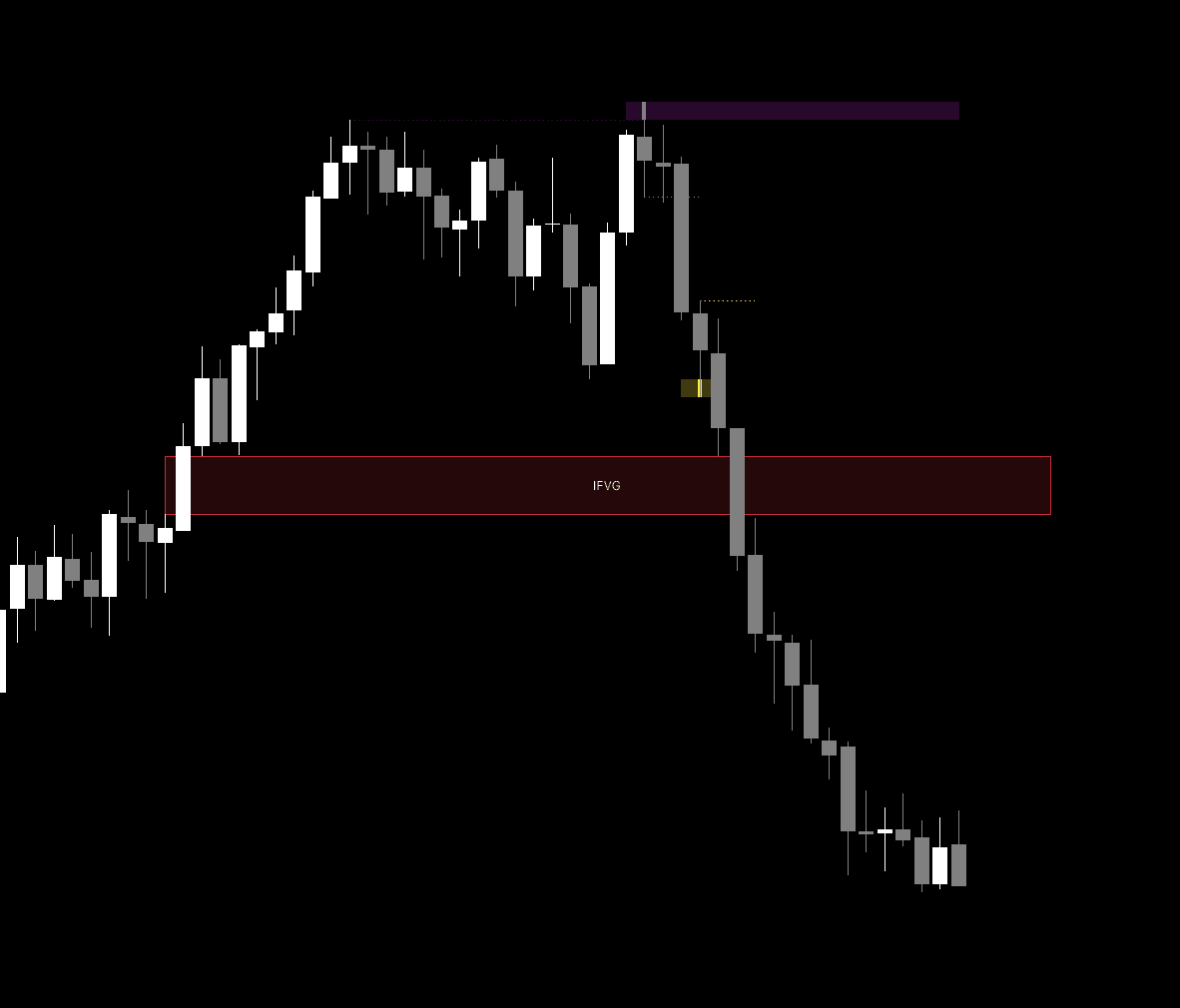
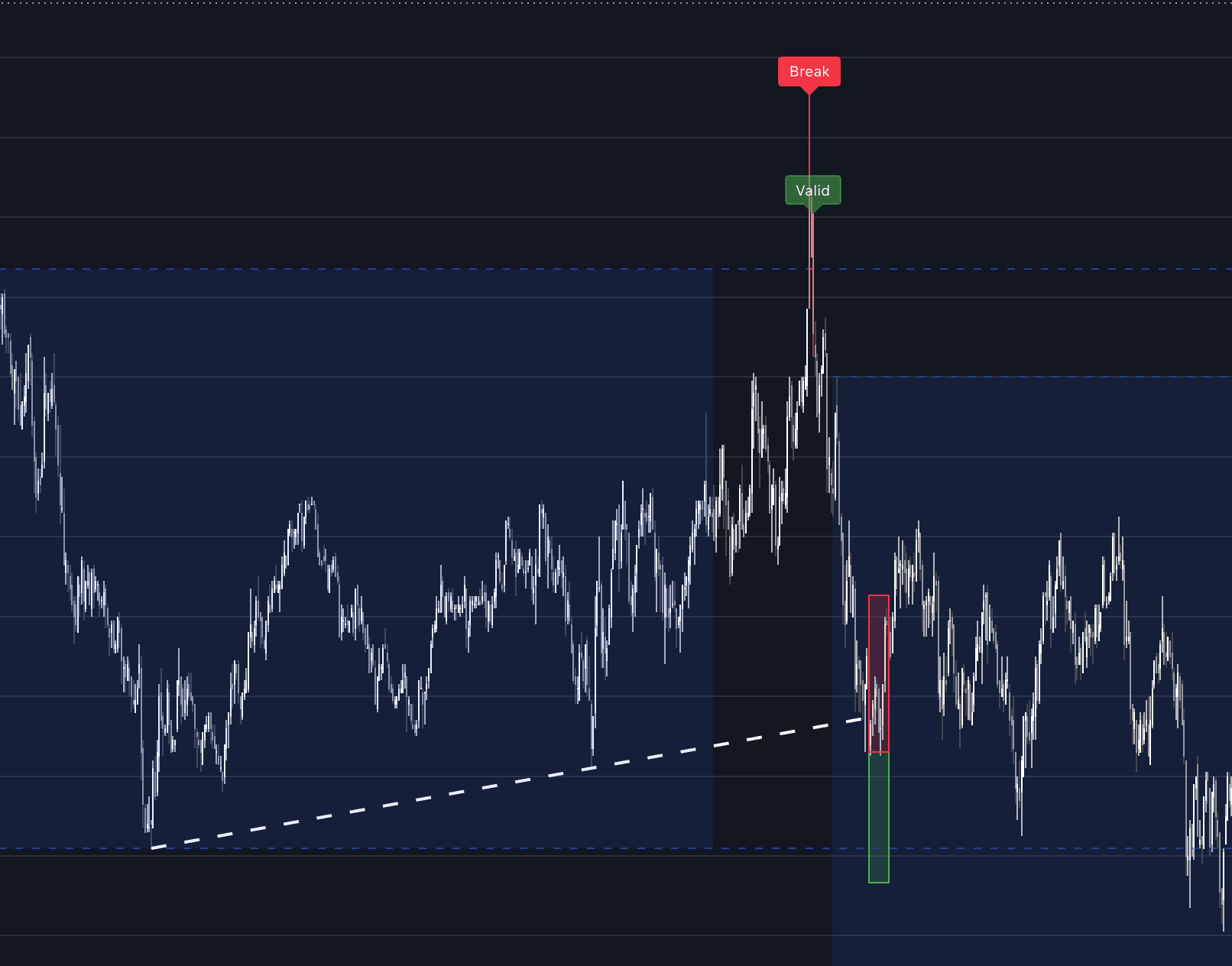
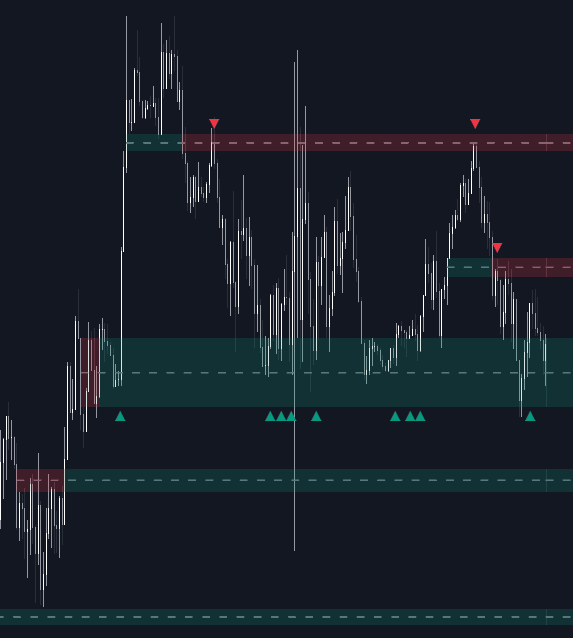
What is an Inversion FVG?
An inversion fair value gap is a fair value gap that failed and flipped roles. A bullish gap is expected to act as support when price trades back into it; if price instead closes through the entire gap, the level inverts: the same span is now watched as resistance. A violated bearish gap inverts into support the same way. Nothing about the gap itself moves; what changes is which side of it traders expect to be defended.
The logic is role reversal applied to imbalances. A gap that fails traps the traders who leaned on it; longs who bought into a bullish gap are underwater once price closes below it, and their exits supply the market on the first retest from beneath. Smart Money Concepts / ICT traders like the setup for its built-in invalidation: the idea is expressed against the far side of the gap, and if price closes back through and reclaims the span, the inversion is simply wrong.
How to identify an inversion fair value gap
An inversion only exists after an ordinary gap has demonstrably failed, so the read happens in two stages: first the gap, then the violation.
- 1Locate a standard three-candle fair value gap and note its intended role: a bullish gap below price should act as support, a bearish gap above price as resistance.
- 2Watch the return. A wick that probes into the gap and holds is normal behavior (the gap doing its job), not an inversion.
- 3Confirm the violation. The common requirement is a candle body closing beyond the far side of the gap; a wick-through alone is usually read as a probe into the gap rather than a genuine inversion. Conventions differ on strictness, so know which rule you are applying.
- 4Flip the role and wait for the retest: the violated bullish gap is now treated as resistance (a violated bearish gap as support), and rejection on the first return is the classic sign the inversion is live.
How traders use it
- As a retest entry: after the close-through, the first return to the inverted span is watched for rejection, with the stop just beyond the far side of the gap; a reclaim of the span invalidates the whole idea, so risk is defined by construction.
- As the confirmation leg of sweep-based models: a liquidity sweep takes stops beyond a key high or low, and the displacement away from it closes through an opposing gap; the inversion is read as evidence the reversal has follow-through rather than being another probe.
- As a bias flip: a gap that holds says the original imbalance is being defended, while the same gap inverting says the other side has taken control, often alongside a change of character on the same timeframe.
- As a quality filter: when gaps invert and are then reclaimed in quick succession, imbalance-based reads are failing in both directions, which many traders take as a signal to stand aside rather than keep flipping with each violation.
Inversion FVG vs. neighboring concepts
Fair Value Gap: The parent. A fair value gap is expected to hold in its original direction; an inversion FVG is what remains after it demonstrably failed, the same span on the chart with the opposite expectation attached.
Breaker Block: Both are failed-and-flipped structures, but a breaker is a violated order block (real traded candles), while an inversion FVG is a violated gap between candles. They often overlap and get used interchangeably as flip zones.
Balanced Price Range: A balanced price range is two opposing gaps overlapping: fast delivery both ways through the same span, leaving a two-sided zone. An inversion FVG is one gap violated once, leaving a single flipped direction.
Concept family
Smart Money Concepts / ICT
54 concepts mapped · 54 in the Library
Inversion FVG FAQ
Turn Inversion FVG into a trading strategy.
Take any implementation from this page into Quant, then build on it, backtest it on real data, and keep refining it in conversation.