Concept
Accumulation-manipulation-distribution
Accumulation-manipulation-distribution, also known as AMD, Power of Three, PO3, is a Smart Money Concepts / ICT concept. The Library holds 3 implementations, each one a working definition you can pull into Quant.
Top Accumulation-manipulation-distribution indicators
The top custom implementations, built on the original standard Accumulation-manipulation-distribution formula.
3 total
Any of the 3 Accumulation-manipulation-distribution implementations below can become a backtested trading strategy — describe your rules and Quant writes the code.
What is Accumulation-manipulation-distribution?
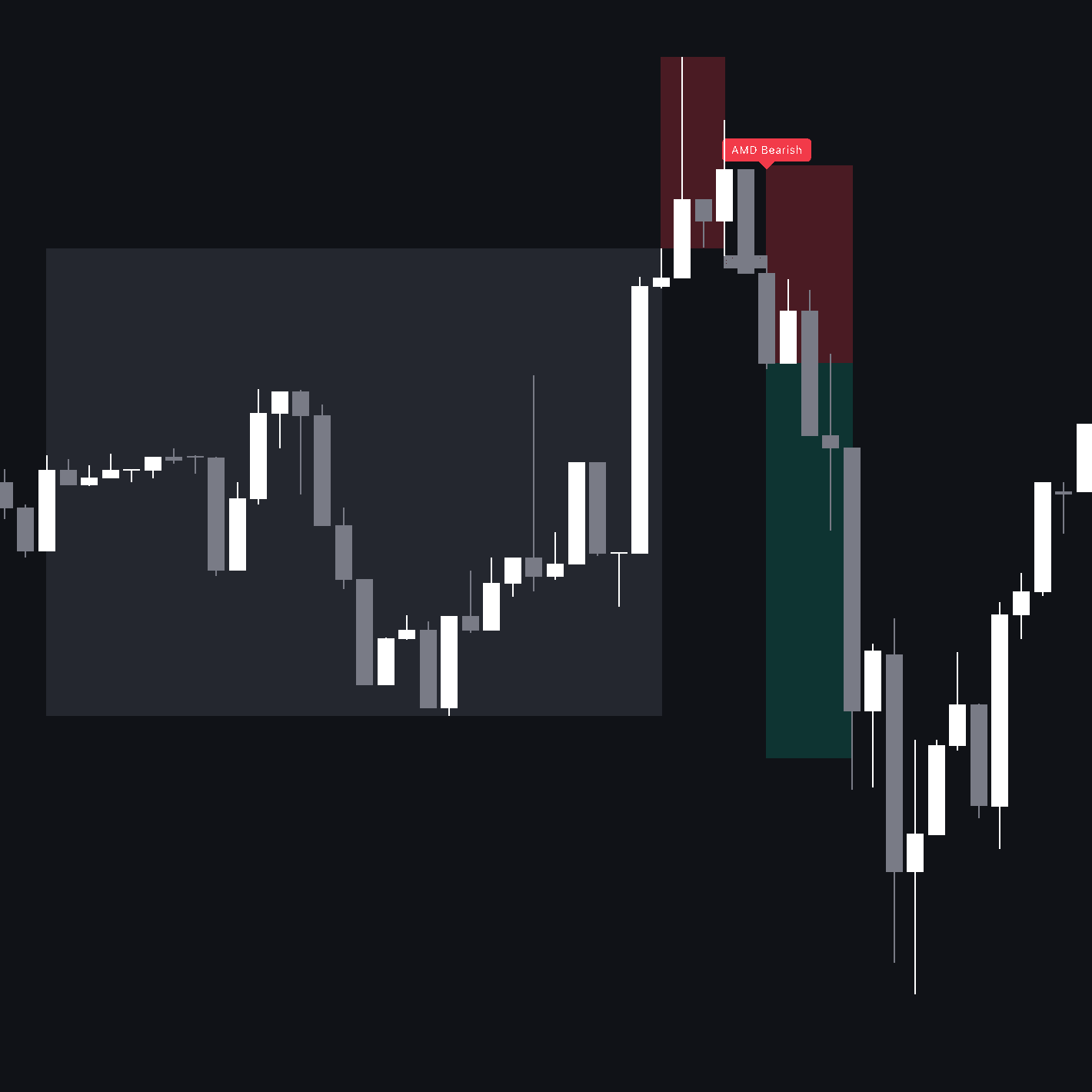
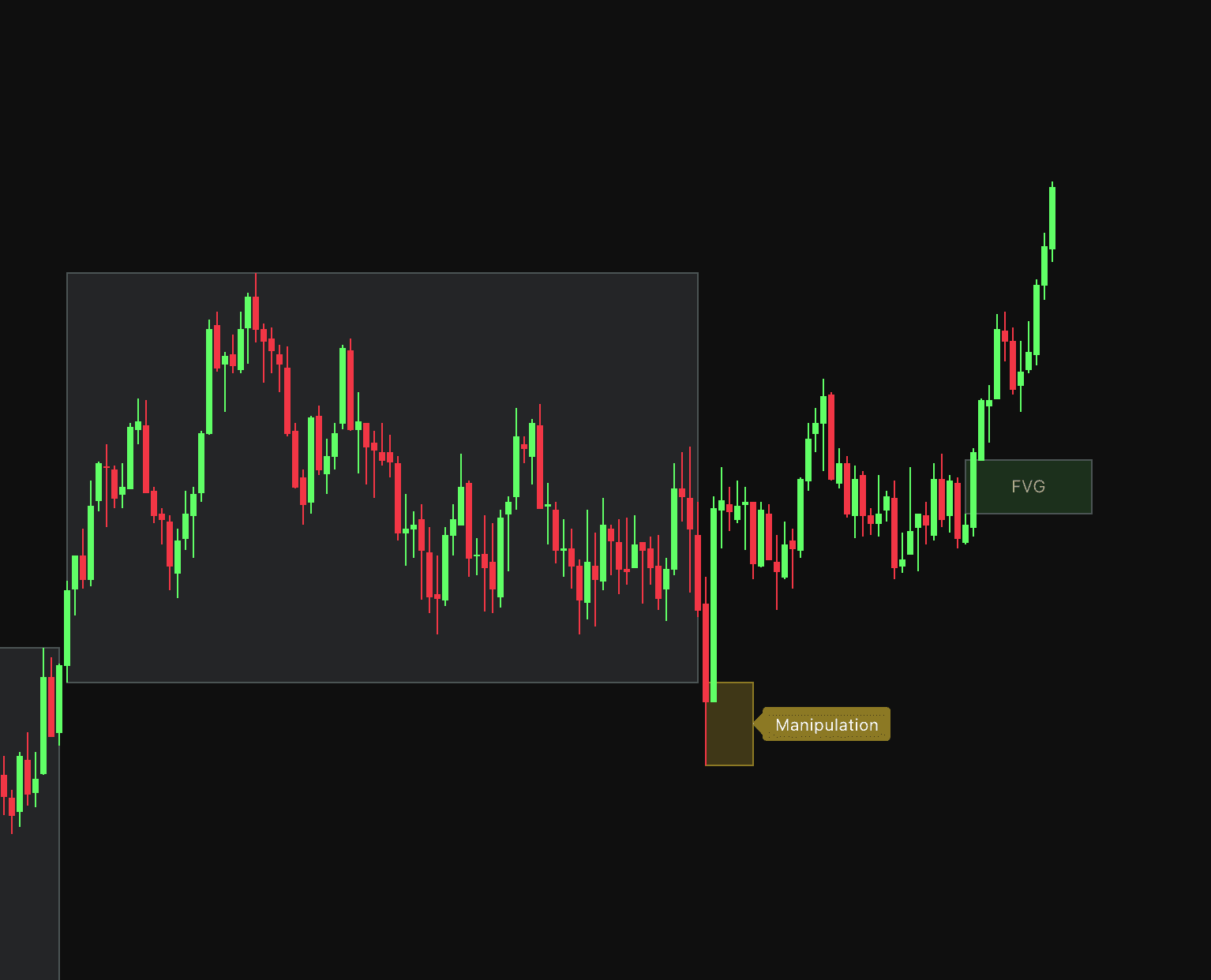
Accumulation–manipulation–distribution (AMD), or in ICT vocabulary the Power of Three (PO3), is a template for how a trading period unfolds around its open. First accumulation: price consolidates in a range at or near the opening price while positions build. Then manipulation: a false move breaks out on the wrong side of the open (the Judas swing), collecting stops and trapping breakout traders. Finally distribution: the real leg expands away from the manipulation extreme, and the period closes near the opposite end of its range.
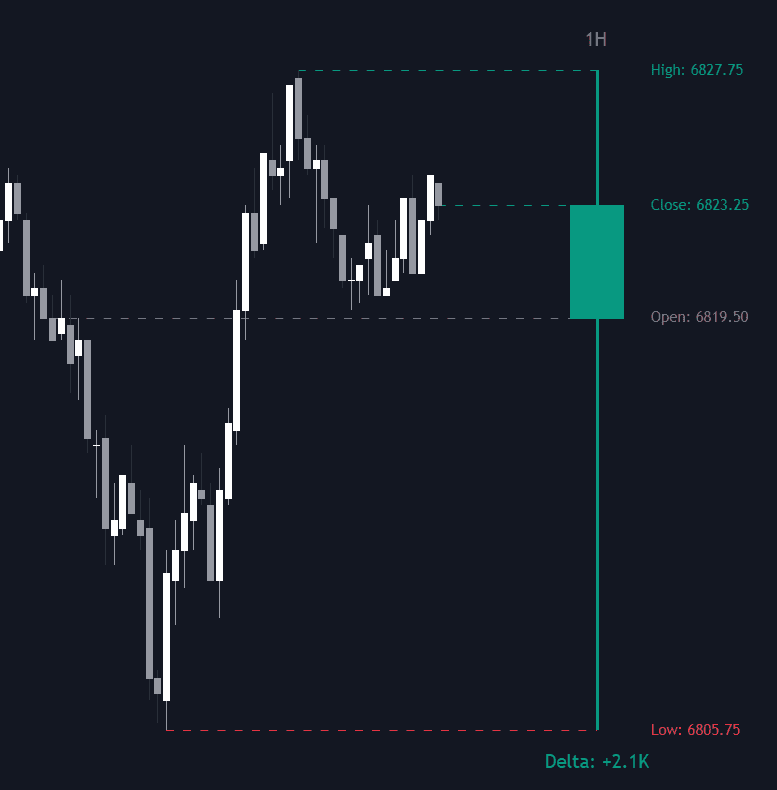
The template is anchored to an opening price and is fractal. On a finished daily candle the anatomy is easy to see in hindsight (a bullish PO3 day opens near its low, wicks below the open, and closes near its high), and the same read applies to a week anchored to Monday's open or to a single session. It is descriptive, not mechanical: plenty of periods trend from the open with no manipulation leg at all, so most traders use PO3 to frame what could happen around period opens rather than as a standalone signal.
How to identify an AMD sequence
The pattern only exists relative to an opening price, so identification starts with the anchor rather than the shape.
- 1Anchor the open. Choose the period you are framing and mark its opening price: commonly the midnight New York open for the day, Monday's open for the week, or a session open for intraday work.
- 2Watch for accumulation: a comparatively tight consolidation straddling or hugging the open, without sustained follow-through in either direction.
- 3Mark the manipulation: an impulsive run beyond one side of that consolidation that takes out obvious resting liquidity (prior session extremes, equal highs or lows) and then stalls rather than trending on.
- 4Confirm distribution: displacement back through the open and an expansion that holds into the close. Until that leg forms, a suspected manipulation is indistinguishable from a genuine breakout. The third phase is what validates the second.
How traders use it
- As a daily bias tool: traders expecting a bullish day watch for early weakness below the opening price into sell-side liquidity, and treat the reclaim of the open as the first evidence that manipulation has finished and distribution is beginning.
- As a session map, one common intraday reading assigns the phases to sessions: Asia accumulates, the London open manipulates, and London into New York distributes, with killzones supplying the timing windows for each phase.
- As entry timing: rather than buying inside the accumulation range, PO3 traders wait for the manipulation sweep and the displacement back through the range, then join the distribution leg on a retracement.
- Fractally, a weekly PO3 anchored to Monday's open frames which day is likely to print the week's manipulation low or high, nesting the daily template inside the weekly one.
AMD vs. related concepts
Judas Swing: The Judas swing is the manipulation phase in isolation: the false early run beyond the open. AMD is the full three-act template that places that swing between an accumulation range and a distribution leg.
Wyckoff Accumulation Schematic: Wyckoff accumulation is a campaign-scale schematic with named internal events (springs, tests, signs of strength), usually spanning weeks. AMD compresses a similar range–shakeout–markup logic into a single open-anchored period and carries no volume methodology.
Market Maker Models: Market maker buy and sell models describe a symmetrical curve: in the buy model, delivery down through consolidations to an accumulation low, then delivery back up through the same levels, with the sell model as its mirror. PO3 is the simpler asymmetric read: one open, one false move, one true move.
Concept family
Smart Money Concepts / ICT
54 concepts mapped · 54 in the Library
Accumulation-manipulation-distribution FAQ
Turn Accumulation-manipulation-distribution into a trading strategy.
Take any implementation from this page into Quant, then build on it, backtest it on real data, and keep refining it in conversation.