Concept
IPDA & Price Delivery Theory
IPDA & Price Delivery Theory, also known as interbank price delivery algorithm, algorithmic price delivery, market efficiency paradigm, IPDA look-backs 20/40/60, is a Smart Money Concepts / ICT concept. The Library holds 2 implementations, each one a working definition you can pull into Quant.
Top IPDA & Price Delivery Theory indicators
The top custom implementations, built on the original standard IPDA & Price Delivery Theory formula.
2 total
From studying IPDA & Price Delivery Theory to trading it: take any implementation below into Quant and backtest it instantly.
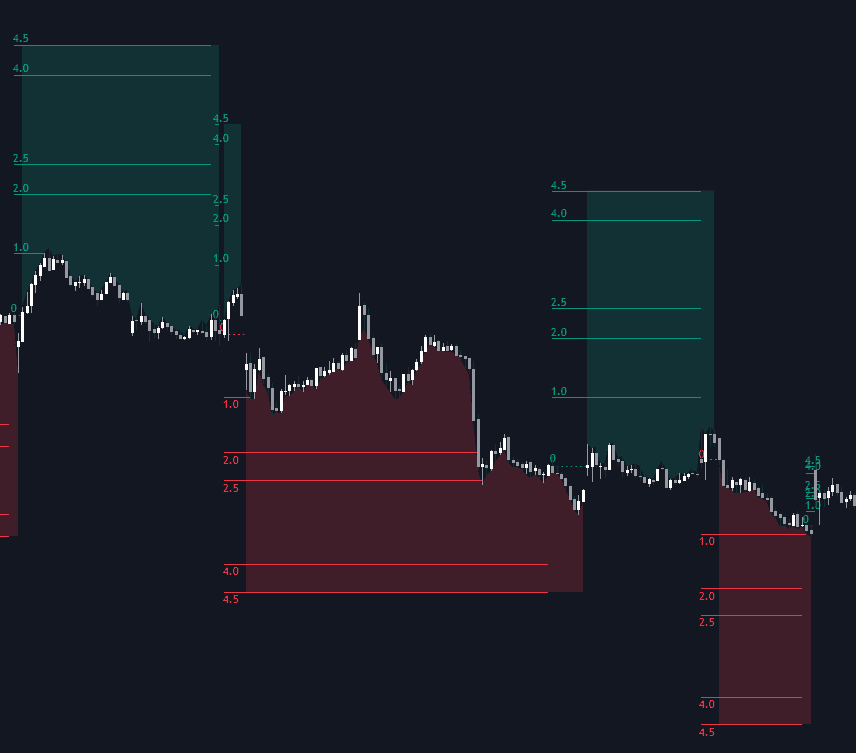
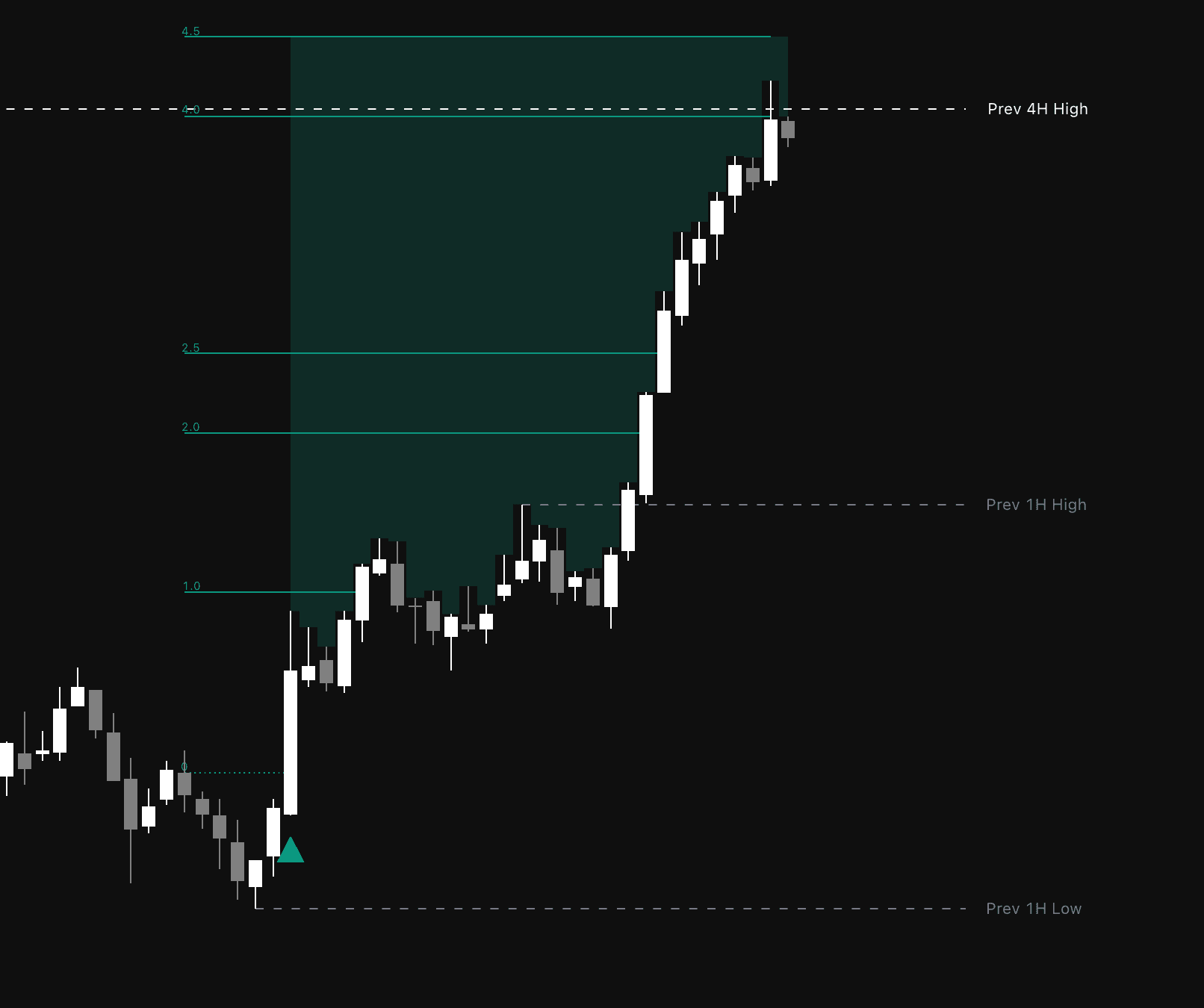
What is IPDA & Price Delivery Theory?
IPDA, the Interbank Price Delivery Algorithm, is the ICT premise that price is delivered rather than merely discovered: moved with intent between pools of resting liquidity on one side and inefficiencies like fair value gaps on the other. Price delivery theory is the grammar built on that premise. At any moment the market is said to be doing one of four things (expanding, retracing, reversing, or consolidating) while traveling between reference points known as PD arrays. The framework's constant question is the draw on liquidity: which old high, old low, or unfilled imbalance price is currently reaching for.
Time is the second pillar. IPDA data ranges are rolling look-backs of 20, 40, and 60 trading days; the highest high and lowest low inside each window are treated as the levels the algorithm references for short-, intermediate-, and long-term delivery. One caveat belongs up front: a literal interbank algorithm steering price is an article of the teaching, not something verifiable from public data. Markets are heavily algorithmic in general, and most traders hold IPDA as a lens (a disciplined way to organize liquidity, imbalance, and time) rather than a testable claim about a specific machine.
How to map IPDA data ranges
The look-backs are the concrete, chartable piece of the theory, taken from the daily chart.
- 1Count back 20, 40, and 60 trading days from the current session (trading days, so weekends and holidays are excluded).
- 2Mark the highest high and lowest low inside each window; those six levels frame the short-, intermediate-, and long-term dealing ranges.
- 3Note which extreme price has recently rejected and which it is traveling toward; within the theory, delivery runs from one side of a range toward the opposite side's liquidity or an imbalance in between.
- 4Roll the windows forward as sessions pass; the look-backs are rolling, so the reference levels refresh with time.
How traders use it
- As a bias framework: the first question each session is where the current draw sits (an old high or low, or an unfilled imbalance). Trading toward that objective is trading with delivery; trading against it demands stricter rules.
- As level generation: the 20-, 40-, and 60-day highs and lows act as higher-timeframe targets and reversal zones, and a decisive break of one is read as the market reaching for the next range out.
- As state classification: labeling the current leg as expansion, retracement, reversal, or consolidation keeps a trader from fading fresh displacement or chasing price in the middle of a range.
- As a time filter: delivery is taught as time-dependent, so the framework is usually applied inside session windows like killzones instead of uniformly around the clock.
IPDA vs neighboring ICT concepts
Institutional Order Flow: Institutional order flow is the directional judgment (which side is being delivered right now). IPDA is the premise underneath it: a theory of how delivery works at all, supplying the levels and states that order-flow reads run on.
Market Maker Models: Market maker models are schematic templates: buy and sell programs staged around a dealing range. They assume the delivery premise; IPDA and price delivery theory is that premise, stated as a general framework rather than a setup.
Change in State of Delivery: A change in state of delivery is a micro event: the moment candles flip from delivering one side to the other. It is one of the turn signals used inside the broader delivery framework, not the framework itself.
Concept family
Smart Money Concepts / ICT
54 concepts mapped · 54 in the Library
IPDA & Price Delivery Theory FAQ
Turn IPDA & Price Delivery Theory into a trading strategy.
Take any implementation from this page into Quant, then build on it, backtest it on real data, and keep refining it in conversation.