Concept
FVG Behavior Rules
FVG Behavior Rules, also known as respect/disrespect, first presented FVG, displacement-leg FVGs, are Smart Money Concepts / ICT concepts. The Library holds 7 implementations, each one a working definition you can pull into Quant.
Top FVG Behavior Rules indicators
The top custom implementations, built on the original standard FVG Behavior Rules formula.
7 total
Want to trade FVG Behavior Rules? Any of the 7 implementations below is one prompt away from a backtested strategy in Quant.
What are FVG Behavior Rules?
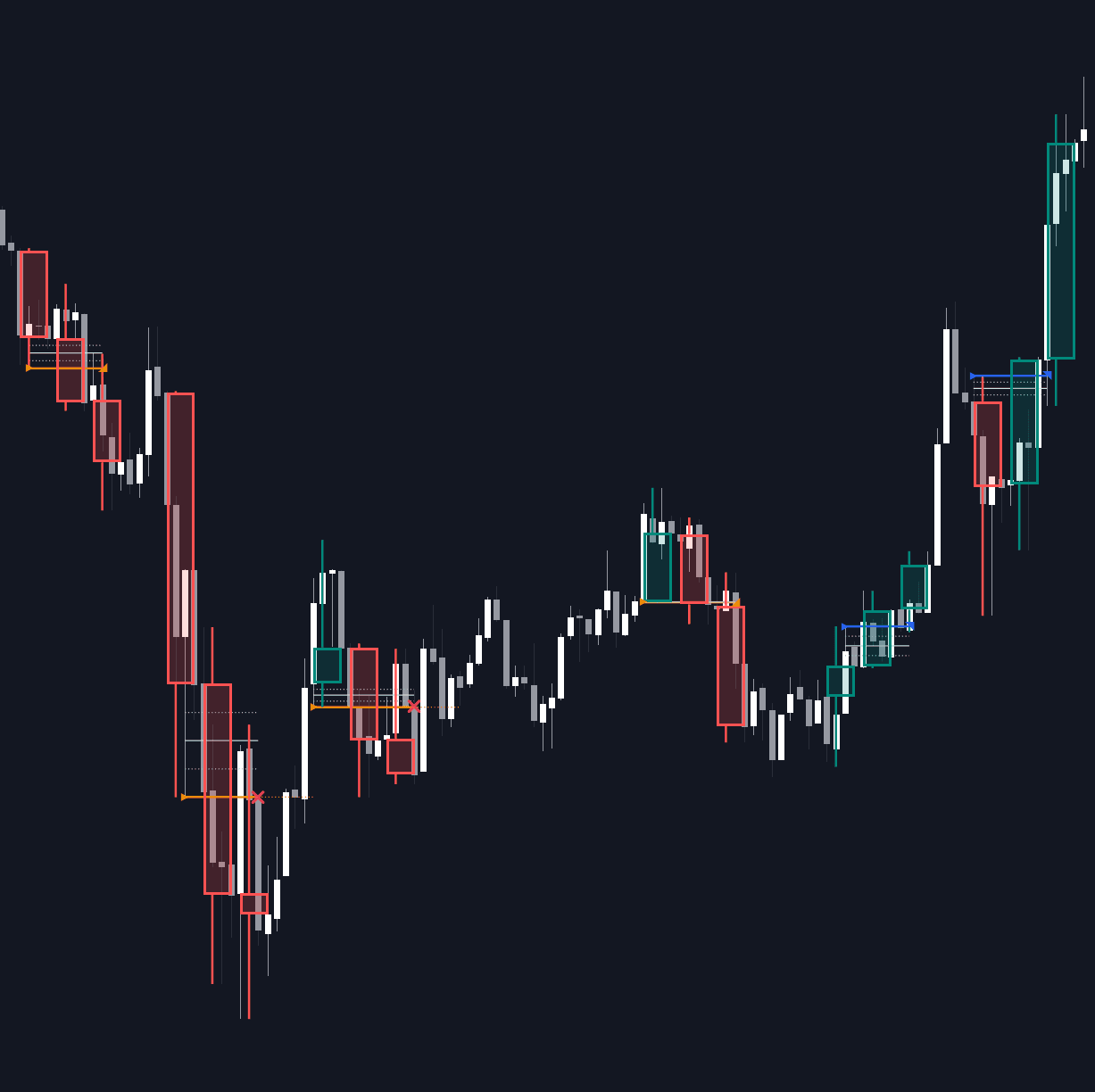
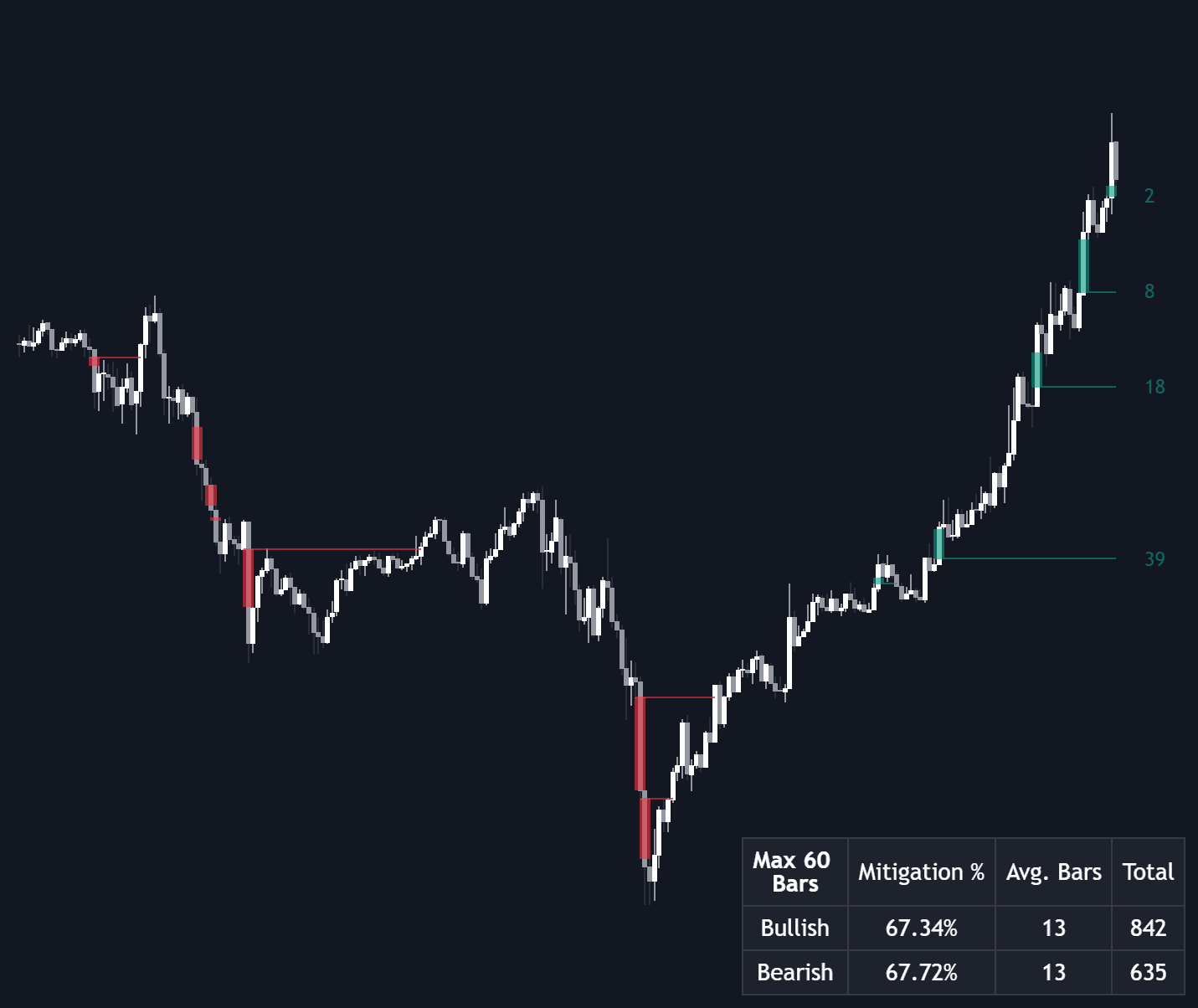
FVG behavior rules are the conventions Smart Money Concepts / ICT traders layer on top of the basic fair value gap definition to decide which gaps matter and what price is expected to do with them. Not every three-candle imbalance is treated equally. The rules classify gaps by origin (formed inside a displacement leg, at a session open, straight off a stop run) and by order, with the first gap presented after a chosen anchor (commonly the New York open) ranked above everything that forms later. They then grade the reaction: a gap is respected when price trades into it and continues in the original direction, and disrespected when price closes through the far side, at which point many traders re-label the span an inversion FVG and flip its role.
Two further rules refine the read. Depth: a fill that reaches only the gap's midpoint (consequent encroachment) still counts as respect, so many traders watch the midpoint rather than the far edge as the line between a shallow, healthy retest and a fill deep enough to question the gap. Expectation: gaps born of genuine urgency (breakaway gaps leaving a base or a sweep) are not expected to fill and stand as evidence of strength, while ordinary gaps are expected to rebalance eventually, sometimes on the very next candle (the immediate rebalance case, usually read as continuation rather than weakness). None of this is standardized: the labels come from mentorship material, and different sources draw the lines differently, so treat the rules as shared vocabulary for describing gap behavior, not a fixed rulebook.
How traders use it
- As a quality filter: instead of trading every imbalance, traders keep only gaps formed by displacement through a meaningful level or inside a recognized time window, and discard those printed in quiet, two-way conditions.
- To rank entries within a session: the first presented FVG after the chosen anchor becomes that window's reference entry zone; later, overlapping gaps are treated as progressively lower quality.
- To grade reactions in real time: respect at the edge or the midpoint keeps the original bias intact, while a close through the far side flips the gap's role, so it is watched as a candidate inversion setup rather than simply written off as invalidated.
- To set expectations per gap type: a breakaway gap is left open as evidence of strength (and sometimes becomes a target from the other side), a rebalancing gap is watched as an entry, and a gap that fills at once is read as the market squaring up before continuing.
FVG behavior rules vs neighboring gap concepts
Fair Value Gap: The FVG defines the object (three candles, an untraded span). Behavior rules are everything layered on top: which gaps to keep, how deep a fill may go, and what respect or disrespect implies for bias.
Inversion FVG: An inversion FVG is one specific outcome the rules anticipate: the disrespect case codified. A gap traded fully through flips role, former support acting as resistance or the reverse.
Consequent Encroachment: Consequent encroachment is a level inside the gap: its 50% midpoint. The behavior rules use it as the boundary between a shallow, healthy fill and one deep enough to question the gap.
More FVG Behavior Rules implementations
Concept family
Smart Money Concepts / ICT
54 concepts mapped · 54 in the Library
FVG Behavior Rules FAQ
Turn FVG Behavior Rules into a trading strategy.
Take any implementation from this page into Quant, then build on it, backtest it on real data, and keep refining it in conversation.