Concept
Reclaimed Order Block
Reclaimed Order Block is a Smart Money Concepts / ICT concept. The Library holds 1 implementation, a working definition you can pull into Quant.
Top Reclaimed Order Block indicator
The top custom implementation, built on the original standard Reclaimed Order Block formula.
1 total
This Reclaimed Order Block implementation is strategy-ready: open it in Quant, set your rules, and it backtests automatically.
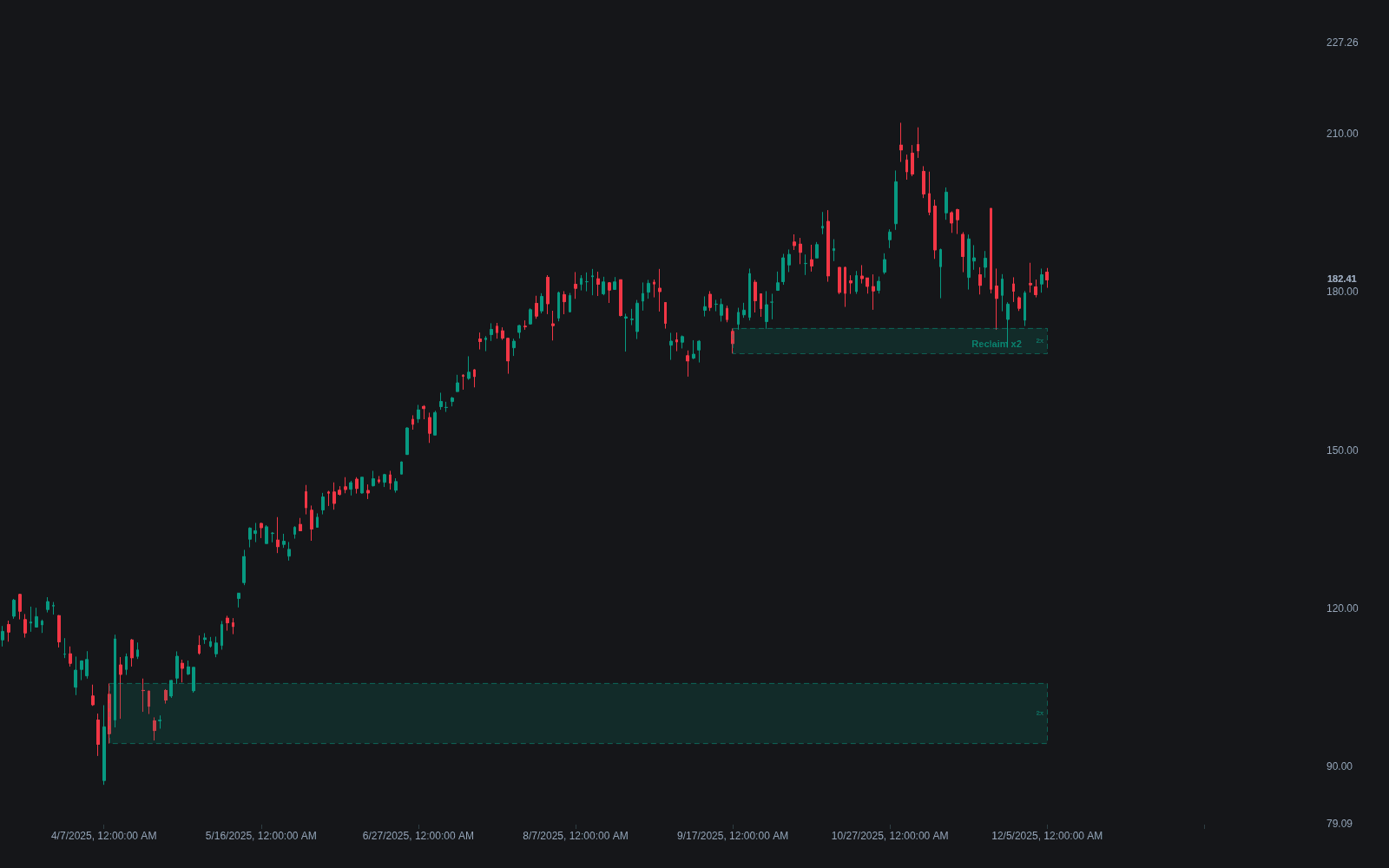
What is a reclaimed order block?
A reclaimed order block is an order block that has already served once and is later revisited and used again in its original direction. In the common bullish reading from Inner Circle Trader (ICT) vocabulary, a down-closing candle that previously acted as a buying zone is returned to after the market has moved away, and buyers defend it a second time: the zone is reclaimed. Some traders extend the term to zones that were briefly violated, with price trading through the block before returning to respect it again, which shades the concept toward reclaim-and-reverse logic.
The idea exists because order-block frameworks need a policy for old zones. A strict view holds that a block is consumed on first touch and should be deleted afterward. The reclaimed order block is the counterargument: institutional interest at a price region does not necessarily exhaust in one visit, and a zone that produced a strong reaction once may see renewed interest when conditions align again. Usage varies between communities, so it is worth knowing which definition a given author intends, first reuse of a respected zone versus recovery of a violated one.
Traders care because old, previously effective levels are abundant on any chart, and the concept offers criteria for which ones still matter: alignment with current structure and draw on liquidity, evidence of a fresh reaction on return, and the absence of decisive acceptance through the zone in the meantime. Without such filters, every historical candle becomes an excuse for a trade.
How to identify a reclaimed order block on a chart
You are looking for a zone with a history: formation, prior use, and a credible return.
- 1Locate the original block: the last opposing candle before a displacement move, marked with your usual anatomy and refinement rules.
- 2Verify prior use: price returned to the zone at least once and reacted in the block's direction, establishing it as respected rather than merely untested.
- 3Assess the interim: brief wicks through the zone are tolerable under looser definitions, but sustained closes and acceptance beyond it argue the block is spent.
- 4Check present context: the return should occur with structure and the current directional bias compatible with the block's direction, not against a fresh opposing trend.
- 5Demand a reaction: a rejection wick, a lower-timeframe structural shift at the zone, or displacement away from it separates a reclaim from a pause on the way through.
How traders use it
- As a second-chance entry: traders who missed the original block's first test use the reclaim as a later opportunity in the same direction, typically with reduced size to reflect the zone's age.
- As a zone-management policy: rather than deleting every touched block, traders keep respected zones on the chart and downgrade them by freshness, treating reclaims as lower-probability than first tests.
- As a reversal tell: under the looser definition, a violated bullish block that price reclaims and holds above can mark failed downside continuation, similar in spirit to a reclaimed support level in role reversal terms.
- With explicit limits: each additional test consumes resting interest in most order-flow readings, so repeated reclaims of the same zone deserve increasing skepticism, and acceptance through the block at any point retires it.
Reclaimed order block vs related order-block concepts
Breaker block: A breaker is a failed order block traded in the opposite direction after structure breaks through it. A reclaimed order block is reused in its original direction; the two are opposite conclusions about what a violated or aging zone now means.
Mitigation block: A mitigation block is defined at formation by a failed swing followed by a structural break. A reclaimed order block is defined by its later history, namely prior use or violation followed by renewed respect.
Bullish and bearish order blocks: The standard order block is strongest fresh and untested. The reclaimed variant explicitly trades an older zone, accepting lower expected reliability in exchange for a second opportunity at a proven level.
Concept family
Smart Money Concepts / ICT
54 concepts mapped · 54 in the Library
Reclaimed Order Block FAQ
Turn Reclaimed Order Block into a trading strategy.
Take the implementation from this page into Quant, then build on it, backtest it on real data, and keep refining it in conversation.