Concept
Gap Fill
Gap Fill, also known as partial fill, opening-gap statistics, is a Chart & Candlestick Patterns concept. The Library holds 3 implementations, each one a working definition you can pull into Quant.
Top Gap Fill indicators
The top custom implementations, built on the original standard Gap Fill formula.
3 total
Want to trade Gap Fill? Any of the 3 implementations below is one prompt away from a backtested strategy in Quant.
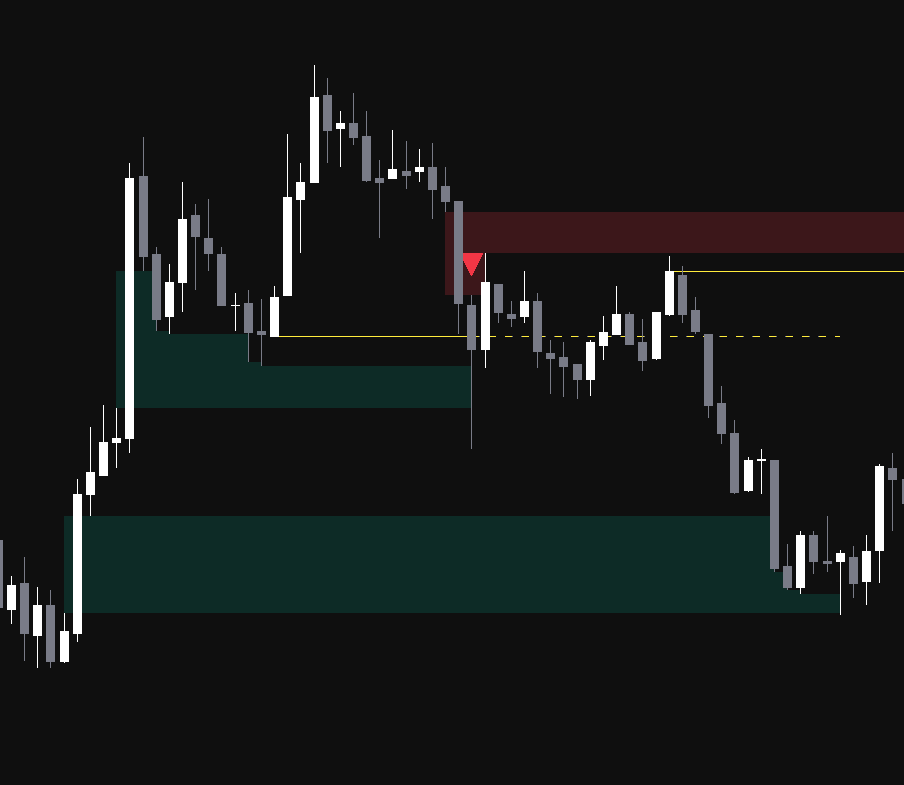
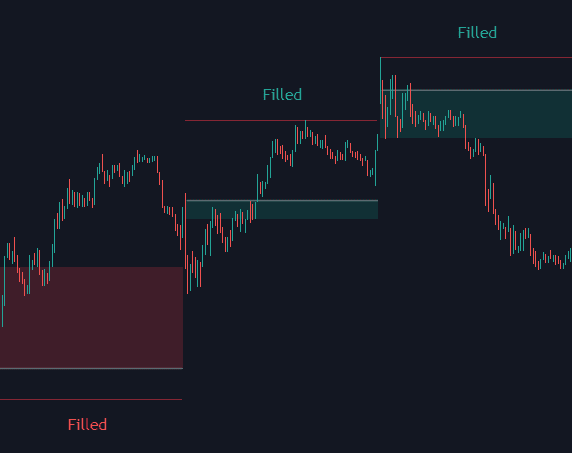
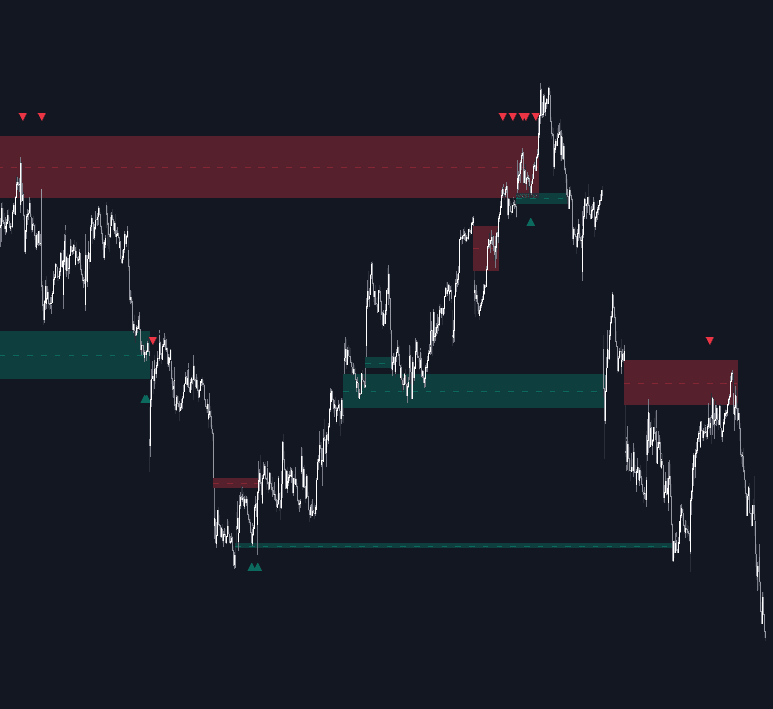
What is a Gap Fill?
A gap fill is the return trip. After price gaps away from a prior reference, it later trades back through the untraded span until the gap is closed, conventionally when price touches the pre-gap reference (for an opening gap, the prior session's close). A partial fill covers only part of the span, and many traders track the gap's halfway point as an intermediate reference.
Fill behavior is the sorting mechanism of gap taxonomy. Gaps that fill quickly and quietly get classified after the fact as common gaps, while gaps that stay open as price runs are the signature of breakaway and continuation moves. Whether a given gap fills is not knowable in advance: fill frequency varies with gap size, direction, and market regime, and the folk rule that every gap eventually fills is not a law.
The idea long predates modern screeners. Japanese candlestick analysis calls gaps windows and describes the return trip as closing the window, with a rising window expected to act as support and a falling window as resistance until it is closed; Steve Nison's books carried that vocabulary into Western candlestick patterns practice. Western floor lore contributed the magnet metaphor: an open gap sits on the chart as unfinished business that traders on both sides can see.
Mechanically, the span is empty on the charted session: little or no volume traded there, so prices inside it were never defended in regular hours, and traversals of the window are often quick once they begin, the air-pocket effect. The meaningful reactions happen at the edges, where real trading last occurred, and at the conventional halfway checkpoint. That geography is what makes fills tradable: the references are objective, visible in advance, and shared by everyone watching the same chart. The alias opening-gap statistics reflects the other reason the concept persists: fills are easy to define and count, so they are among the most-studied intraday tendencies, even though published fill rates vary with every definitional choice.
How to identify a gap fill on a chart
A fill is defined by two references, the pre-gap price and the post-gap extreme; everything else is progress measurement between them.
- 1Mark the span: for an opening gap, the prior session's close on one side and the new session's open on the other; for an intrabar window, the two adjacent candle extremes that failed to overlap.
- 2Add the midpoint: half the span is the common checkpoint for partial fills, and stalls there are read as the gap side defending its territory.
- 3Track re-entry: the fill attempt begins when price trades back inside the span; note whether progress is steady or the attempt stalls at the first sign of defense.
- 4Confirm completion: a touch of the pre-gap reference closes the gap by the usual convention. Reaction bars there, such as a hammer or pin bar at a filled up-gap's origin, tell you whether the fill ended the move or the original trend is resuming.
- 5Log failures too: a rejection at the gap's edge, such as a two-bar reversal back in the gap's direction, is a failed fill attempt and counts as continuation evidence.
How traders use it
- In gap-fade strategies: intraday traders fade opening gaps toward the prior close, using the full fill as the target and filtering by the gap's size relative to recent average range; large news-driven gaps are commonly excluded on the view that they trade more like breakaway gaps than common ones.
- As a magnet and target: an open gap above or below price provides an objective reference, so swing traders use the pre-gap close, or the gap midpoint for partial fills, as profit targets when price rotates back toward the span.
- As a strength read: a gap that refuses to fill on the first retracement attempt suggests initiative conviction behind the move, while an immediate full fill files the gap under noise and weakens any breakout thesis built on it.
- As a re-entry location: when a gap in the trend's direction finally fills, the pre-gap reference often coincides with prior structure, and reversal prints there, such as a morning star or engulfing bar, are used to rejoin the original move with defined risk.
- For stop placement: because the span is untraded, stops parked inside it sit in the path of fast traversals; traders anchor risk beyond the gap's edges or beyond the pre-gap reference instead.
Gap fill vs related patterns
Hikkake: Both are failure patterns: a hikkake fades a failed inside-bar breakout, while a fill trade fades a gap that could not hold. In each case the fuel is other traders' trapped positions unwinding.
Two-bar Reversal: A two-bar reversal is a trigger, two candles that flip direction, while a gap fill is a destination, a defined target for such a turn. Fade traders often use the first as the entry signal and the second as the objective.
Wide-range Bar: A wide-range bar's retracement crosses prices where volume actually traded, so it can find support inside the bar. A gap's span traded nothing, which is why fills tend to move quickly to the far edge once underway.
Concept family
Chart & Candlestick Patterns
84 concepts mapped · 84 in the Library
Gap Fill FAQ
Turn Gap Fill into a trading strategy.
Take any implementation from this page into Quant, then build on it, backtest it on real data, and keep refining it in conversation.