Concept
Retest
Retest, also known as throwback, is a Trend concept. The Library holds 3 implementations, each one a working definition you can pull into Quant.
Top Retest indicators
The top custom implementations, built on the original standard Retest formula.
3 total
Every Retest implementation here is strategy-ready: open one in Quant, set your rules, and it backtests automatically.
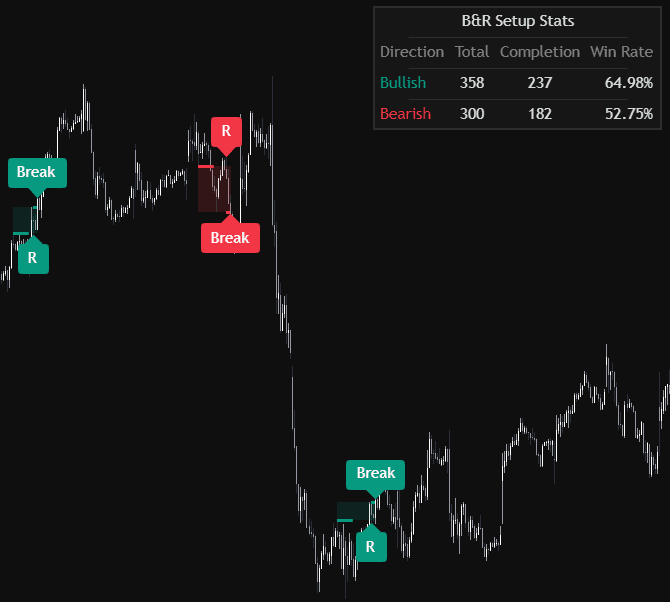
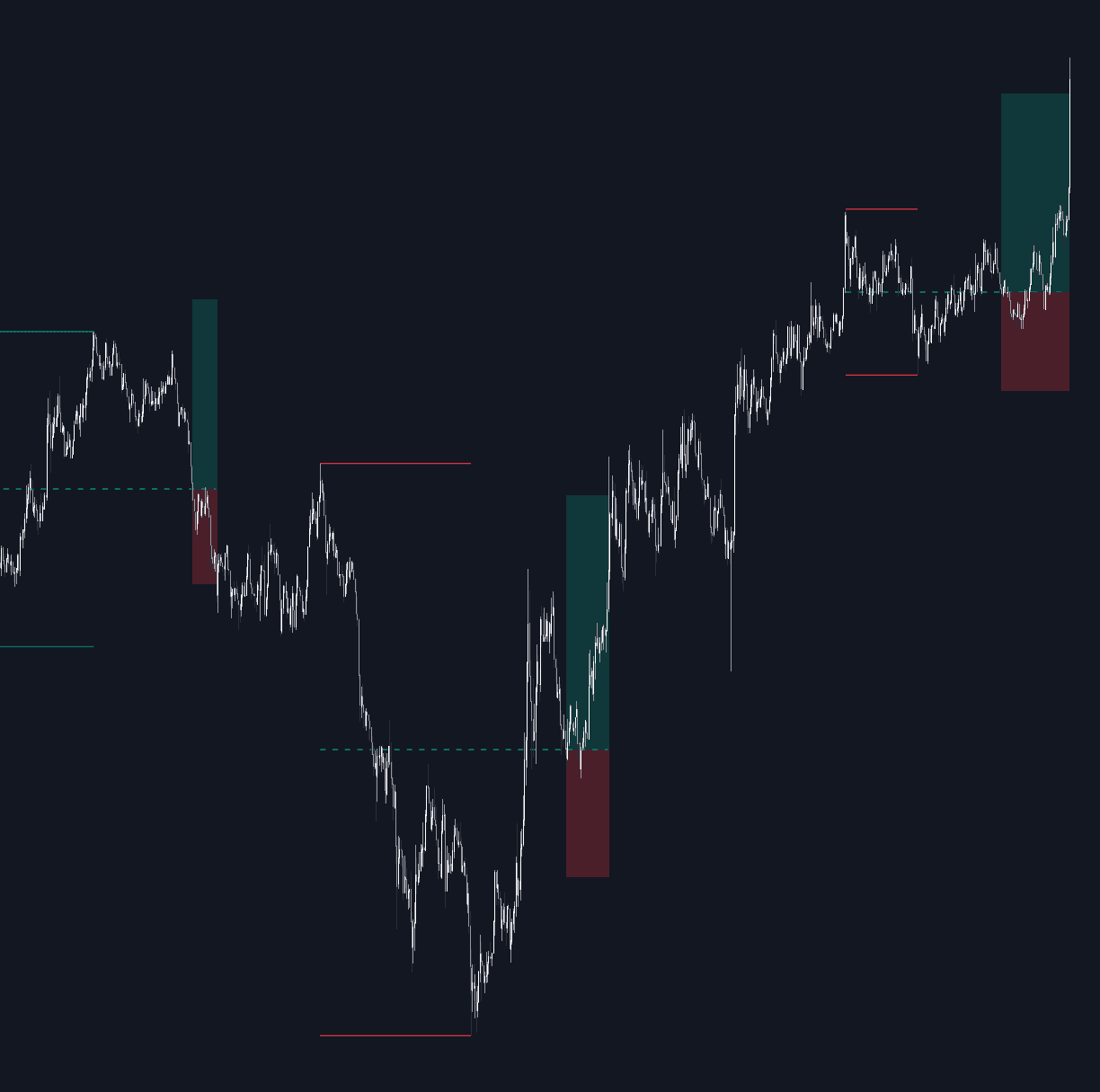
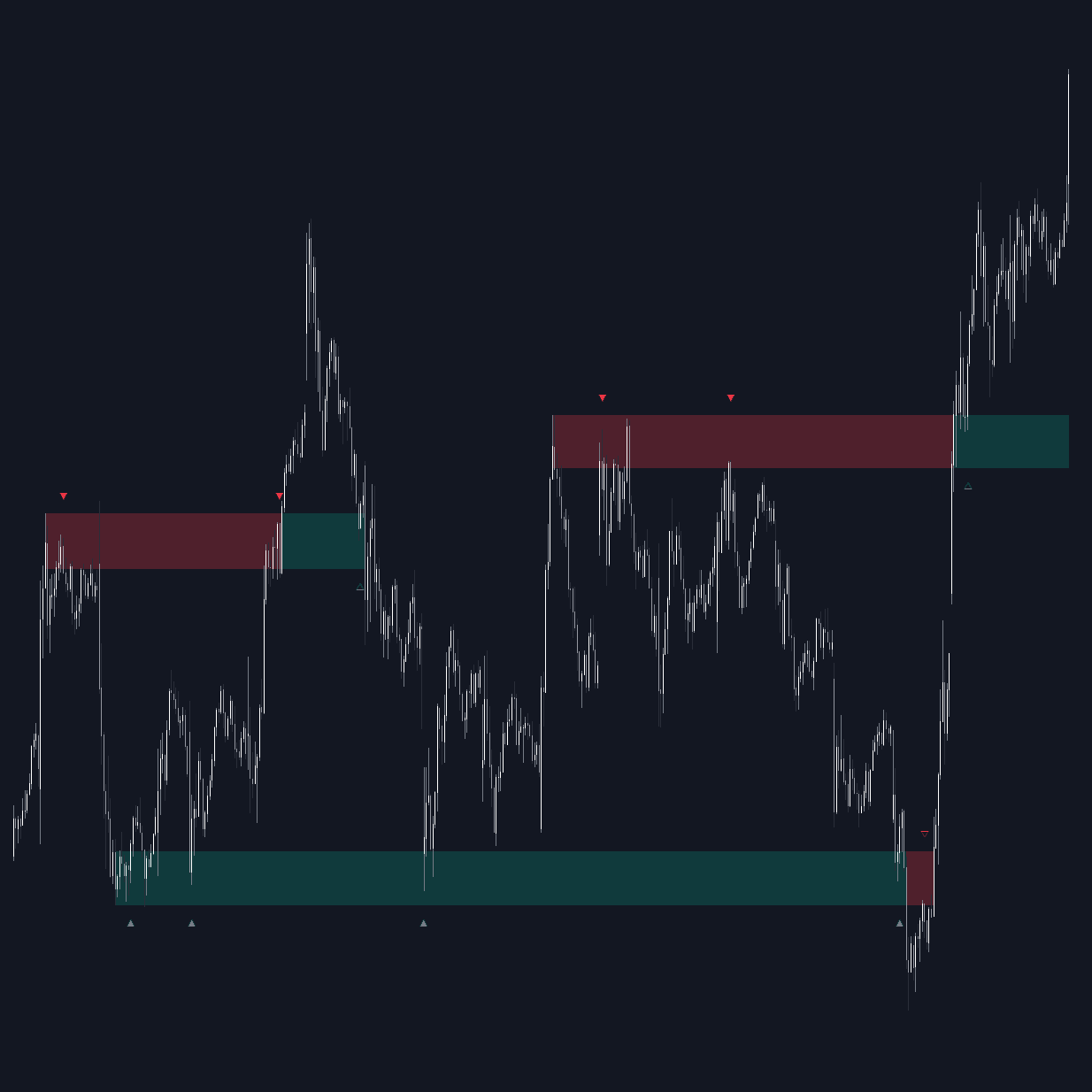
What is a Retest?
A retest is a return to a level that price has already broken, approached now from the other side. After a breakout above resistance, price dips back to touch the broken line; if the old ceiling now behaves as a floor, the level has flipped, the textbook role reversal. Classical charting used finer vocabulary: a 'throwback' returns to broken resistance and a 'pullback' to broken support, but modern usage calls both a retest.
The retest matters because it is the breakout trader's confirmation mechanic. The initial break proves little by itself; plenty of breaks fail within a few bars. A return that holds the level shows traders defended the new side, and it offers a precise invalidation point: the level itself. The cost of waiting is real, though. Not every breakout retests, so retest-only entries systematically miss the strongest moves, and a retest that holds is still no guarantee of continuation.
The mechanics behind the event are ordinary order flow. After a break, early entrants take profit into the move, pulling price back toward the origin; participants who missed the break leave resting bids or offers at the old level; and trapped traders on the wrong side hope for an exit near break-even at the same price. When the returning price meets that mix and the new side wins, the level has demonstrably changed hands. That is also why grading uses a zone rather than a line: defense happens across a band of prices, so a tolerance around the level, scaled to recent volatility, separates a wick probing the zone from a genuine failure.
The same grammar extends beyond horizontal levels. A broken trendline gets retested from the far side, and pullbacks to a rising average traded as dynamic support follow the identical held-or-failed logic at a moving reference. Tooling reflects the taxonomy: LuxAlgo's Breakouts with Tests & Retests distinguishes tests, approaches from the original side without a prior break, from true retests, while Retest & Break Setup and the Range Average Retest Model package the sequence into detected setups. The vocabulary discipline matters because the two events carry different information: a test probes a standing level, a retest audits a completed break.
How to identify a retest
A retest needs three ingredients: a level, a confirmed break, and a return. The sequence matters more than any single bar.
- 1Mark the level that broke: a horizontal S/R zone, range boundary, or trendline that price closed through decisively rather than merely wicked.
- 2Wait for price to rotate back to that level from the breakout side. The return often arrives within a few bars, but it can take much longer, or never come at all.
- 3Judge the touch: rejection wicks and a close back in the breakout direction argue the level held; a full-bodied close back through it converts the event into a false breakout signal instead.
- 4Work with a tolerance zone rather than an exact price: a band around the level scaled to recent volatility keeps wick noise from mis-grading the event in either direction.
- 5Weigh the tempo: a prompt, decisive rejection is the strong form, while price sitting flat on the retested level suggests nobody is defending the new side and the flip thesis is weakening.
How traders use it
- As an entry technique: enter on the retest with a stop just beyond the level, so the trade is wrong exactly where the level-flip thesis is wrong. This trades a later entry for tighter, better-located risk.
- As breakout validation: a held retest upgrades confidence that the break was genuine, while a failed one flags a trap early, often before the crowd that chased the initial break has exited.
- Across timeframes: a common pattern is to take the break on a higher timeframe and execute the retest entry on a lower one, where the touch and rejection resolve in finer detail.
- As a management aid: traders already positioned from the break may add on a successful retest or trail stops behind the retested level once it has held.
- On dynamic references: pullbacks to a broken trendline or to a rising EMA acting as moving support are traded with the same held-or-failed grammar, extending the retest playbook beyond horizontal levels.
Retest vs related concepts
Pullback: A pullback is any counter-trend dip inside a trend; a retest specifically revisits a broken level. A retest often unfolds as a pullback to the level, but most pullbacks are not retests.
False Breakout: The same return separates them: a retest holds the broken level and continues in the breakout direction, while a false breakout closes back through the level and returns to the prior range.
Role Reversal: Role reversal is the principle (broken resistance becomes support, and vice versa); the retest is the observable event that puts that principle on trial.
Concept family
Trend
100 concepts mapped · 100 in the Library
Retest FAQ
Turn Retest into a trading strategy.
Take any implementation from this page into Quant, then build on it, backtest it on real data, and keep refining it in conversation.