Concept
Breakaway Gap
Breakaway Gap is a Chart & Candlestick Patterns concept. The Library holds 1 implementation, a working definition you can pull into Quant.
Top Breakaway Gap indicator
The top custom implementation, built on the original standard Breakaway Gap formula.
1 total
Want to trade Breakaway Gap? The implementation below is one prompt away from a backtested strategy in Quant.
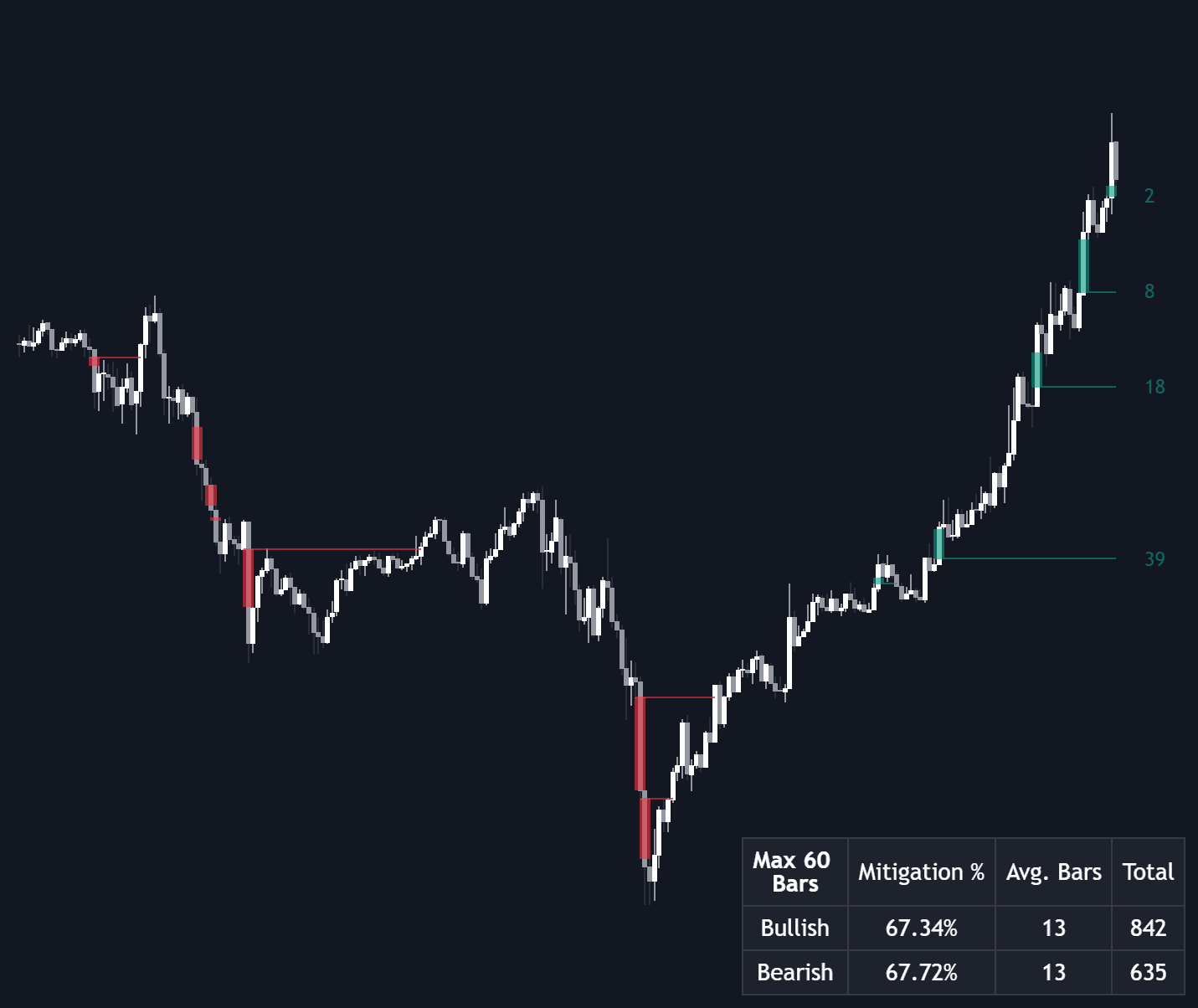
What is a Breakaway Gap?
A breakaway gap is the gap that starts a move. In the classical four-gap taxonomy (common, breakaway, runaway, exhaustion), it is the one that opens beyond the boundary of a recognizable structure, such as a trading range, a triangle boundary, or the neckline of a double top or bottom, leaving an untraded window behind, and it typically arrives with a clear volume expansion. The gap itself is the breakout: price jumps from ranging to trending without auctioning the levels in between.
The taxonomy comes from the classical stock-charting literature. Richard Schabacker sorted gaps by their position within a trend in the early 1930s, and Edwards and Magee carried the framework into Technical Analysis of Stock Trends (1948): common gaps inside congestion, breakaway gaps at the start of a move, runaway (or measuring) gaps near its middle, and exhaustion gaps at its end. The breakaway type arguably carries the most structural information of the four: it marks the moment a market leaves an area of accepted value.
Mechanically, the gap prints when the balance of orders shifts between sessions faster than price can adjust continuously. Earnings, news, or the exhaustion of one side of a long congestion leaves the next open trading away from the prior close, and everyone who meant to transact inside the skipped window went unfilled. That unfinished business is why the window's edges are watched afterward: trapped positions and unfilled orders give the gap its later relevance as support or resistance.
In the classical account, breakaway gaps are among the least likely of the gap types to fill quickly, because the imbalance that created them marks the start of new commitment rather than noise inside a range. None of that is assured. A breakaway gap that fills fast and completely is evidence the classification was wrong: either a common gap mislabeled, or a breakout that failed.
How to identify a breakaway gap on a chart
The label depends on context, so identification starts with the structure the gap escapes, not with the gap itself.
- 1Map the prior structure first: a multi-week trading range, a triangle or rising or falling wedge nearing its apex, or a completed top or base with a defined neckline.
- 2Look for an open beyond that boundary leaving visible untraded space against the prior bar's range, so a genuine window exists rather than just a strong open.
- 3Check volume: breakaway gaps classically arrive on a clear expansion versus recent sessions, while a quiet gap inside congestion is better filed as common.
- 4Watch the next sessions: continued trade away from the structure, often on a wide-range bar, supports the breakaway read, while a prompt close back inside argues against it.
- 5Mark the gap's upper edge, lower edge, and midpoint; these become the reference levels for any later retest into the window.
How traders use it
- As breakout confirmation: gapping out of a base on expanded volume is read as stronger evidence of commitment than an intrabar poke through the same boundary.
- As a level source: the gap's edges and midpoint are treated as support after an upside break (resistance after a downside one), so retests into the window are watched as continuation entries, with no assurance the window holds.
- As a fill filter: classifying a gap as breakaway rather than common flips the default expectation away from an immediate gap fill, which changes whether the gap is faded or followed.
- As a stop anchor: traders positioned with the break often trail stops beyond the far edge of the window, since a complete fill plus acceptance back inside the old structure voids the breakaway premise.
- In measured-move work: objectives projected from the broken pattern carry more weight when the exit came on a breakaway gap, which argues the resolution was decisive.
- With candlestick context: the gap day's close is read alongside candlestick patterns, where a strong close supports the break and a doji or long rejection wick warns the gap is being sold into.
Breakaway gap vs related concepts
Gap Fill: Gap fill is the behavior, not the pattern: price returning through the window. A breakaway classification lowers the expectation of a quick fill, and a fast, complete fill with no follow-through is the standard evidence against the label.
Wide-range Bar: A wide-range bar covers similar distance continuously, auctioning every price. A breakaway gap skips those prices entirely, which is why the untraded window itself becomes a mapped level while a big bar's interior usually does not.
Double Top/bottom: A double top or bottom supplies the neckline; the breakaway gap is one way price can leave it. A gapped neckline break is conventionally read as stronger than a drift through the same level, though the measured objective comes from the pattern, not the gap.
Concept family
Chart & Candlestick Patterns
84 concepts mapped · 84 in the Library
Breakaway Gap FAQ
Turn Breakaway Gap into a trading strategy.
Take the implementation from this page into Quant, then build on it, backtest it on real data, and keep refining it in conversation.