Concept
Hammer
Hammer is a Chart & Candlestick Patterns concept. The Library holds 4 implementations, each one a working definition you can pull into Quant.
Top Hammer indicators
The top custom implementations, built on the original standard Hammer formula.
4 total
Want to trade Hammer? Any of the 4 implementations below is one prompt away from a backtested strategy in Quant.
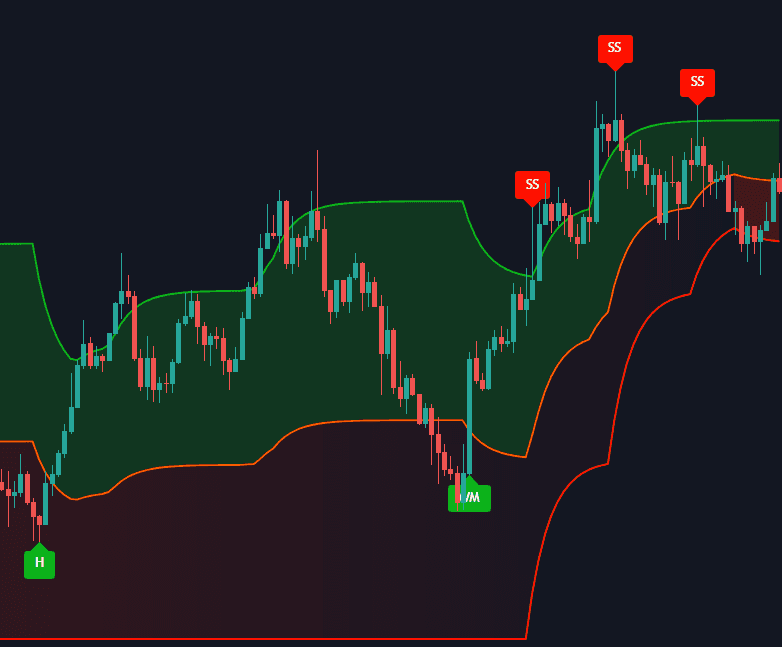
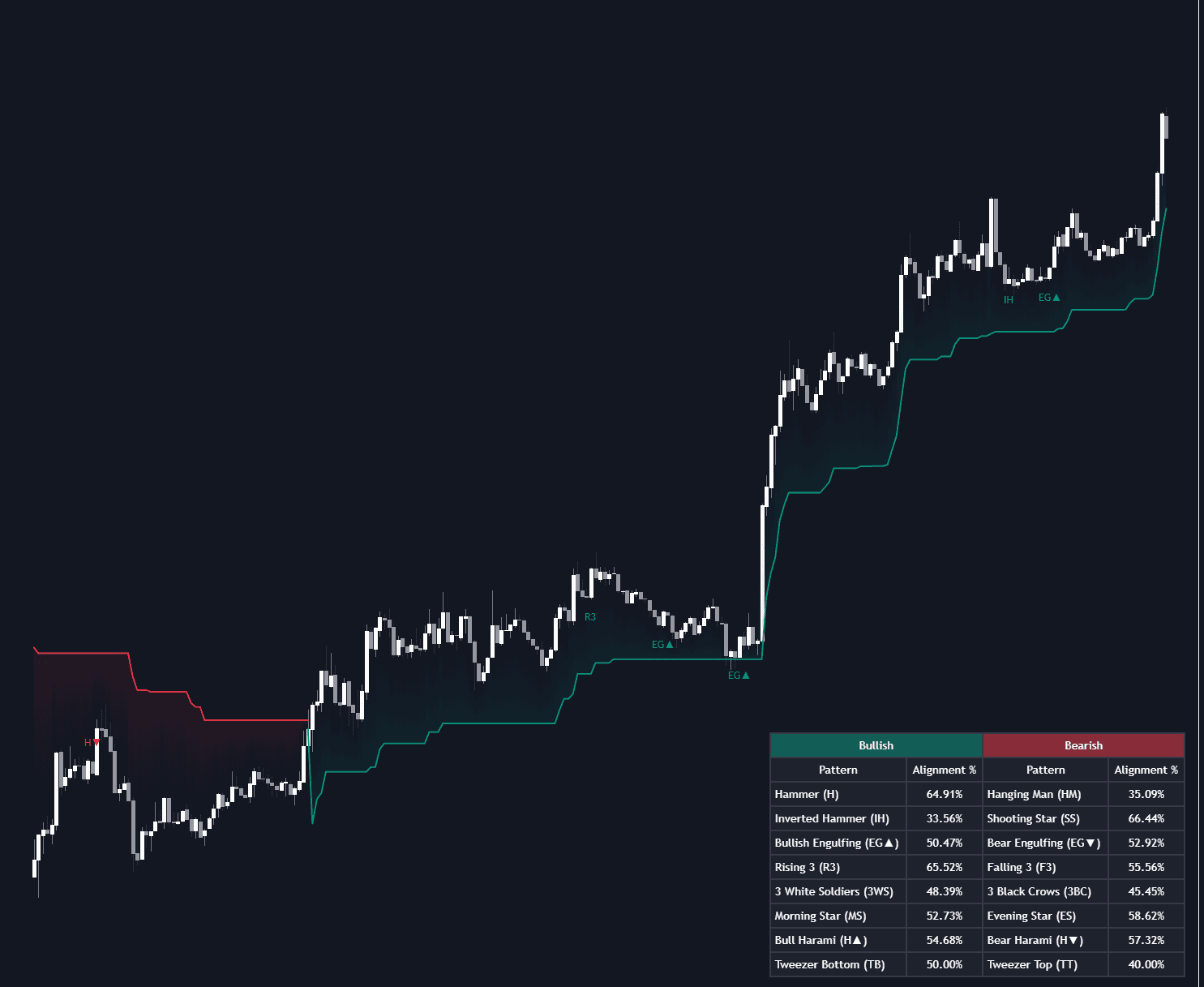
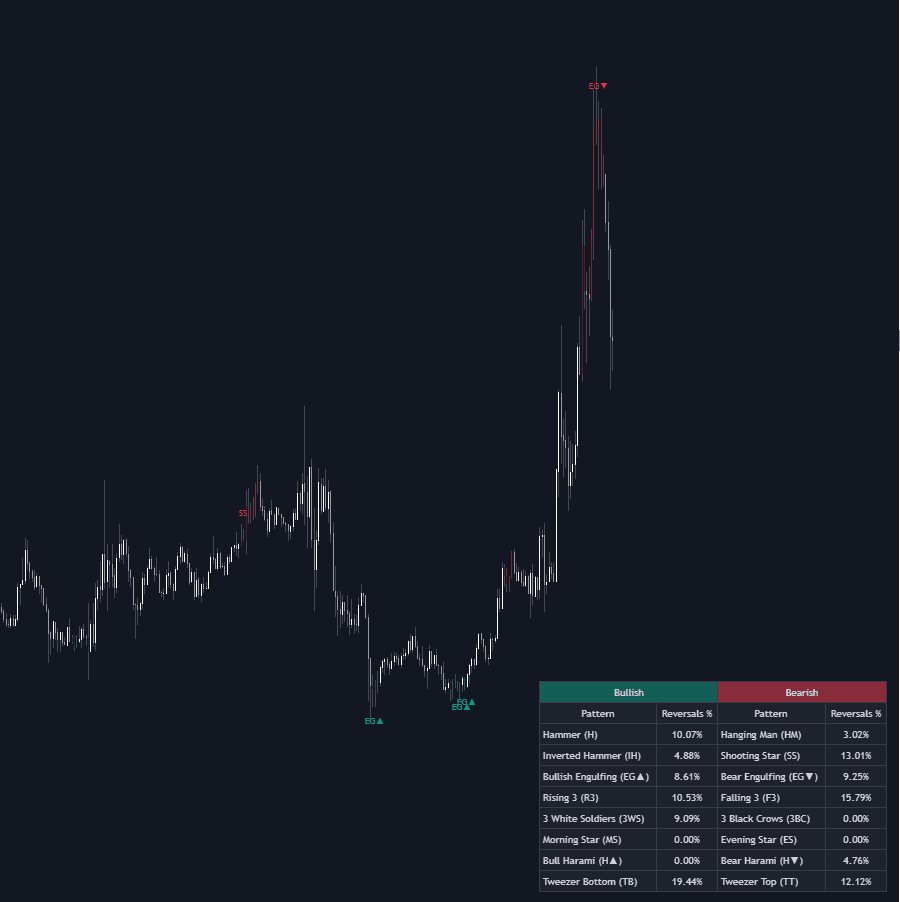
What is a Hammer?
A hammer is a single-candle bullish reversal pattern from Japanese candlestick analysis. It prints after a decline: a small real body near the top of the range, a lower shadow conventionally at least twice the body's height, and little to no upper shadow. The mechanics are the point: sellers extended the move down intrabar, buyers absorbed the selling and drove price back up, and the session closed near its high, rejecting the lower prices on offer. Body color matters less than position; a close above the open is often read as marginally stronger, but a red hammer still counts.
Context is definitional, not optional. The identical candle without a preceding decline is not a hammer, and near the top of an advance the same shape is read as the bearish hanging man. Candlestick tradition also treats the hammer as a warning that needs proof: the pattern marks rejection of lows, not a completed reversal, so classical practice waits for bullish confirmation on the next candle and gives extra weight to hammers that form at a support level or prior swing low rather than in open space. Hammers fail often enough that the confirmation step is not a formality.
How to identify a Hammer
The pattern is defined by trend context plus candle geometry.
- 1Require a preceding decline: a hammer is only a hammer after a downswing, because its meaning is rejection at the lows of a move.
- 2Check the geometry: a lower shadow at least about twice the height of the real body, the body in the upper portion of the range, and at most a token upper shadow.
- 3Grade the location: hammers into support, a prior low, or a fib retracement zone carry more weight than hammers with nothing beneath them.
- 4Wait for confirmation: common conventions are a next candle that closes above the hammer's body or high, ideally on firm volume, before treating the low as defended.
How traders use it
- As a long trigger at demand: hammer at support, entry on confirmation or a break of the hammer's high, stop below the hammer's low, since a close beneath the tail negates the rejection.
- As one input in a confluence stack: hammer plus level plus a volume spike on the rejection bar is a common composite, with the candle supplying the trigger rather than the whole thesis.
- As a risk cue for shorts: a hammer forming at a logical target area is a standard prompt to tighten stops or cover, whatever one thinks of trading the reversal itself.
- In pattern scanners: the definition reduces to body-position and shadow-ratio arithmetic, so hammers are easy to code, and coded versions make the otherwise fuzzy thresholds explicit.
Hammer vs similar patterns
Inverted Hammer: Same context, mirrored geometry: after a decline, the inverted hammer's long shadow points up, showing an attempted rally that faded within the session. It is still read as a bottoming candidate, but the rejection logic is weaker, so confirmation matters even more.
Pin Bar: A bullish pin bar at a low and a hammer are the same shape described by two schools. Pin bar is the western bar-pattern term, direction-agnostic and usually tied to a level; hammer is the candlestick term with a required downtrend context.
Doji: A dragonfly doji closes where it opened, leaving effectively no body above its long lower shadow, while the hammer keeps a small but real body. Both reject lower prices; the doji version is a purer statement of indecision.
More Hammer implementations
Concept family
Chart & Candlestick Patterns
84 concepts mapped · 84 in the Library
Hammer FAQ
Turn Hammer into a trading strategy.
Take any implementation from this page into Quant, then build on it, backtest it on real data, and keep refining it in conversation.