Concept
Three-bar Reversal
Three-bar Reversal is a Chart & Candlestick Patterns concept. The Library holds 2 implementations, each one a working definition you can pull into Quant.
Top Three-bar Reversal indicators
The top custom implementations, built on the original standard Three-bar Reversal formula.
2 total
From studying Three-bar Reversal to trading it: take any implementation below into Quant and backtest it instantly.
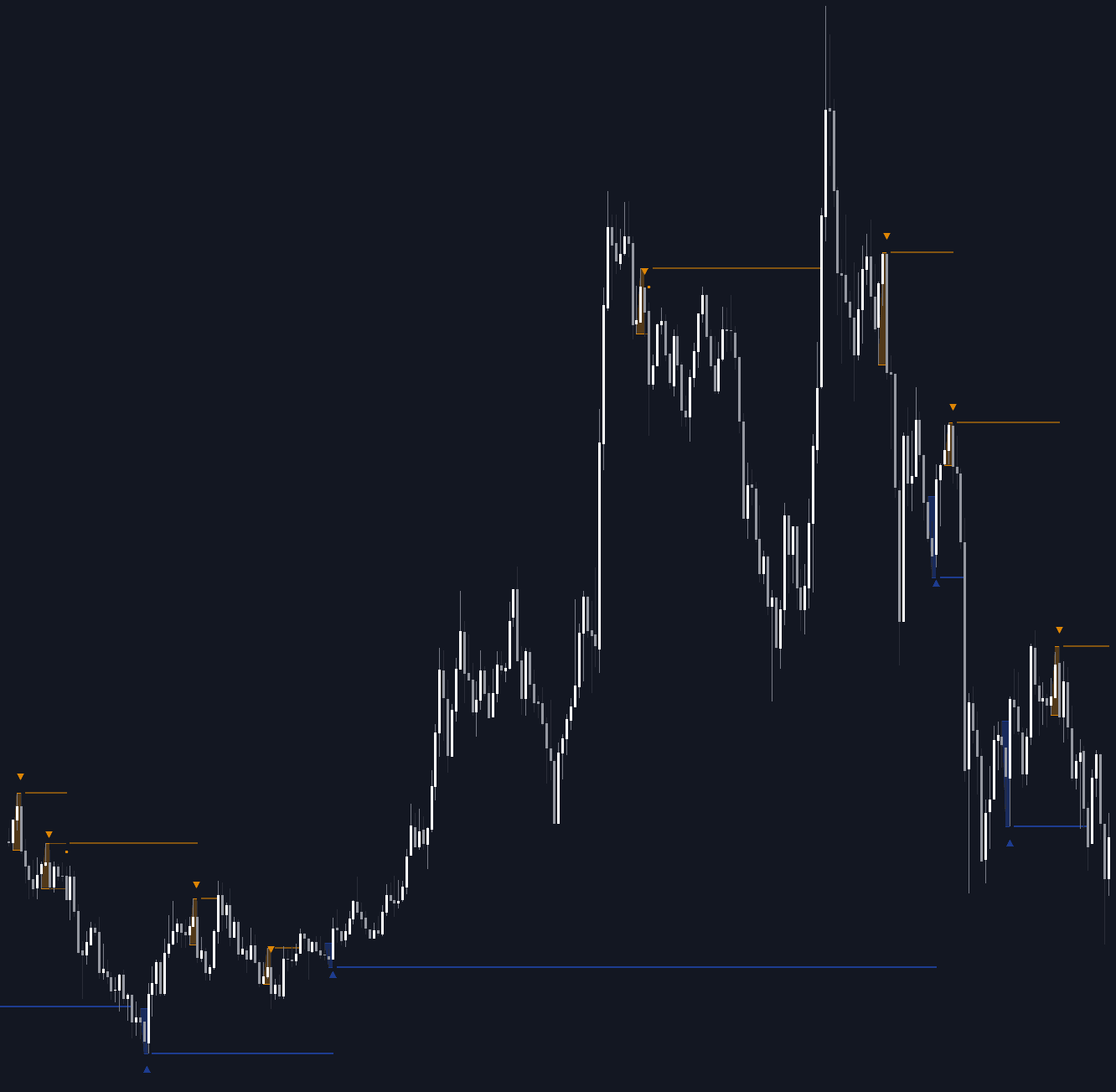
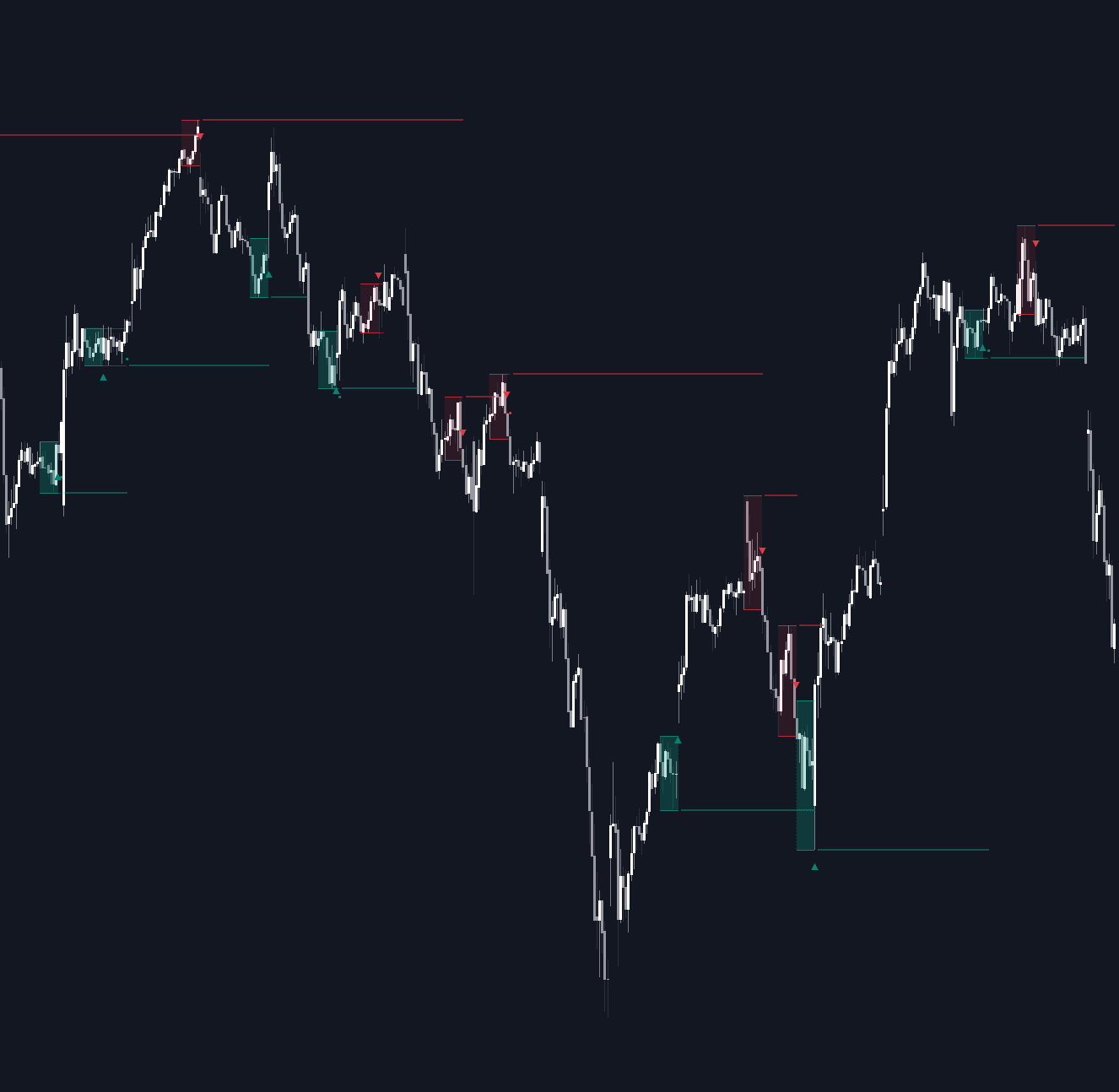
What is a Three-bar Reversal?
A three-bar reversal is the smallest complete turn a chart can print. In the bullish form, a down bar is followed by a bar that makes the lowest low of the sequence, and then a third bar that closes back above the middle bar's high. The middle bar's extreme becomes a local pivot, the same geometry as a strength-one swing low, and the third bar's close is the confirmation that the probe lower found no follow-through selling. The bearish version mirrors this at a high.
The pattern is bar-chart vernacular rather than any single author's invention: three-bar and N-bar reversal rules appear throughout systems literature because they are the minimal mechanical encoding of a pivot plus confirmation. The candlestick tradition tells the same story with body rules, its morning star adding requirements about candle anatomy that the bar-count version deliberately omits.
Definitions vary in strictness: some sources require the third bar to close above the highs of both preceding bars, others only above the middle bar's high, and some add rules about where the middle bar must close. Looser and tighter cousins exist as the two-bar reversal and N-bar generalizations; all encode the same probe-and-reject logic at different confirmation costs.
Grading the pattern is grading its three acts. A middle bar that probes deep, ideally through a prior low where stops rested, and closes off its extreme carries more information than a shallow dip; a third bar that closes strongly, approaching a wide-range bar, confirms with conviction rather than technicality; and location decides whether any of it matters, since the identical sequence mid-range is scan noise. The strictness dial exists precisely to trade frequency against quality.
How to identify a three-bar reversal
The bullish case is described; invert every element at highs.
- 1Require a decline into the pattern: the first bar continues the existing leg lower.
- 2Find the middle bar: the lowest low of the three, the probe that defines the pivot.
- 3Demand the confirmation close: the third bar closing above the middle bar's high (stricter rule sets require it above both prior bars' highs).
- 4Grade the anatomy: a deep probe that closes off its low, and a third bar with a strong, wide close, upgrade the signal.
- 5Weight the location: at a tested level, after a sweep of an obvious low, or at a pullback within an uptrend, the trigger means something; mid-range it rarely does.
- 6Set the reference points: entry on the third bar's close or a break of its high, stop beyond the middle bar's low.
How traders use it
- As an entry trigger at a location: a bullish three-bar reversal printing into support, a value-area edge, or a pullback within an uptrend, entered on the third bar's close or a break of its high.
- As an invalidation anchor: the middle bar's extreme is the natural structure stop; if price trades back through that pivot, the reversal premise is gone.
- As a scan primitive: the definition is fully mechanical, so it codes cleanly, but raw signals without a location or trend filter fire constantly and degrade accordingly.
- As the confirmation layer over sweeps: a middle bar that runs a prior low before the third bar closes back through the sequence converts the pattern into a bar-count reading of the sweep-and-reclaim trade.
- As a family member among reversal triads: scanners often flag the same turn as a three-bar reversal, a morning star, or a middle-bar hammer with confirmation, and the overlap itself (several definitions agreeing) is a usable quality score.
Three-bar Reversal vs related reversal patterns
Two-bar Reversal: The two-bar version demands immediate, symmetric commitment: strong bar one way, strong bar back. The three-bar form inserts the probe bar between them, so it fires later with an extra bar of evidence and a natural pivot for the stop.
Morning Star: The morning star is the candlestick telling of the same three acts, with body-size and position rules replacing the bar-range rules. Many prints satisfy both definitions; the bar version is looser and easier to code, the candle version stricter about anatomy.
Hammer: A hammer compresses probe and rejection into one candle, then waits for confirmation. The three-bar reversal spreads the same event across the sequence and builds the confirmation into its third bar, trading immediacy for a completed trigger.
Concept family
Chart & Candlestick Patterns
84 concepts mapped · 84 in the Library
Three-bar Reversal FAQ
Turn Three-bar Reversal into a trading strategy.
Take any implementation from this page into Quant, then build on it, backtest it on real data, and keep refining it in conversation.