Concept
Key Reversal
Key Reversal is a Chart & Candlestick Patterns concept. The Library holds 1 implementation, a working definition you can pull into Quant.
Top Key Reversal indicator
The top custom implementation, built on the original standard Key Reversal formula.
1 total
The Key Reversal implementation below can become a backtested trading strategy — describe your rules and Quant writes the code.
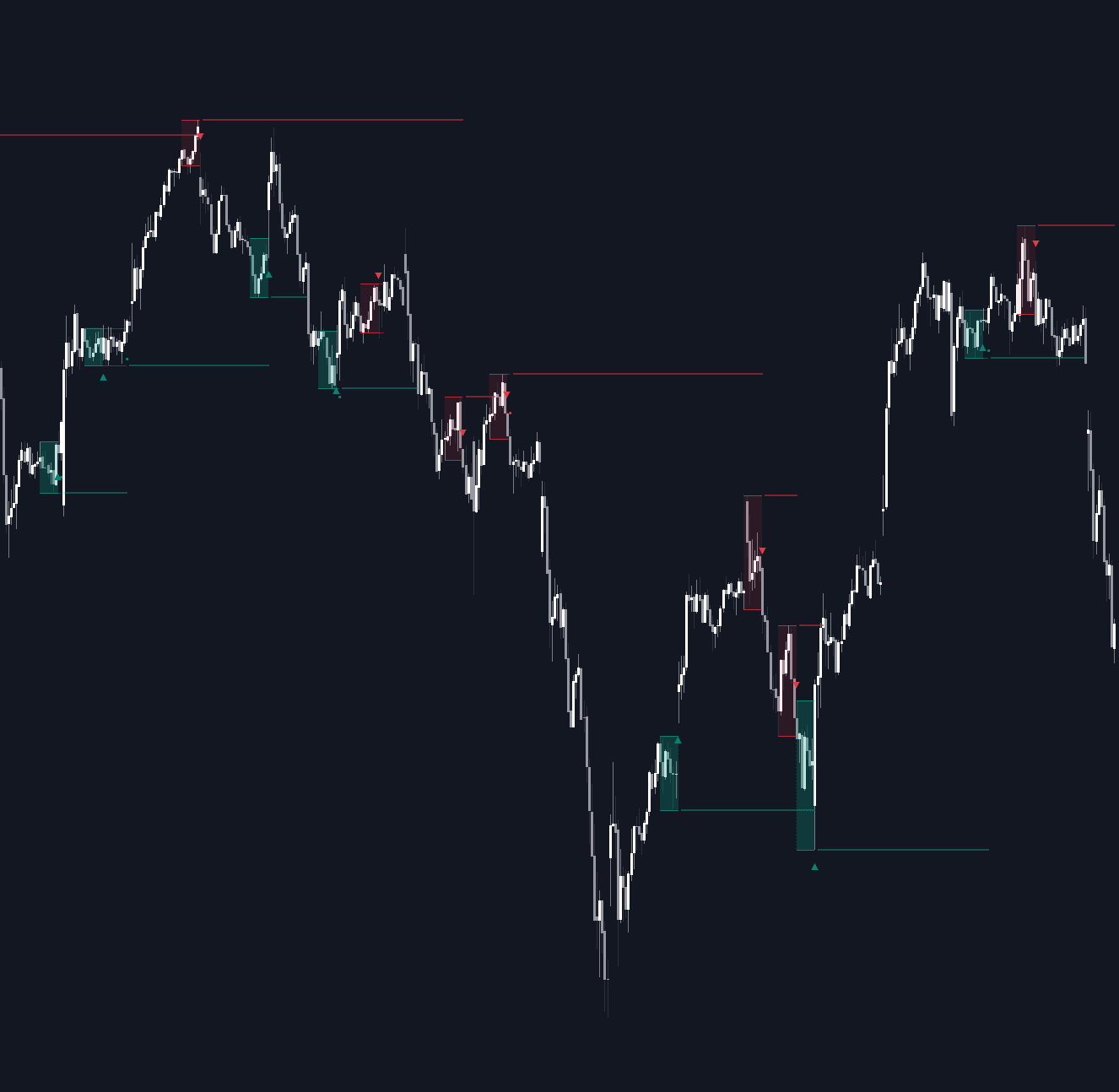
What is a Key Reversal?
A key reversal is a single-bar failure at a trend extreme. In the bearish form, price pushes (often gaps) to a new high above the prior bar's high, then sells off to close below the prior bar's close, or below the prior bar's low in strict definitions. The bullish mirror makes a new low and closes back above. It is the 'one-day reversal' of classic charting literature: the market accepts new extremes intraday and rejects them by the close, leaving everyone who chased the push underwater.
The pattern is tape-reading vintage. One-day reversals were catalogued in the earliest bar-chart literature and carried into the standard references, and the association with climactic single-session turns runs back to the Livermore era of reading reversals off the tape. The name reflects the old claim attached to it: that such bars can mark the key turning point of a move, a claim modern usage has learned to soften considerably.
The strict form (a new extreme plus a close beyond the prior bar's opposite side) is also an outside bar, and the logic overlaps with a swing failure pattern: a probe beyond a reference extreme that closes back through it. Classic descriptions add climactic volume as a qualifier. Single bars fail routinely, so the pattern reads best as a warning at an extreme rather than proof of a turn.
Definition strictness is the practical variable. Loose versions ask only for a new extreme and a close below the prior close; strict versions demand the close beyond the prior bar's opposite extreme, heavy volume, and a mature trend behind it, and each added requirement trades frequency for quality. Timeframe scales the meaning the same way: daily key reversals are common furniture, while weekly and monthly versions are rare enough that chartists track them as candidates for durable swing extremes.
How to identify a key reversal on a chart
The bearish case at a high is described; mirror every step at lows.
- 1Require an extended advance into the bar: without a trend to exhaust, the geometry is just an ordinary volatile bar.
- 2Look for the push: the bar trades above the prior bar's high, ideally gapping up or accelerating, the last buyers committing at the top.
- 3Demand the failure: the same bar closes below the prior bar's close, or below the prior bar's low under strict definitions.
- 4Check the volume: classic treatments want climactic activity, maximum effort at the extreme producing no held progress.
- 5Trigger on follow-through, not the bar itself: a break of the key reversal bar's low is the conventional entry, with the stop above the new high it printed.
- 6Void the read on a fresh extreme: a close above the reversal bar's high resolves the failure as continuation.
How traders use it
- As an exhaustion alert in an extended trend: a key reversal after a sustained run is a common cue to take partial profits or tighten a trailing stop, ahead of any actual reversal entry.
- As a fade trigger with confirmation: entry on a break of the key reversal bar's opposite extreme, stop beyond the new high or low it printed, accepting that many such bars only pause the trend.
- On higher timeframes: weekly and monthly key reversals are watched as candidates for durable swing highs and lows, particularly when they print on a volume spike.
- As a scanning condition: the geometry (new extreme, close beyond the prior bar's close or low) codes directly into screeners, usually filtered further by trend length, range size against a wide-range bar standard, and relative volume.
- As candlestick crosswalk: the same event often qualifies as a bearish engulfing bar at a high, and its two-bar cousin distributes the identical trap across a two-bar reversal, so scanners frequently flag one turn under several names.
Key Reversal vs neighboring reversal bars
Outside Bar: An outside bar only requires engulfing the prior bar's range, anywhere on the chart. The key reversal adds the context that gives the geometry meaning: a trend to exhaust, a push to a new extreme first, and the close-back-through as the failure.
Two-bar Reversal: The two-bar reversal spreads the same trap across two committed candles: strength one way, then strength the other. The key reversal compresses the whole round trip into a single bar, which makes it rarer and, on higher timeframes, heavier.
Pin Bar: A pin bar rejects an extreme with a long wick and a small body, hesitation crystallized. The key reversal is a full traverse: acceptance of new prices intraday, then a close beyond the prior bar's level, so it records commitment failing rather than merely a probe rejected.
Concept family
Chart & Candlestick Patterns
84 concepts mapped · 84 in the Library
Key Reversal FAQ
Turn Key Reversal into a trading strategy.
Take the implementation from this page into Quant, then build on it, backtest it on real data, and keep refining it in conversation.