Concept
Three Black Crows
Three Black Crows are Chart & Candlestick Patterns concepts. The Library holds 1 implementation, a working definition you can pull into Quant.
Top Three Black Crows indicator
The top custom implementation, built on the original standard Three Black Crows formula.
1 total
From studying Three Black Crows to trading it: take the implementation below into Quant and backtest it instantly.
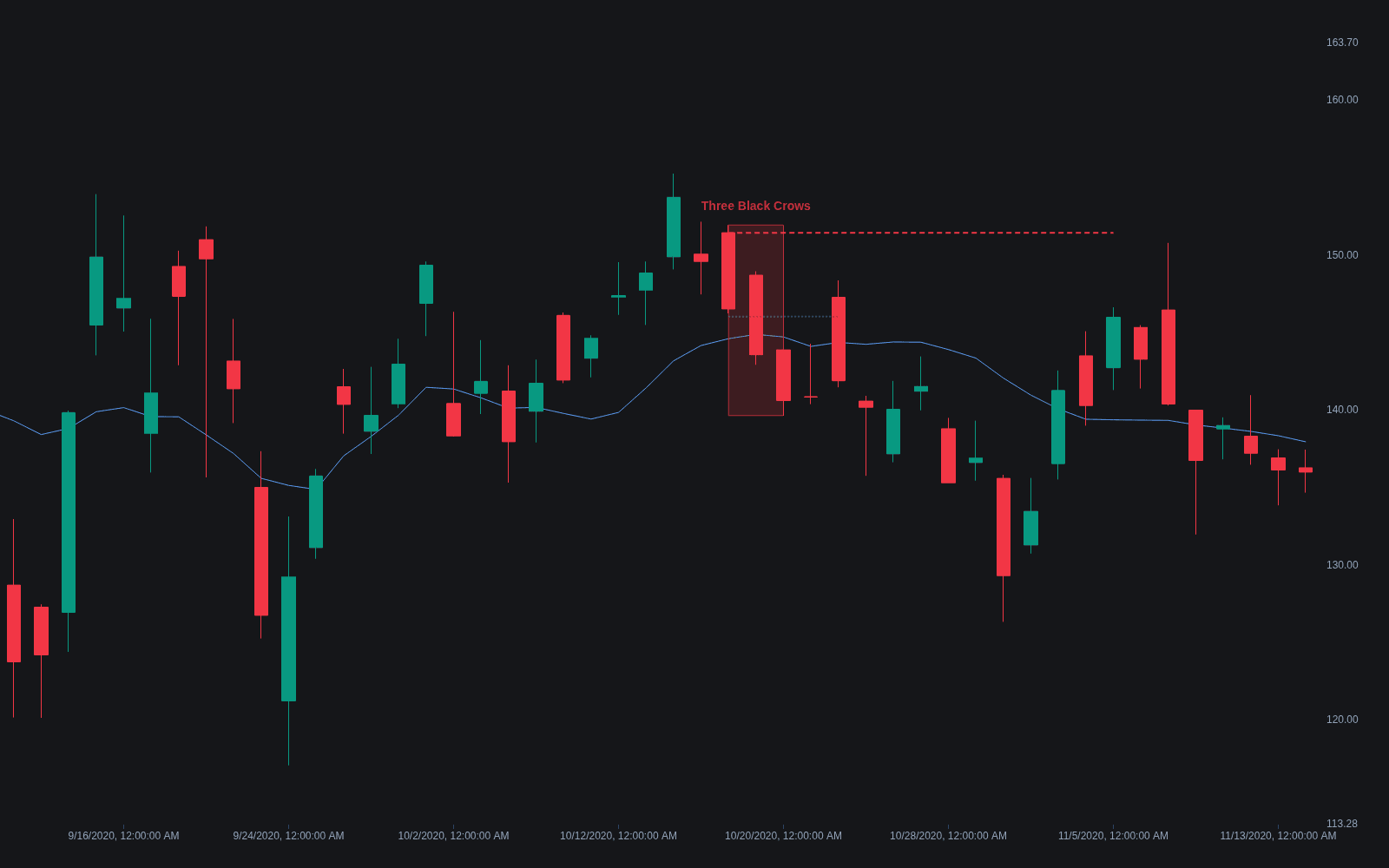
What are Three Black Crows?
Three black crows is a three-candle bearish reversal pattern from the Japanese candlestick catalog. After an advance, three consecutive long dark candles print, each opening within the prior candle's body and each closing near its own low at a progressively lower level. The image behind the name is of crows settling on a dead branch: methodical, repeated selling rather than a single panic. The pattern is the bearish mirror of three white soldiers.
The mechanism is persistence. One large dark candle after a rally can be profit-taking; three in a row, each opening inside the prior body (giving buyers a slightly better price that immediately fails) and closing near the lows, shows supply being reloaded on every small bounce. Closes near the session lows matter because they indicate sellers finished each session in control, with little of the late-day dip buying that marks absorbed selling.
Traders care because the pattern flags a potential character change at the end of an uptrend, but its structure also contains its main practical problem: by the time the third crow closes, price has already fallen substantially, so the signal often arrives with the near-term move partly spent and the natural stop far away. A stricter variant, the identical three crows, has each candle opening at or near the prior close instead of inside the body, and is traditionally read as even more bearish, though it is rare.
How to identify three black crows
The pattern is about three qualifying candles in sequence, and the qualifications do real work.
- 1Confirm the context: the pattern needs a preceding advance or a market at highs; three dark candles inside a downtrend are just the trend.
- 2Require three consecutive long dark bodies with progressively lower closes.
- 3Check the opens: each candle should open within the prior candle's real body, showing a small bounce that failed.
- 4Check the closes: each candle should close at or near its low, with short lower shadows; long lower tails suggest dip buying and weaken the pattern.
- 5Prefer bodies of similar, substantial size: three modest red candles do not qualify, and an accelerating final candle can signal short-term exhaustion rather than the start of a decline.
How traders use it
- As a reversal warning after an advance: the pattern argues for tightening stops on longs, taking partial profits, or standing aside on new buys, even for traders who never short.
- As a short setup with patience: because the third crow often leaves price short-term stretched, many traders wait for a bounce back toward the pattern's midpoint or the first crow's open before entering, rather than selling the third close.
- As a trend-change filter in combination with structure: the signal carries more weight when the crows break a support level or a prior swing low, converting candlestick evidence into a structural break.
- As a caution against chasing: pattern researchers consistently note the entry-versus-extension problem; the crows describe what has already happened, and the tradable question is whether the follow-through justifies a late entry. No candle sequence settles that by itself.
Three black crows vs related patterns
Three white soldiers: The exact bullish mirror: three long white candles with opens inside prior bodies and closes near highs after a decline. The two patterns share the same logic and the same late-arrival problem.
Evening star: The evening star marks a top with a stall candle between two opposing bodies, catching the turn earlier but with less confirmation; the crows demand three full sessions of selling before signaling.
Bullish/bearish engulfing: A bearish engulfing compresses the reversal claim into two candles at the high; the crows trade immediacy for persistence, requiring sustained supply rather than one dominant session.
Concept family
Chart & Candlestick Patterns
84 concepts mapped · 84 in the Library
Three Black Crows FAQ
Turn Three Black Crows into a trading strategy.
Take the implementation from this page into Quant, then build on it, backtest it on real data, and keep refining it in conversation.