Concept
Volume Spike
Volume Spike is a Volume & Order Flow concept. The Library holds 4 implementations, each one a working definition you can pull into Quant.
Top Volume Spike indicators
The top custom implementations, built on the original standard Volume Spike formula.
4 total
From studying Volume Spike to trading it: take any implementation below into Quant and backtest it instantly.
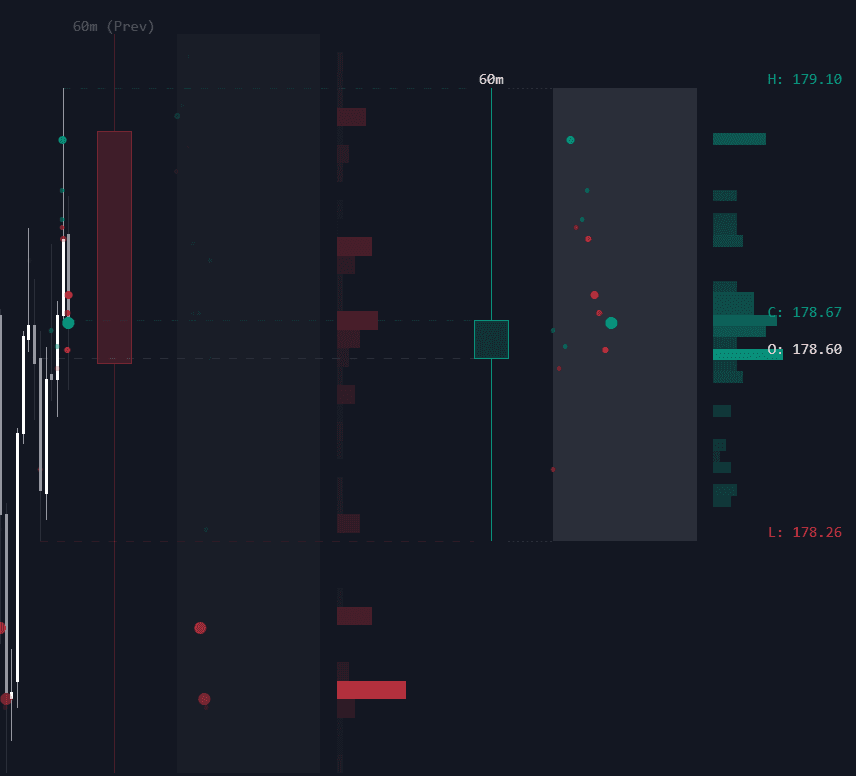
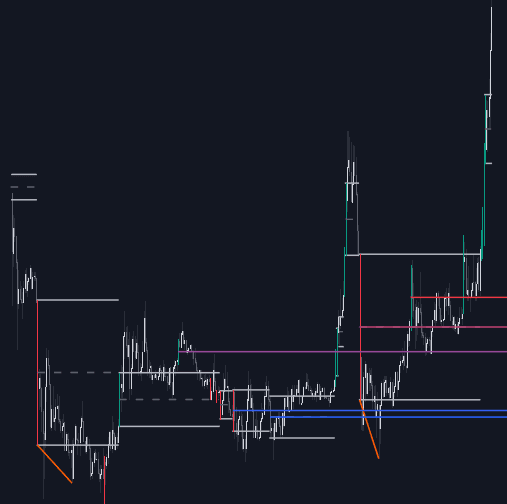
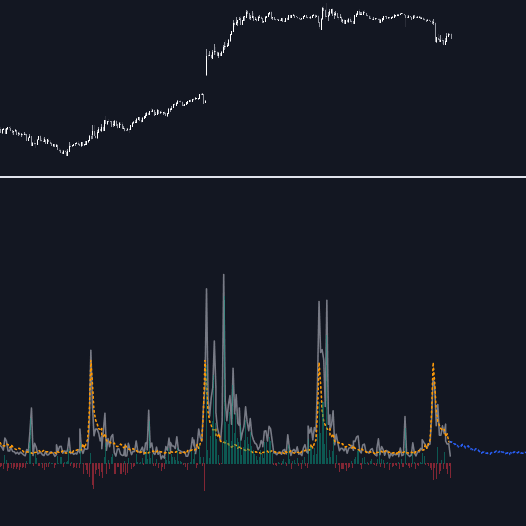
What is a Volume Spike?
A volume spike is a bar that trades dramatically more volume than its recent norm. There is no fixed definition; common rules flag a bar whose volume exceeds a multiple of the trailing average (twice the 20-bar average is a popular default), sits in a high percentile of recent bars, or clears a z-score threshold. Whatever the rule, the object is the same: isolating moments when participation suddenly surged, because far more shares or contracts changed hands than the market had been printing.
What a spike means depends on where it happens and what price did with it. Heavy volume pushing through a level reads as participation behind a breakout; an extreme-volume bar after a long advance, especially one closing off its high, is the raw material of climactic action; and enormous volume that produces almost no progress suggests absorption, the classic effort vs result disagreement. Intraday, spikes must also be judged against the time of day, since opens, closes, and scheduled news are loud by default.
Spikes matter because volume is the most direct public record of participation: a spike certifies that something (news, forced liquidation, institutional repositioning) actually happened on that bar. It does not certify direction. The same burst of activity begins some trends and ends others, so the spike is a flag for attention, and price context does the interpreting.
How to identify a Volume Spike
Spike detection is a comparison against normal, so defining normal is most of the work.
- 1Build a baseline: an average or median of volume over the last N bars (20 is common), or, on intraday charts, the average for that same time slot across prior sessions.
- 2Flag bars exceeding your threshold: a multiple such as 1.5x to 3x the baseline, or a percentile or z-score cutoff. Stricter thresholds trade frequency for significance.
- 3Read the bar itself: its range, close location, and where it printed (at a level, mid-range, after an extended run). A spike on a wide breakout bar and a spike on a doji tell different stories.
- 4Screen out routine inflation: session opens and closes, futures roll, options expiry, index rebalances, and scheduled releases all produce large volume that carries less incremental information.
How traders use it
- To qualify breakouts: a level break accompanied by a spike is conventionally treated as more trustworthy than one on thin volume, which is why volume at breakout checks are built into many breakout systems and why quiet breaks are prime false breakout candidates.
- To spot potential exhaustion: a volume spike late in an extended trend, particularly on a wide-range bar that closes poorly, raises the odds the move is climaxing rather than beginning. Confirmation from subsequent price action is still required.
- To detect absorption: repeated spikes into a level with little further progress imply resting orders are eating the aggression, a read formalized in concepts like stopping volume.
- To drive scans and alerts: unusual-volume filters shortlist symbols where something is happening right now, typically normalized as relative volume so quiet names and liquid names compete fairly.
Volume Spike vs neighboring volume concepts
Relative Volume: Relative volume is a continuous, normalized ratio of current volume against typical volume for that time of day. A volume spike is the discrete event of that gauge going extreme on a single bar.
Volume at Breakout: Volume at breakout evaluates participation at one specific event, the level break. A volume spike is location-agnostic: it can print at a breakout, mid-range, or into support, and means something different at each.
Climactic Action: Climactic action is a spike plus context: extreme volume and range arriving after an extended trend, suggesting terminal urgency. Every climax involves a volume spike; most volume spikes are not climaxes.
Pocket Pivot: A pocket pivot is a specific rule: an up bar whose volume exceeds the largest down-day volume of the prior ten sessions, used in base-building stocks. A generic volume spike carries no such directional or positional requirement.
More Volume Spike implementations
Concept family
Volume & Order Flow
88 concepts mapped · 88 in the Library
Volume Spike FAQ
Turn Volume Spike into a trading strategy.
Take any implementation from this page into Quant, then build on it, backtest it on real data, and keep refining it in conversation.