Concept
Pullback
Pullback is a Trend concept. The Library holds 1 implementation, a working definition you can pull into Quant.
Top Pullback indicator
The top custom implementation, built on the original standard Pullback formula.
1 total
The Pullback implementation below can become a backtested trading strategy — describe your rules and Quant writes the code.
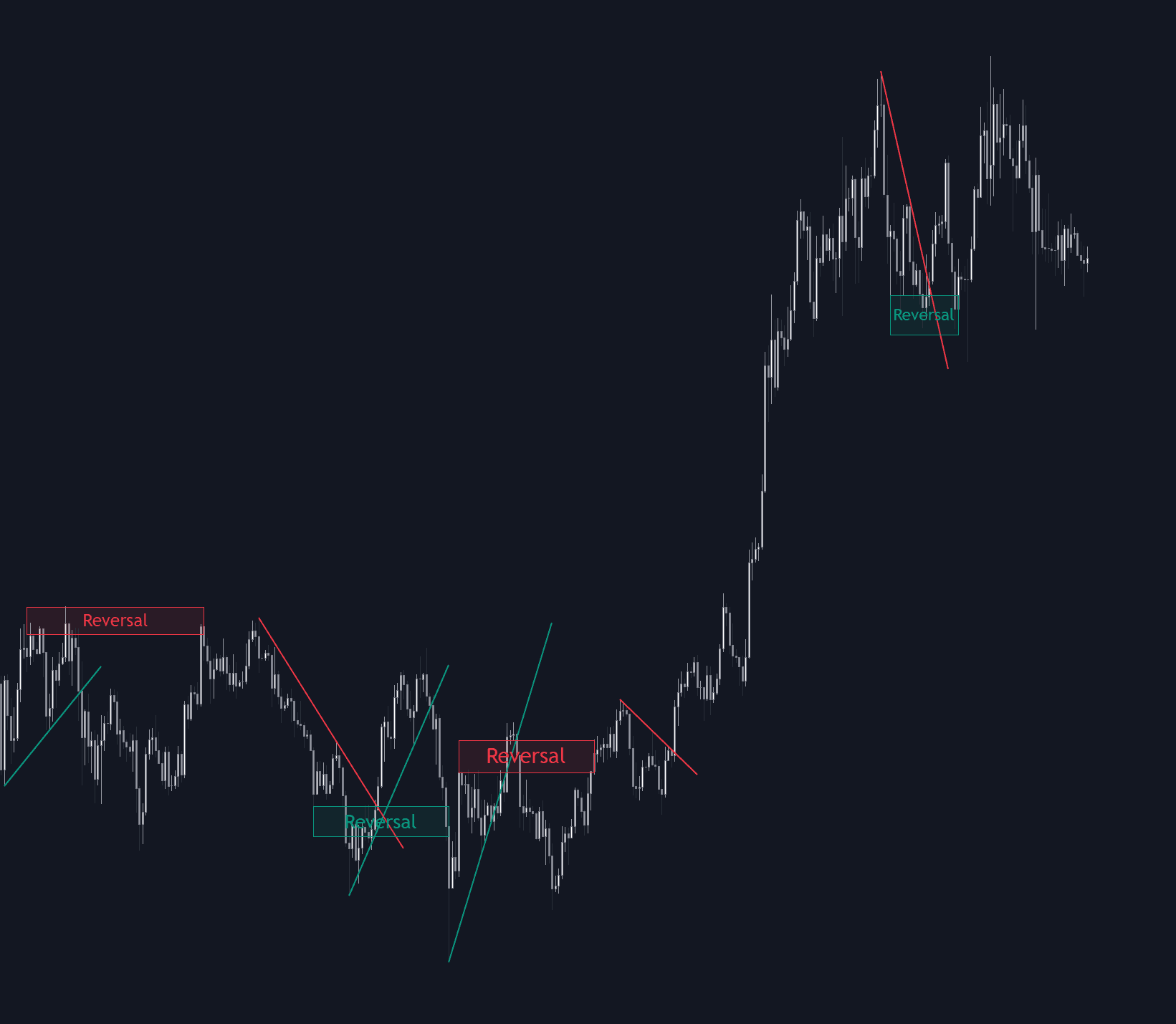
What is a Pullback?
A pullback is a counter-trend move inside an intact trend: price gives back part of the most recent advance (or decline), then the trend resumes. The defining feature is that structure survives the dip. In an uptrend the retracement bottoms out above the prior higher low, so the sequence of higher highs and higher lows stays unbroken; in a downtrend the mirror applies. Mechanically it is the market digesting a move: early entrants take profit, late chasers get shaken out, and the auction rotates back to a price where trend-side participants are willing to re-engage.
Pullbacks matter because they are the trend trader's entry vehicle: joining an established move at a discount, with a stop tucked beyond the retracement extreme, is usually better defined than chasing an extended breakout. The catch is that a pullback and the first leg of a reversal look identical while they are forming. Depth, speed, and volume are the usual tells (shallow, slow, quiet dips lean toward continuation), but none of them is decisive in real time, which is why most pullback methods wait for the trend to visibly resume before acting.
How to identify a pullback
The judgment is always relative to an established trend; without one, a dip is just a dip.
- 1Establish the trend first: a sequence of higher highs and higher lows, price holding above a rising moving average, or an equivalent objective trend filter.
- 2Watch for a counter-trend leg: a handful of bars retracing part of the last impulse, ideally on contracting volume and with smaller ranges than the move being corrected.
- 3Track where it lands. Common landing zones are the prior breakout level, a rising average acting as dynamic support, or a Fib retracement band of the last leg; in an uptrend the dip must hold above the prior higher low to keep the pullback label.
- 4Wait for resumption: a close back in the trend direction, or a break of the small counter-trend swing, confirms the pullback ended rather than deepened.
How traders use it
- As entry timing in trend-following: buy the dip in an uptrend (sell the bounce in a downtrend) as it completes, with the stop beyond the pullback extreme, so risk is anchored to a level that invalidates the idea.
- As a trend-health gauge: shallow pullbacks that hold well above support suggest one-sided conviction, while each successively deeper retracement warns that momentum is fading toward exhaustion.
- As the middle stage of the breakout-pullback-continuation sequence: entering not on the break itself but on the first orderly dip after it.
- As a system filter: many rule sets forbid fresh trend entries unless price has first retraced by some minimum, forcing the strategy to buy weakness within strength instead of extension.
Pullback vs related concepts
Retest: A retest is a return to a specific broken level to test it from the other side. A pullback is any counter-trend dip within a trend; it may or may not involve a broken level.
Reversal: A reversal breaks trend structure (in an uptrend, a lower low and lower high); a pullback keeps it intact. The two are indistinguishable in their early bars, which is why structure is the usual dividing line.
Corrective Leg: Corrective leg is the swing-structure name for the same movement: the counter-trend swing between impulses. 'Pullback' emphasizes the tradable event; 'corrective leg' emphasizes its place in the swing sequence.
Concept family
Trend
100 concepts mapped · 100 in the Library
Pullback FAQ
Turn Pullback into a trading strategy.
Take the implementation from this page into Quant, then build on it, backtest it on real data, and keep refining it in conversation.